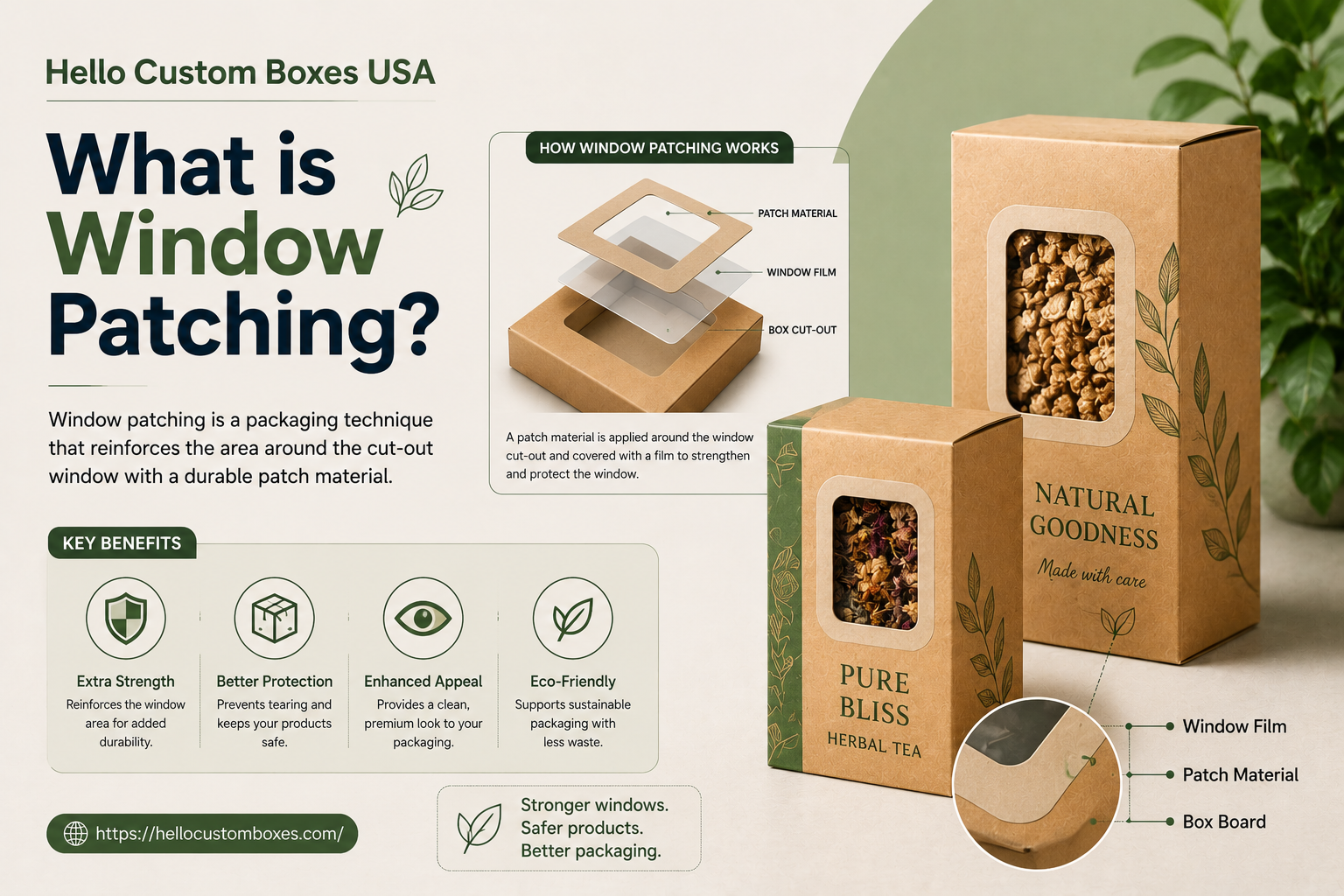
The Window Patching Procedure in Printing and Packaging
Consider browsing for cookies or a premium gift set. Instead of having to open the gift box, a clear window lets you view the contents. This feature, known as window patching, breaks the monotony of packaging by adding a simple yet impactful feature.
Window patching involves the method that involves applying a clear plastic onto a window cut out of a carton or carton. This method lets customers look at the product without opening the package, which increases the trust of customers and also safeguarding the product from moisture, dust and handling.
Window patching is a staple in U.S. packaging, particularly for toys, food electronics, clothing, and food as outlined by experts in the field and top packaging firms like WestRock.
Why Patch Windows Patching is Important: Visibility And Protection Combined
Blind patches combines both visibility and protection with a single, elegant design. For customers, it helps reduce uncertainty and returns and increases confidence by allowing visibility of the product prior to purchase. It is also important for the business to improve brand visibility and increases transparency without compromising hygiene or product integrity.
Mrs. Fields Cookies is a great example. They use PET window patches to showcase their signature treats which increases customer trust and boosts sales by an estimated 20% while still being FDA compliant.
Common Window Films Used in U.S. Packaging: PET, PVC and Others
The choice of the window film is important for functionality, price, and the possible environmental impact. Here are some of the films most people use in U.S. packaging.
1. PET (Polyethylene Terephthalate)
PET material has become the industry standard.
About 70% of food packaging used in the U.S. is constructed using PET films due to their eco-friendliness, oil and grease resistance, and FDA compliance for food contact applications. PET is also clear, strong and easy to recycle as well as FDA compliant for food contact, making it suitable for bakery, cosmetics and other consumer goods. Check out this document for more on FDA food contact materials.
2. PVC (Polyvinyl Chloride)
PVC ruins among the most inexpensive plastics. The material is used in packaging for short-term or industrial use. In recent times, many companies have sought to reduce PVC in order to meet consumer demand for green alternatives. It’s also among the most hazardous types of plastic, because it is not recyclable. Use (PET) Polyethylene terephthalate films which is FDA compliant and recyclable
3. PLA (Polylactic Acid)
PLA is among the kinds of bioplastics since it is made from organic resources. It can be composted, which makes perfect for green businesses that operate in the natural and organic sector. PLA is also sensitive to heat. However, it does interact well with the green packaging objectives of many brands.
4. Acetate
This is used for the high-end packaging of artisan and stationery products and is appreciated for its clarity. It is also a cellulose based film which makes it biodegradable.
5. Anti-Fog Films
These films are designed for the refrigerated packaging of pastry items, salads and fresh meals. Their primary function is to eliminate or prevent window fog on the mentioned products.
Rigid vs. Flexible Windows: Choosing What Fits Your Product
Not all window patches behave the same way.
Rigid Windows
Used in premium display or electronics packaging. They are also prevalent in stand-alone display packaging. They are made from thicker film sandwiched between layers of reinforced film, making them more expensive, but resistant to wrinkling.
Flexible Windows
Used in the every-day retail packaging for stationery, toys and pastries. These are thin and cheap to produce, making them cost-effective and simple to apply. Flexible Windows are indeed adaptable to pressure, yet labeling them pliable would be inaccurate.
Both processes utilize similar machinery; therefore, your product type, budget and customer expectations should inform your decision when making this selection.
The Window Patching Process: Steps Involved
In the United States, commercial print shops perform window patching using automated processes. Here’s a simplified overview:
- Die Cutting: A machine cuts the window shape on a sheet of paperboard.
- Film Cutting: A roll of clear film is unrolled, then cut to the appropriate window dimensions.
- Glue Application: Cold glue or hot melt adhesive is applied to the window shapes cut in the paperboard.
- Film Application: The film is applied to the glued windows and is thermally bonded.
- Drying & Finishing: The boxes are then folded, dried, and packed for shipment.
Cost effectiveness if the integration of window patching is done in the folding and gluing lines of the business.
Making the Right Window Patching Decision: A Checklist
Making the right window patching decision is based on the product and goals. Here are a few questions to guide window patching decision:
Are your customers eco-conscious?
Look for films that incorporate PLA (Polylactic acid) or acetate for their compostability.
Is cost a major factor?
PVC is a plastic that would suit this need as it is a lower cost material, although does lack recyclability and sustainability.
Will the packaging withstand rough shipping or stacking?
Use thicker films and rigid windows for better protection and durability.
Is your product fog-prone or refrigerated?
Use anti-fog films for windows to keep them clear.
Will there be exposure to sunlight?
Use films that resist UV radiation to prevent yellowing.
Exposed to sunlight?
Use UV resistant films to prevent yellowing.
Real-World Example: Window Patching Success Stories
Think about promoting a boutique bakery company that is aiming to elegantly showcase cupcakes in a clear window box. Utilizing PET window patches The packaging give clear views of the product, but it is also able to meet compliance and safety expectations, bolsters your brand’s assertions, and increases the trust and loyalty of your customers.
Further and Authoritative Reading
- FDA Food Contact Materials
- EPA Guide on Plastic Recycling
- Sustainable Packaging Coalition
- Food Contact Materials
- Kaplan University
Finally Window Patching as a Smart Packaging Strategy
As modern brands and consumers prioritize ecological considerations, window patching creates an elegant blend of product visibility and minimalism while highlighting its contents. For brands wanting to make a statement while remaining eco-conscious, window patching remains a remarkable silent solution.