
Measuring a box isn’t glamorous, but it’s the line between smooth operations and expensive fixes. I’ve watched a full run get scrapped because the carton was a quarter inch short. Five quiet minutes with a tape measure would’ve saved a week of fire-drills. When you measure well, products arrive safe, invoices make sense, and you’re not paying carriers to haul empty space.
Why Correct Box Measurements Matter
Tiny errors compound fast. A box that’s too big lets items rattle and crack. Too tight, and you stress seams and scuff product. Add dimensional weight into the mix and a bad number can spike freight.
When you measure consistently, three good things happen:
- Products fit snugly, so returns drop.
- Production flows without last-minute reworks.
- Freight charges land where you planned, not a tier higher.
The Basics: L × W × H (and why people mix them up)
The convention is always Length × Width × Height. Face the open end of the assembled box and read it like this:
- Length = the longest side of the opening.
- Width = the shorter side beside it.
- Height (sometimes depth) = the vertical distance from base to top.
If the opening is square, say 12 × 12, pick either side as length and the other as width; height stays vertical. Suppliers usually work from inside dimensions for product fit. Carriers care about outside dimensions because that’s what stacks on belts, trucks, and pallets.
How to Measure a Box, Step by Step
This is the same routine I’ve used on the shop floor for years:
- Assemble and square the sample.
- Turn the opening toward you.
- Measure the longest opening side first (length).
- Measure the shorter opening side (width).
- Measure from inside base to the open edge for height.
- Mark whether you recorded ID (inside) or OD (outside).
- ID for product fit, inserts, cavities.
- OD for shipping, pallet layout, shelf space.
- Keep units consistent. Mixing inches and millimeters is the fastest way to ruin a PO.
Pro tips
- Small cartons or tight fits: grab calipers for cleaner numbers.
- Medium and large corrugated: check ID and OD—board caliper adds up.
- Precision: record to the nearest 1/16in (or 1 mm) and stick with it.
What Counts as Small, Medium, or Large
There isn’t a single “normal box size,” but these ranges are common:
- Small: around 6 × 4 × 3 in for cosmetics, components, or small mailers.
- Medium: roughly 14 × 10 × 8 in for apparel or mid-sized electronics.
- Large: 20 × 16 × 14 in and up for bedding or bulky but light picks.
For moving cartons, typical references are:
- Small: 16 × 12 × 12 in (books, pantry items)
- Medium: 18 × 18 × 16 in (apparel, mixed goods)
- Large: 24 × 18 × 18 in (bulky but lightweight loads)
Length vs. Width: the classic mix-up
This one bites teams all the time. Length is always the longest opening side. Width is the shorter one. Height runs vertical. Swap them on a CAD drawing and inserts won’t seat, or worse, your line won’t assemble cleanly.
Shipping and Dimensional Weight
Carriers charge for space as well as mass. That’s why dimensional weight (DIM) matters.
Formula (generic):DIM weight = (Length × Width × Height) ÷ Divisor
Each carrier sets its owndivisorand rounding rules. Your billable weight is the higher of DIM vs. actual scale weight.
Cost-savvy moves I recommend:
- Trim height first; it often drops DIM fastest.
- Replace oversized outers with tighter cartons plus inserts.
- Do a test pack and record both DIM and actual weights before you place a big order.
Materials and when they work
People say “cardboard” for everything, but the details matter.
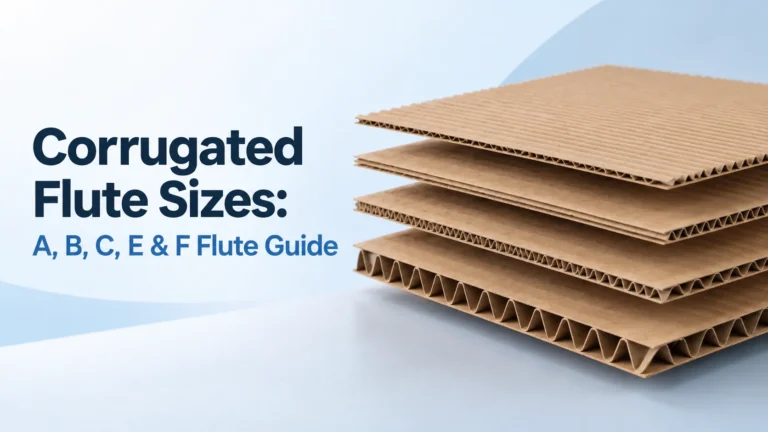
- Corrugated (flute + liners) is the workhorse for shipping: conveyors, trucks, stacking, the whole gauntlet.
- Paperboard/folding cartons are thinner and great for lightweight retail packs or mailers.
- Fragile goods deserve custom sizing, corner protection, or die-cut inserts that lock pieces in place.
Mistakes I See Most Often
- Measuring outside when the spec asked for inside.
- Rotating the box and calling height the width.
- Mixing inches and millimeters in one project.
- Sloppy rounding that wrecks freight math.
The simple fix: measure at the opening, write L × W × H, label ID or OD, keep units consistent, and attach a quick sketch or photo. Five minutes now saves weeks later.
When a Custom Size Pays for Itself
If you’re constantly cramming, padding, or trimming, it’s time to go custom. I’ve helped teams replace three off-the-shelf sizes with two tuned customs and cut freight by about 20%. Another client trimmed just two inches of height and slipped under a DIM threshold—no surcharge, instant savings. The tweak cost pennies; paying to ship air was the real expense.
Conclusion
Measuring a box takes minutes, but it shapes your whole supply chain. Start at the opening, write Length × Width × Height, and note ID vs. OD every time. Do it consistently and you’ll avoid damage, tame DIM charges, and stop paying to move air. If your products keep fighting “standards,” stop forcing it—go custom and make every inch earn its keep.