Cardstock Thickness
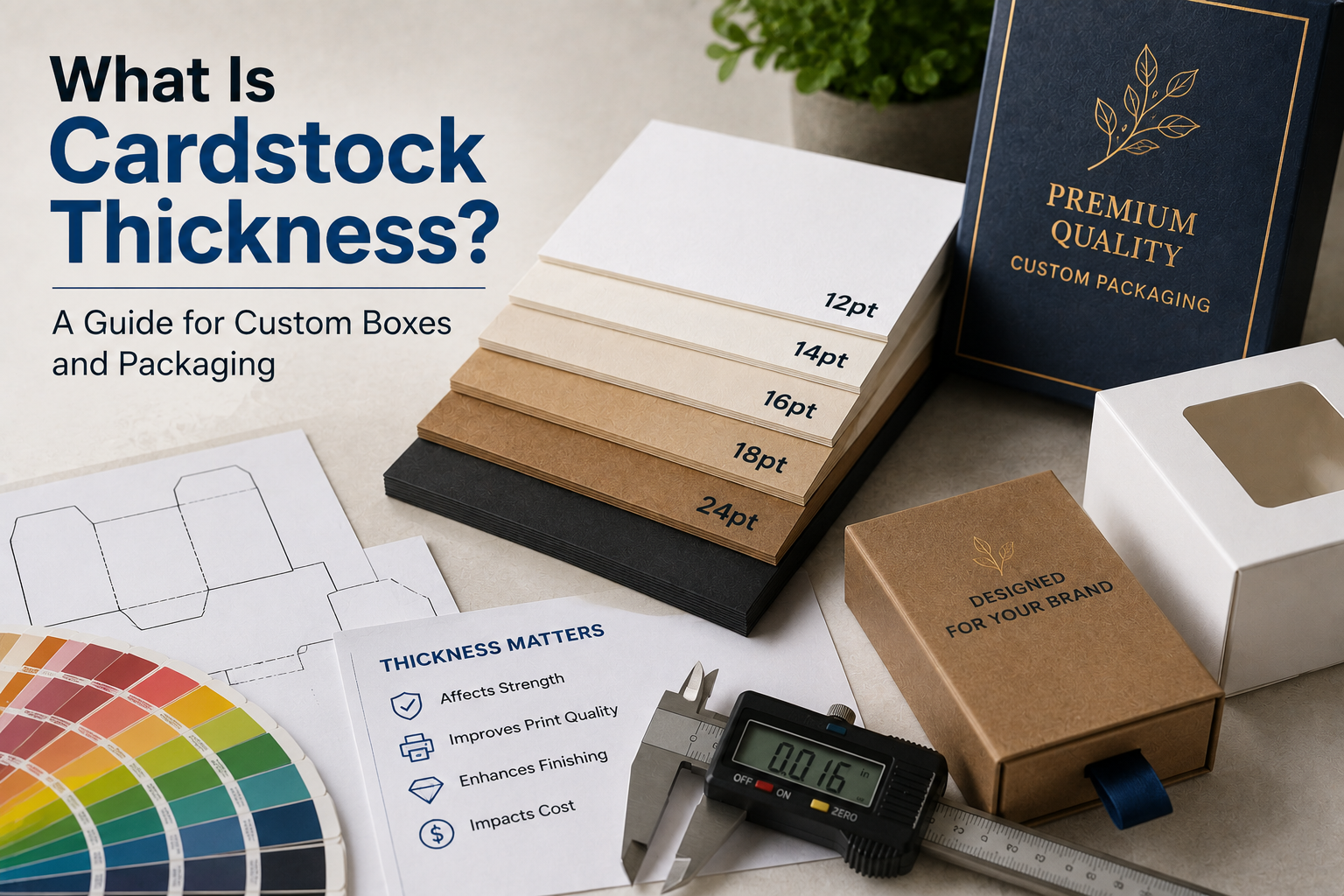
Cardstock thickness is the actual depth of the paperboard—measured in points almost every time. That number decides whether a custom box feels solid when someone picks it up, survives shipping, or ends up looking thin and cheap. I’ve seen brands get this wrong more times than I’d like to admit. Crushed corners. Cracked folds. Packages that make the product inside look less expensive than it is. Get the thickness right and the packaging just works.
Quick Answer
Cardstock thickness is how thick the board really is. Most custom packaging sits between 12pt and 24pt. Thicker stock adds strength and a better hand-feel, but it can also raise shipping weight. The right choice depends on what you’re packing, how far it travels, and the impression you want people to walk away with.
- 12–14pt handles light sleeves and hang tags without trouble
- 16–18pt covers most everyday folding cartons and retail boxes
- 20–24pt is what a lot of brands pick for heavier products or a more premium feel
- GSM and pound weight measure mass, not thickness
- Board type changes how any thickness performs once it’s in production
What Is Cardstock Thickness?
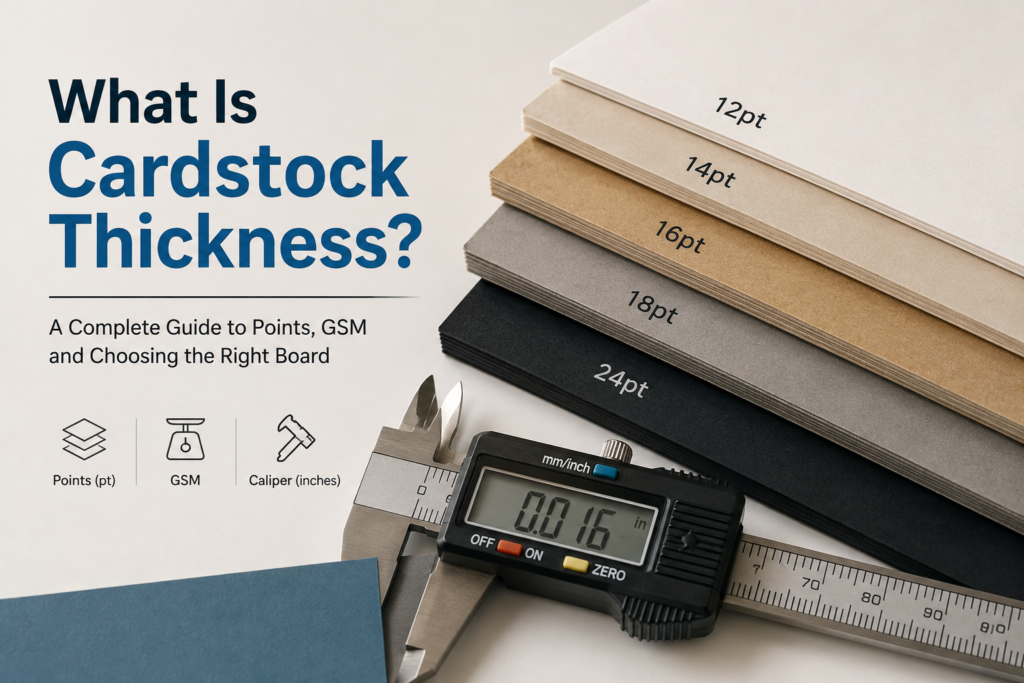
Cardstock thickness is simply the measurement from one side of the board to the other. Packaging people talk in points. One point equals one-thousandth of an inch, so 16pt board measures 0.016 inches thick.
Paper weight is a different number entirely. GSM and the older pound system tell you how much the sheet weighs. Two boards can share the same GSM and still feel different because one is denser or built with different fibers. Thickness is the measurement that actually drives strength, fold behavior, and that first impression when someone lifts the package.
Why Cardstock Thickness Matters in Packaging
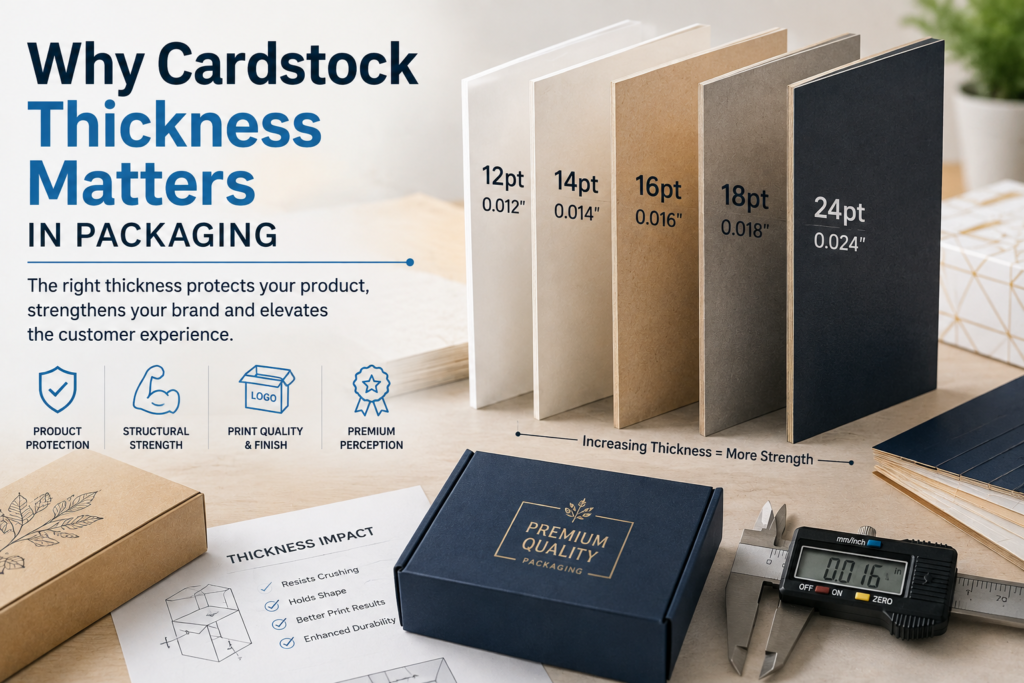
Thickness sits behind almost every practical decision. A 12pt sleeve around a light cosmetic jar can look sharp and keep freight costs down. Put that same board around a heavy glass CBD bottle and the corners start folding in before the package leaves the warehouse. I’ve watched it happen.
Structural strength tracks straight with thickness. Folding cartons on retail shelves need enough board to hold their shape. Thin inserts let products rattle. Thicker ones lock everything so the item arrives the way it was packed.
Print quality shifts with thickness too. Thin board can show the reverse side through or develop wavy edges under heavy ink. Thicker stock stays flatter and takes foil, embossing, and soft-touch lamination more cleanly.
Shipping weight climbs with every point you add. Across a few thousand units that extra weight shows up on the freight bill. Spec the board too thin and you trade that savings for damaged goods and replacement shipments that cost more in the end.
Customers notice right away. A high-priced skincare line that arrives in soft 12pt cartons undercuts its own positioning. The same line in solid 18pt or 20pt board with clean creases and firm corners backs up the price the second the package is opened.
How Cardstock Thickness Is Measured
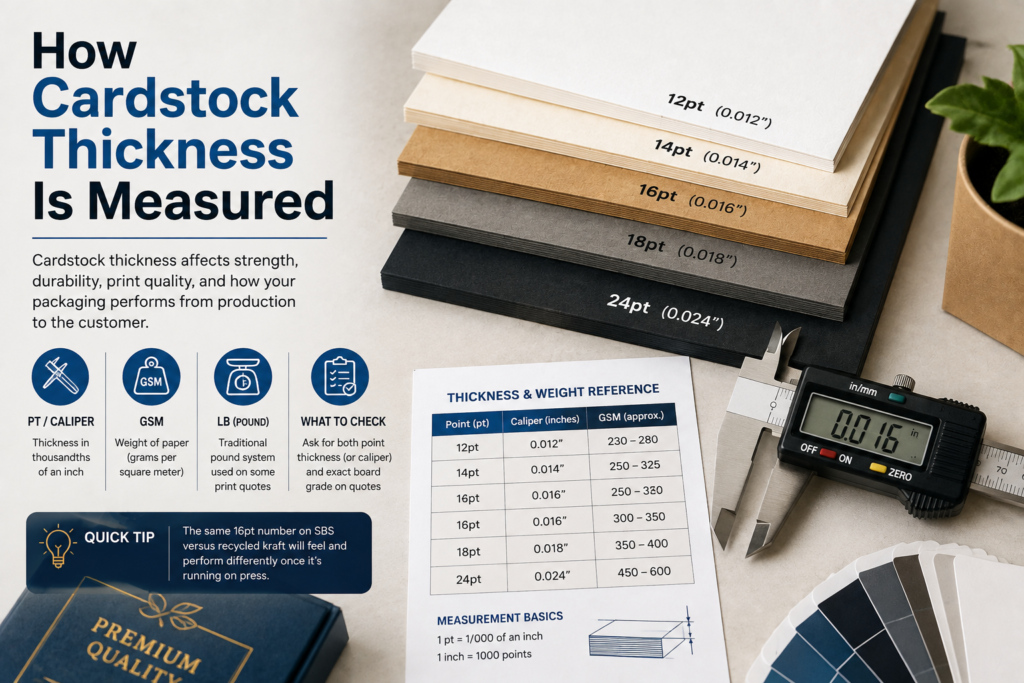
Four numbers show up on most quotes: pt, caliper, GSM, and lb.
Points and caliper are basically the same thing. Caliper is the real thickness in thousandths of an inch. Converters round it into points for everyday talk. A board that measures 0.016 inches gets called 16pt.
GSM measures weight. Higher GSM usually means thicker board, but density varies a lot. A dense SBS sheet at 300 GSM can be thinner than a bulkier kraft board at the same weight.
The traditional pound system still appears on some print quotes, but it’s less useful for packaging. Most modern specs lead with points or caliper and list GSM as a secondary reference.
When you compare quotes, ask for both the point thickness and the exact board grade. The same 16pt number on SBS versus recycled kraft will feel and perform differently once it’s running on press.
Cardstock Thickness Chart
These numbers are approximate. Actual GSM shifts by mill and how the board is built.
Best Cardstock Thickness for Different Packaging Applications
Most everyday ecommerce folding cartons land at 16pt or 18pt. That range gives clean folds, decent stacking strength, and shipping weight most brands can live with.
Cosmetic and CBD boxes often move up to 18pt or 20pt. The products carry higher margins and the unboxing moment matters. Glass bottles and dropper packs need the extra rigidity.
Food packaging follows regulatory and grease-resistance rules first, but thickness still decides whether the carton holds up. Many food cartons sit between 14pt and 18pt depending on fill weight.
Product sleeves and slipcases can stay thinner—12pt to 16pt—because they wrap rather than carry the full load.
Box inserts and dividers work best when they match or sit a bit above the outer box thickness. That keeps the product locked during transit.
Hang tags and product cards rarely need more than 12–14pt unless the brand wants them to feel substantial on the shelf.
Luxury and rigid-style packaging usually starts at 20pt and climbs from there. Some brands laminate boards or use chipboard cores, but solid paperboard at 24pt already delivers a noticeable step up in feel without the full rigid-box cost.
How Different Paperboards Affect Thickness
Same thickness does not mean the same performance.
SBS (Solid Bleached Sulfate) is the clean white board preferred for high-end printing. It’s dense and consistent, so 16pt SBS feels solid and folds the same way every time.
C1S and C2S boards give excellent print surfaces. The coating adds a little thickness and changes how ink sits, but the base board still carries most of the strength.
Kraft paperboard is bulkier and more fibrous. A 16pt kraft often feels tougher than the same point SBS, though the surface is less smooth for fine detail work.
CCNB (Clay Coated News Back) is the economical recycled option. It’s usually gray or brown on the reverse and can show more variation across a sheet. It works fine for many retail cartons when budget drives the decision.
The same GSM on different constructions can produce different calipers and different fold results. Always ask for a physical sample of the exact board the converter plans to run.
How Thickness Affects Printing and Finishing
Offset and digital presses handle a wide range of thicknesses, but registration and ink laydown improve when the board stays flat. Very thin stock can stretch or wave under heavy coverage.
Foil stamping and embossing need enough mass to take the impression without crushing or cracking. Most shops prefer 16pt and above for reliable foil and deep emboss work.
Spot UV and soft-touch lamination work on almost any thickness, yet the tactile contrast shows up more clearly on thicker stock. Thin board can start looking plasticky once laminated.
Scoring and creasing have to match the exact caliper. Too deep a score on thin board cuts through the fibers. Too shallow a score on thick board causes cracking on the fold. Experienced converters adjust the dies for the specific board they’re running.
How to Choose the Right Cardstock Thickness
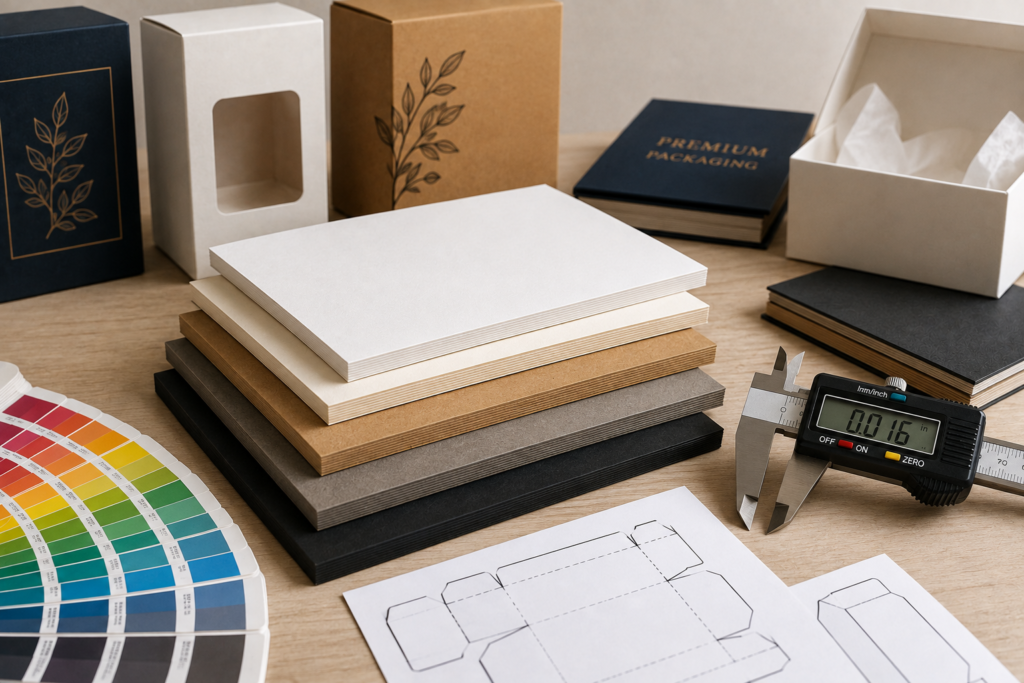
Start with the product. Weigh it. Measure the longest dimension. Heavy or tall items need more board strength.
Look at the shipping environment next. Direct-to-consumer parcels take more abuse than retail display cartons that ride on pallets.
Budget and branding goals pull in opposite directions. Thicker board costs more per unit and adds freight, but it also supports higher price points and cuts damage claims.
Printing method and finishes matter. Heavy foil, deep emboss, or soft-touch usually push you up in thickness. Simple four-color process on a light product can stay at 14–16pt.
Order physical samples early. Hold them. Fold them. Put a product inside. No digital mockup replaces that check.
Common Mistakes When Choosing Cardstock Thickness
Treating GSM as thickness is the most common slip I see. A high-GSM recycled board can still feel soft if the fibers are loosely packed.
Assuming thicker is always better wastes money and can make small boxes feel clumsy in the hand.
Ignoring the board grade leads to surprises. A 16pt kraft and a 16pt SBS are not interchangeable when print quality is critical.
Forgetting dimensional weight and freight class can wipe out the savings from cheaper thin board when packages get damaged or reclassified.
Skipping finish compatibility checks produces cracked folds or foil that refuses to stick cleanly.
Cardstock Thickness vs Paperboard Thickness
In packaging the terms often overlap. Cardstock usually refers to the lighter end of the paperboard range used for folding cartons, sleeves, and tags. Heavier paperboard grades move into rigid box construction or specialty work.
The measurement systems stay the same. What changes is fiber composition, density, and whether the board is solid bleached, kraft, or recycled. A 24pt SBS folding carton board is still paperboard—it just sits at the upper end of the range most converters use for custom work.
Buyer Checklist Before Ordering Custom Packaging
- Product weight and fragility
- Exact outer dimensions and required internal clearance
- Expected shipping method and distance
- Print process (offset, digital, or flexo)
- Required finishes (foil, emboss, lamination, spot UV)
- Desired unboxing feel and retail shelf presence
- Target unit cost and freight budget
- Storage and stacking conditions at the warehouse or store
Walk through each item with your packaging supplier before locking the board specification.
Need Help Choosing the Right Cardstock Thickness?
Picking the right cardstock thickness is one of those quiet decisions that separates packaging that simply holds a product from packaging that protects it, presents it, and backs up the brand. If you’re specifying custom boxes or related paperboard packaging, run the product weight, shipping method, and finish list against the chart and checklist above.
When you want a second set of eyes on the board choice, the team at Hello Custom Boxes USA can walk through samples and real production constraints with you.
Frequently Asked Questions
It’s the measured depth of the paperboard, most often stated in points or thousandths of an inch.
Yes for light products, sleeves, and many retail cartons. Heavier or glass items usually need 16pt or more.
It’s the most common and versatile choice for everyday custom boxes. It balances strength, printability, and cost.
Most luxury brands start at 18–20pt and go higher when the unboxing experience is central to the brand.
Grams per square meter—the weight of the board, not its thickness.
No. GSM is mass. Thickness is caliper. They correlate but are not the same.
It often improves flatness and reduces show-through, but board surface and coating matter more than raw thickness alone.
Properly scored 16pt and 18pt SBS and C1S boards fold cleanly when the die is cut for the exact caliper.
Thicker board increases both actual weight and dimensional weight, which can raise freight charges on large runs.