Custom packaging made for growing USA brands +44 741152 3056 sales@hellocustomboxes.com

HELLO CUSTOM BOXES · PACKAGING GUIDE

Printing Methods
for Custom Packaging

Understand how your artwork reaches the box. Compare printing processes, color options and stock considerations before choosing your specification.

Print clarityColor consistencyMaterial compatibility
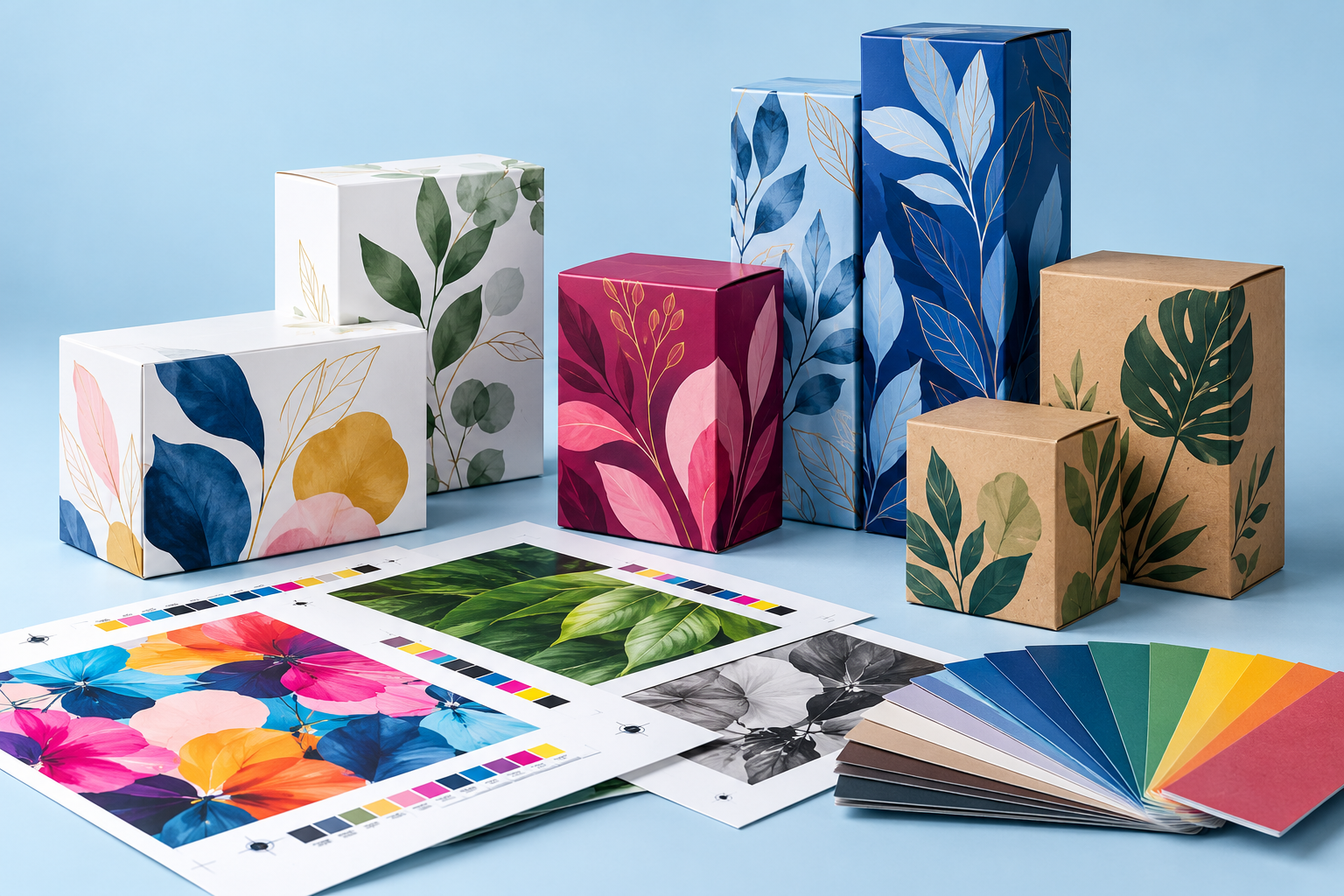
Illustrative printed cartons with colorful artwork, proof sheets and solid color swatches

CHOOSE THE PROCESS

Explore Packaging Printing Methods

Start with the artwork, material and production requirements.

01

Digital Printing

Prints artwork directly from digital files.

Common uses: Short runs, versions and personalized artwork.

View Method Details

Digital printing can suit packaging projects with changing artwork, multiple versions or shorter runs. The available sheet size, print technology and stock compatibility determine what can be produced.

Review fine text, image quality, print coverage and the chosen substrate on a suitable proof. Confirm whether a brand color will be simulated or produced with a dedicated ink.

02

Offset / Lithographic Printing

Transfers artwork through plates and a blanket.

Common uses: Detailed graphics and repeat carton artwork.

View Method Details

Offset printing transfers the image from a plate to a blanket and then to the printing surface. It is a common approach for detailed paperboard carton graphics and repeat artwork, using process colors, suitable spot inks or a combination.

Discuss plate setup, run requirements, stock, coverage and color targets. The proof and production specification should reflect the actual board and any later coating or finishing.

03

Flexographic Printing

Uses flexible plates to transfer ink to the substrate.

Common uses: Suitable corrugated, paper and roll-fed applications.

View Method Details

Flexographic printing uses a flexible relief plate to transfer ink. Depending on the equipment and ink system, it can suit paper, corrugated and other packaging applications. The process must be matched to the specific substrate and graphics.

Check fine detail, solid areas, registration and the effect of the stock surface on the design. A method that suits a simple shipping carton is not automatically the best specification for every retail artwork.

04

Screen Printing

Pushes ink through a prepared mesh stencil.

Common uses: Selected bold designs and compatible surfaces.

View Method Details

Screen printing uses a prepared mesh stencil and a squeegee to transfer ink onto a surface. It can be considered for selected graphic effects and bold designs where the stock, ink and production format are compatible.

Discuss artwork detail, color separations, registration, ink coverage and drying or curing needs. Confirm suitability on the actual packaging stock before choosing the process.

CMYK or Spot Color?

The color approach is a separate part of the print specification.

CMYK Process Color

Combines four process inks for multicolor artwork and images.

Pantone / Spot Color

Uses a specified color reference or mixed ink for selected brand colors. Confirm whether the chosen process uses a dedicated ink or a simulation.

Review color on the actual stock. Screen previews do not guarantee the printed result.

Compare Printing Approaches

Common printing approaches and specification checks
MethodCommon Starting PointWhat to Review
DigitalShort runs and artwork versionsStock, format and artwork
OffsetDetailed, repeat carton graphicsPlate setup and run requirements
FlexographicSuitable board and paper applicationsPlates, substrate and ink coverage
ScreenSelected bold designsSurface, registration and coverage

The final method depends on the complete packaging specification. Suitability, availability and cost are reviewed for the project.

Your Material Changes the Result

  • White stock provides a bright print base.
  • Brown and colored stocks affect color appearance.
  • Textured and reflective surfaces need compatible ink and artwork.
Explore the Materials Guide

Foil, embossing and spot UV are finishing choices.

Explore Finishes & Add-ons
White PaperboardBright print base.
Natural KraftStock color affects appearance.
CorrugatedReview the liner and inks.

Before Your Packaging Goes to Print

  1. 01

    Share Your Artwork

    Provide your design files and project details.

  2. 02

    Confirm Stock & Colors

    Choose the material and review color options.

  3. 03

    Review the Proof

    Check the proof type, artwork and selected stock.

  4. 04

    Approve the Specification

    Confirm the details before production.

A digital layout proof, a printed color proof and a production sample serve different purposes. Confirm what the supplied proof is intended to show.

Printing Methods FAQs

A clearer specification starts with the right questions.

Which printing method suits my boxes?

The starting point is your stock, artwork, box dimensions, quantity and production requirements. Compare those together rather than choosing a method from the run size alone. Share the specification so the practical options can be reviewed.

Can I specify Pantone colors?

You can provide a Pantone reference as a color target. Confirm whether the proposed process uses a dedicated spot ink or a process-color simulation. Coated and uncoated stock, ink systems and finishing can affect the result, so review the appropriate proof.

How does the material affect print color?

The stock's color, texture and surface treatment influence printed appearance. The same artwork can look different on white paperboard, brown kraft and reflective surfaces. A suitable white-ink layer or other artwork adjustments may be needed for the selected process.

Is UV printing the same as spot UV?

No. UV-cured printing describes curing compatible printing inks with ultraviolet light. Spot UV is a selective coating used to highlight areas of a design. The print process, ink system and finishing specification need to be considered separately.

Find the Right Print Approach for Your Packaging

Share your artwork, material and quantity. Let’s review the options for your project.

Get a Custom Quote

Imagery illustrates packaging and print processes; it does not represent a specific production facility or guaranteed printed result.

Scroll to Top