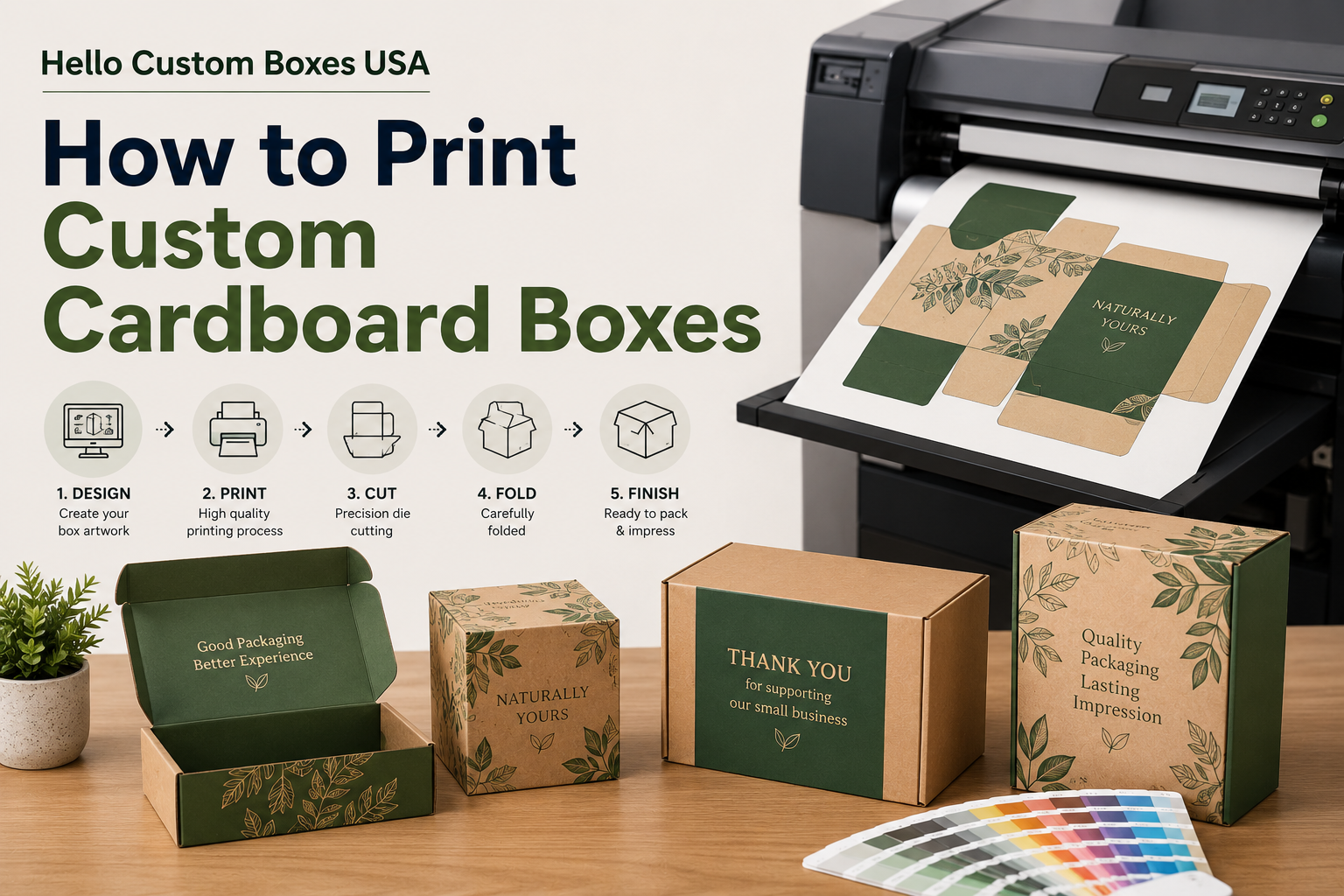
How to Print Custom Cardboard Boxes: A Step-by-Step Guide
Printing on cardboard boxes isn’t a quick push of a button. The type of board how the box is built, the color setup, and the finish all changes the way your brand shows up in a customer’s hands. What follows is a practical walk-through that mirrors how packaging pros approach custom printed cardboard boxes so they look sharp hold up in transited and do their job on the shelf.
1) Know Your Product, Purpose, and Quantity
Start by answering a few basics:
Use case: Is it an e-commerce mailer, a subscription box, or something for retail shelves?
Durability: Will it need to survive parcel carriers, resist scratches, or stack in storage?
Run size: Are you printing a small pilot run, a few hundred for a launch, or thousands for wholesale scale?
Priorities: Do you care most about exact color, the “unboxing” effect, or sustainability credentials?
The answers set the direction for everything that comes next, from print method to cost.
2) Decide on Box Style and Material Early
When people say “cardboard,” they’re usually talking about paperboard or corrugated.
Paperboard (folding carton):smooth and dense, perfect for detailed printed card packaging. SBS (bright white), CCNB (recycled), and kraft (brown) are the most common. You’ll see it used for cosmetics, confectionery, and other light retail products.
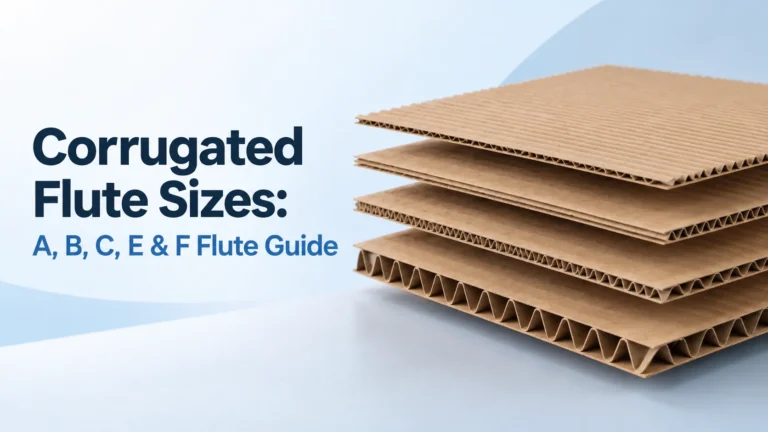
Corrugated (shipping or mailers): fluted board (E, B, C flutes, etc.) chosen for strength. Best for custom shipping box printing and heavier items. Comes in kraft brown or white-coated options.
From what we’ve seen, cosmetic brands usually pick paperboard for its clean print surface, while subscription companies stick with corrugated for durability. Locking in structure and board first avoids expensive redesigns down the line.
3) Pick the Printing Method That Fits Your Boxes
There’s no single “best” printing method. It depends on the job size, the artwork, and the budget.
Direct Flexo (corrugated)
Works well for mid- to high-volume shipping boxes and bold logos.
Plates are economical, runs are fast.
Fine type and halftones may blur a bit on kraft.
In most subscription projects we’ve produced, flexo struck the right balance between cost and durability.
Litho-lam (offset label mounted to corrugated)
Delivers photo-quality print on corrugated.
Clean, consistent colors with many finish options.
Higher setup and mounting cost.
Digital (inkjet/toner)
Best for small runs, prototypes, or personalized campaigns.
No plates, so turnaround is quick and variable data is easy.
Cost per unit goes up at scale.
Screen Printing (niche use)
Great for opaque whites, heavy solids, and specialty needs.
Thick, vibrant ink layers.
Too slow for large runs and not ideal for detailed photos.
For custom cardboard boxes with logos on kraft, using a white base layer helps brand colors stay bright.
4) Plan Your Colors the Right Way
CMYK handles photos, gradients, and full-color artwork.
Pantone (PMS) inks guarantee brand consistency — a must for logos.
Substrate counts:kraft dulls colors unless you lay down white first.
Small type: stick to 100% black for clarity.
Barcodes: solid black on a plain, non-gloss background.
At this stage you decide whether you’re keeping it simple with a spot-color logo or going full-color with gradients and photography.
5) Get a Box Printing Template (the Dieline)
Ask your supplier for a dieline — it’s the flat outline that shows folds, panels, and glue tabs. Stick to these basics:
- Add at least 0.125 in (3 mm) bleed.
- Keep logos and text inside the safe margin.
- Use 300 dpi images at size.
- Supply logos as vector files.
- Export final artwork as PDF/X with correct color settings.
For a print paper box, it’s one carton dieline. For litho-lam, you’ll get label dielines sized to face panels. With multiple SKUs, insist on clearly labeled files to avoid mix-ups.
6) Design With the Material in Mind
Corrugated doesn’t print like paperboard. Keep that in mind:
- Positive text at least 8 pt; reversed-out text closer to 10–12 pt.
- Avoid hairline strokes or thin serifs.
- Add trapping (slight overlaps) so colors don’t misalign.
- Large solid areas print cleaner if broken up with subtle patterns.
- Always consider a white base under bright colors on kraft.
If you need photo-quality results, litho-lam or coated paperboard are safer bets.
7) Run a Prepress Check Before Printing
A careful prepress check saves money later:
- Verify dieline size and panel order.
- Confirm bleeds and safe zones, then remove dielines from print layers.
- Check that spot colors are deliberate.
- Review overprints and transparencies.
- Make sure logos appear correctly on each panel.
Approve a digital proof — and request a hard proof on the actual substrate for color-critical jobs.
Tip: Printers like Hello Custom Boxes can preflight your dieline and artwork. Having a pro review early on prevents costly reprints.
8) Choose Finishes That Add Value
Finishes do more than add polish — they protect the box:
Aqueous or varnish: light, budget-friendly scuff resistance.
Lamination: matte, gloss, or soft-touch for a premium feel.
Foil stamping or embossing: makes logos pop.
Spot UV: creates glossy contrast against matte areas.
For retail items handled often, lamination is worth the spend. For shipping mailers, a basic aqueous coat is usually enough.
9) Balance Sustainability and Design
- Choose recycled or FSC-certified boards where possible.
- Water-based flexo inks are widely recyclable.
- Simplify materials to improve recyclability.
- Use right-sized packaging to avoid waste.
Premium looks are still possible on kraft — embossing, spot colors, or smart design touches can replace heavy plastic finishes.
10) Understand What Drives Cost and Lead Time
Plates & dies: flexo plates and die tools are one-time costs.
Run size: price per unit drops as volume increases.
Artwork complexity: more colors and finishes raise cost.
Freight: flat-packed boxes ship cheaper.
For trial runs, digital makes sense. For long-term volume, flexo or litho-lam is more economical.
11) Approve, Print, and Quality-Check
Before production, confirm:
- Print is aligned to the opening and folds.
- Flute direction matches stacking needs.
- Barcodes scan cleanly.
- Glue tabs are clear of ink.
- Cartons fold properly with graphics lining up.
Always keep a retained sample for future reorders.
12) Glossary of Common Terms
Box printing template: another word for the dieline.
Custom printing boxes / box packaging printing: general terms for branded cartons.
Printable cardboard boxes: flat, unassembled cartons ready for print.
Print on cardboard paper: printing a paper label to mount on corrugated.
Custom printed boxes near me: local quick-turn jobs.
Cardboard box printing / cardbaord box printing: same thing (including common typo).
13) Where to Find Templates and Support
Printers and suppliers: usually provide dielines and prepress guidance.
Online libraries: some vendors post standard box templates for free.
Custom partners: Hello Custom Boxes can supply dielines tailored to your product and check your files before press.
For newcomers, working with a supplier who handles both dielines and prepress saves time and avoids headaches.
Real-World Examples
Food brand (brownies):folding cartons printed on SBS board, CMYK artwork, gloss aqueous coat. Food-safe, affordable, designed for retail.
Cosmetics line (lipsticks): coated paperboard cartons with Pantone spot colors for precision, plus foil stamping. Focused on luxury detail and shelf impact.
E-commerce startup (subscription kits): corrugated mailers printed flexo in one or two bold colors. Clean, cost-effective, durable for shipping.
Final Word
After overseeing hundreds of print runs across industries, one thing is clear: the right method and material make or break your box. If you’d like an expert to review your dieline or help weigh flexo, digital, or litho-lam, Hello Custom Boxes can guide you. We’ll match your artwork and print path to your volume, budget, and brand so your packaging arrives sharp, sturdy, and ready to sell.