TL;DR
The best custom bakery boxes in the U.S. are the ones designed around your actual product size, shipping needs, and branding — not generic stock templates. Many bakeries start with local suppliers for speed, then move to custom wholesale packaging for better consistency, protection, and long-term cost savings. Material strength, print quality, and box structure matter more than most businesses expect.
A bakery box looks simple until you’ve had 200 frosting-smudged cupcake boxes arrive at a weekend event.
That’s usually when businesses realize packaging is not just “something to hold baked goods.” It directly affects presentation, shipping stability, freshness, and customer trust. A weak fold line or poorly chosen coating can turn a beautiful product into a refund request.
For bakeries, dessert brands, home-based baking startups, and retailers across the U.S., finding dependable packaging takes more than typing where to by bakery boxes into Google and choosing the cheapest option.
The real challenge is finding packaging that performs consistently after printing, folding, stacking, refrigerating, and transporting.
Why Bakery Boxes Fail More Often Than Most Businesses Expect
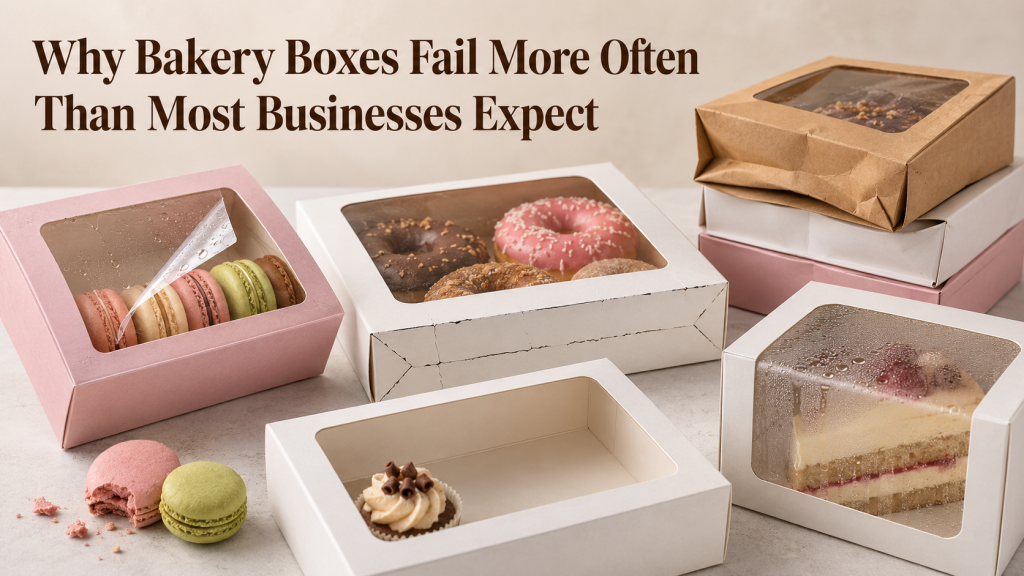
One of the most common issues in bakery packaging is structural mismatch.
A macaron box needs rigidity. A donut box needs ventilation. A cake slice box needs grease resistance plus secure locking tabs. Yet many suppliers still push standard stock templates that were never designed for specific bakery products.
That creates problems like:
- Window film detaching in humid environments
- Ink cracking along score lines
- Boxes collapsing during stacked delivery runs
- Excess empty space causing movement during transport
- Condensation damage inside refrigerated packaging
This is especially common with low-cost imported packaging where material thickness varies from batch to batch.
For example, SBS paperboard may print beautifully with vibrant colors, but if the GSM is too light for layered pastries or heavy fillings, corners soften quickly during handling. Kraft materials offer better rigidity for some applications, but darker stocks can shift printed colors slightly compared to digital mockups.
That difference surprises many bakery owners during first production runs.
Screen colors rarely match physical print exactly, especially with kraft or uncoated materials. Experienced packaging suppliers usually explain this upfront instead of overpromising “perfect color matching.”
The Difference Between Stock Boxes and Custom Bakery Packaging
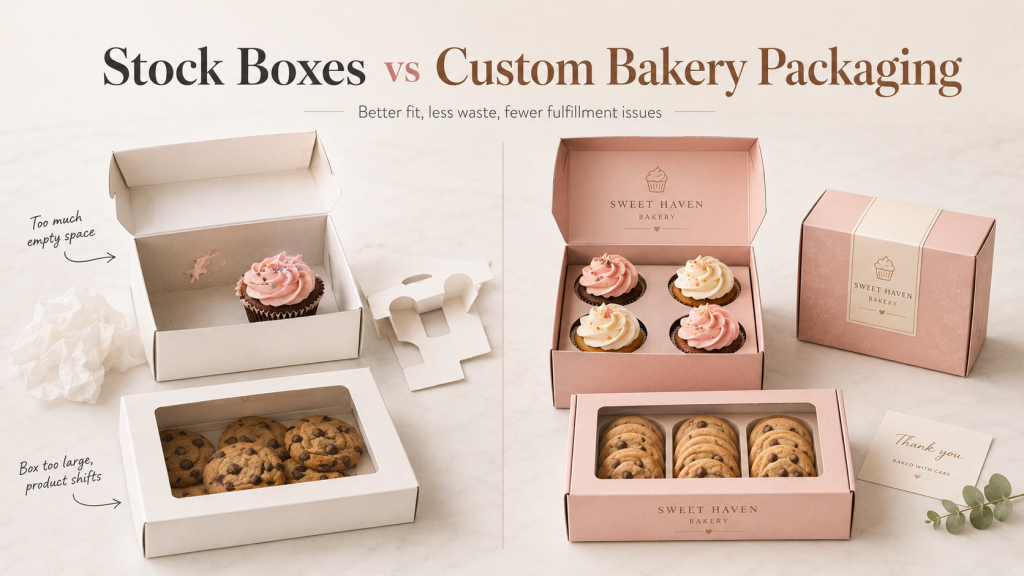
A lot of businesses initially buy stock packaging because it feels faster and cheaper.
Sometimes it is.
But stock bakery boxes often create hidden operational costs:
- Extra inserts to stop movement
- Additional tissue or wrapping
- Higher shipping dimensional weight
- Product damage from poor fit
- Inconsistent branding presentation
With custom bakery boxes, the structure is designed around the product itself rather than forcing products into preset dimensions.
That matters more than people think.
A half-inch gap inside a cupcake box can smear icing during transit. A slightly oversized cookie box may increase shipping rates across hundreds of orders monthly.
Every box is built around your product’s actual size, layout, and structure, not from pre-made templates. That approach usually reduces waste, improves presentation, and creates fewer fulfillment issues over time.
Brands shipping fragile pastries or premium desserts often notice the difference almost immediately.
What Businesses Should Look for in Bakery Boxes Wholesale
Wholesale ordering sounds straightforward until storage, shipping, and print consistency become part of the equation.
Not every supplier handles repeat runs well.
Some businesses receive excellent first batches, then encounter color inconsistencies or weaker material quality on reorders. That usually happens when suppliers switch paper mills or outsource portions of production.
When evaluating bakery boxes wholesale, focus on operational consistency more than flashy pricing.
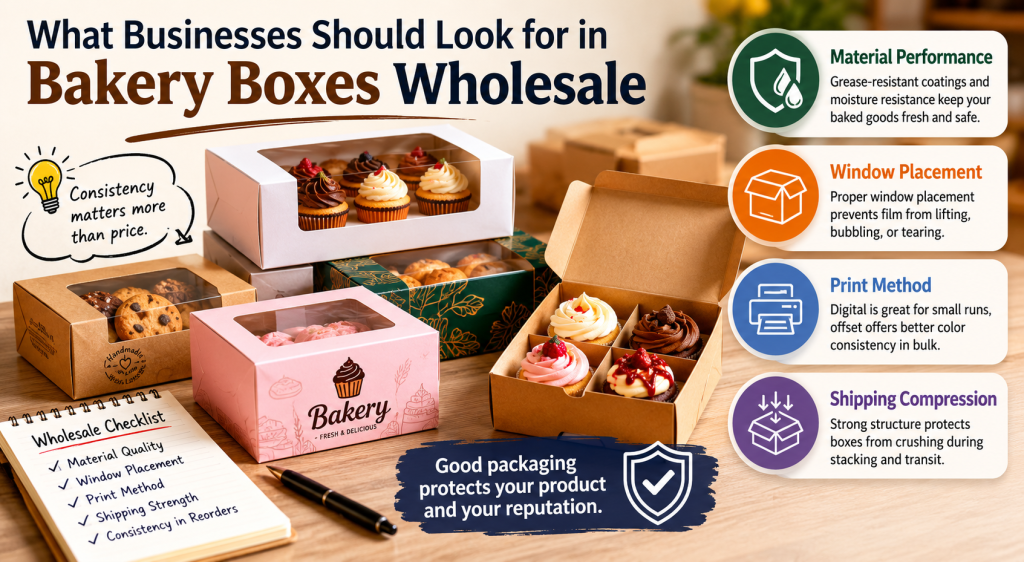
A few things experienced bakery owners typically check:
Material Performance
Grease-resistant coatings matter for pastries, croissants, and butter-heavy products. Without proper barriers, oils migrate through paperboard faster than expected.
For refrigerated desserts, moisture resistance becomes critical. Condensation weakens folding strength surprisingly fast.
Window Placement
Small bakery boxes with window panels often look great online but fail in real use if the film placement overlaps score lines or fold areas.
That causes bubbling or separation after repeated opening.
Print Method
Digital printing works well for lower quantities and quick turnaround. Offset printing usually provides better color consistency at larger volumes.
However, offset jobs require tighter file setup. Thin typography, rich black builds, and fine gradients can shift depending on coating selection.
Shipping Compression
Boxes stacked during courier handling experience vertical pressure most business owners never test for.
A structurally weak top panel may cave in during transit even if the box feels sturdy by hand.
Why Small Bakery Boxes With Window Designs Continue to Grow
Window packaging keeps expanding because bakeries sell visually.
Customers want to see texture, icing details, toppings, and freshness before opening the box.
But there’s a practical side too.
Window packaging reduces unnecessary handling in retail displays. Staff members don’t need to repeatedly open boxes for customer viewing, which helps preserve freshness and presentation.
Still, not all window boxes perform equally.
Cheaper acetate films fog more easily in cold storage. Thin adhesive bonding around window edges can peel under humidity.
This becomes noticeable with chilled cheesecakes, mousse desserts, or cream-filled pastries.
The better approach usually involves matching the window shape to the product layout instead of using oversized generic die cuts.
That creates a cleaner presentation while maintaining structural integrity.
Businesses selling premium baked goods often combine window packaging with subtle finishing techniques like soft-touch coating or inside printing rather than overloading the exterior with graphics.
Too much printing can actually make bakery packaging look less premium.
Local Suppliers vs Nationwide Packaging Manufacturers
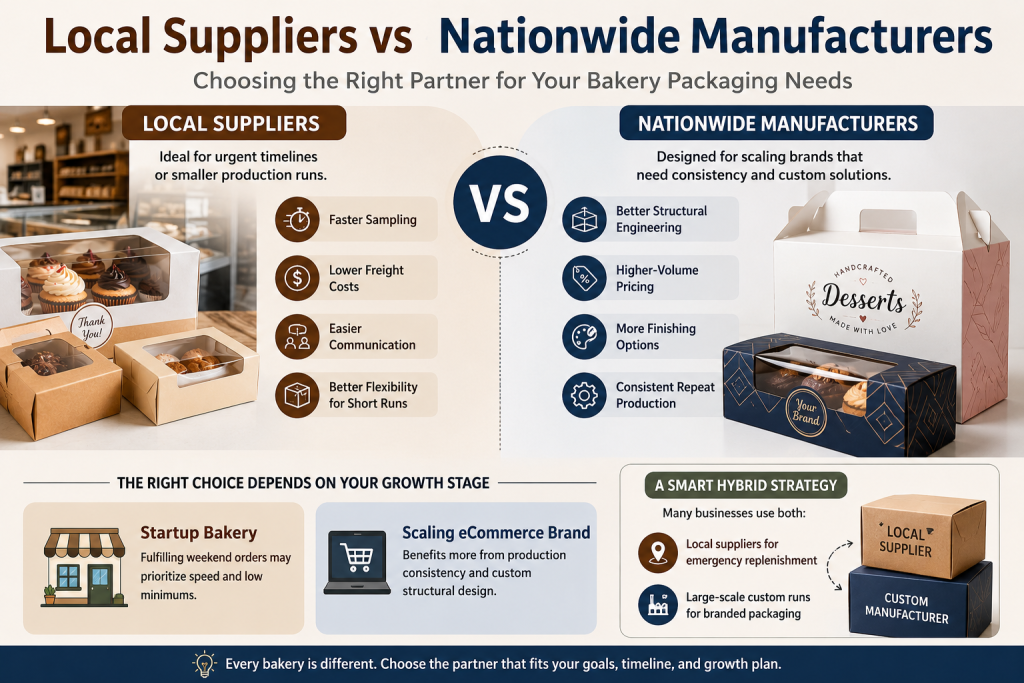
Searching for bakery boxes near me makes sense for urgent timelines or smaller production runs.
Local vendors may offer:
- Faster sampling
- Lower freight costs
- Easier communication
- Better flexibility for short runs
But nationwide manufacturers often provide:
- Better structural engineering
- Higher-volume pricing
- More finishing options
- Consistent repeat production
The right choice depends on growth stage.
A startup bakery fulfilling weekend orders may prioritize speed and low minimums. A scaling eCommerce dessert brand usually benefits more from production consistency and custom structural design.
Some businesses even split sourcing strategies:
- Local suppliers for emergency replenishment
- Large-scale custom runs for branded packaging
That hybrid approach is more common than people realize.
Printing Details Most Bakery Brands Overlook
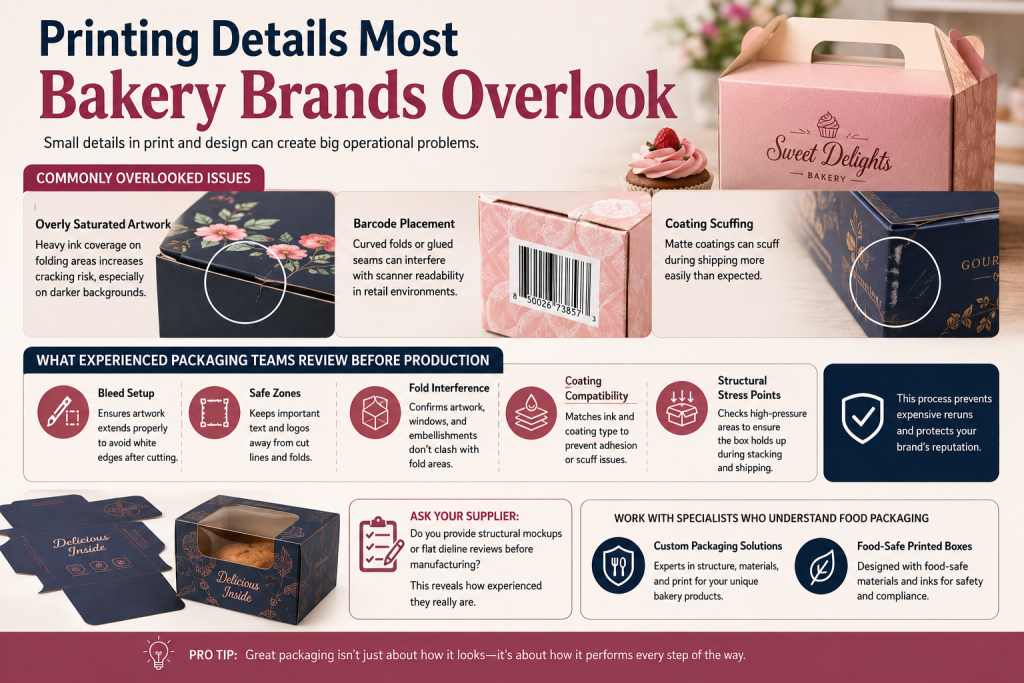
A lot of packaging issues begin before production even starts.
One example: overly saturated artwork.
Heavy ink coverage on folding areas increases cracking risk, especially on darker backgrounds. Matte coatings can also scuff during shipping more easily than expected.
Another overlooked detail is barcode placement.
Curved folds or glued seams sometimes interfere with scanner readability in retail environments.
These aren’t dramatic problems individually, but together they affect daily operations.
Experienced packaging teams usually review:
- Bleed setup
- Safe zones
- Fold interference
- Coating compatibility
- Structural stress points
before final production.
That process prevents expensive reruns later.
If you’re comparing suppliers, ask whether they provide structural mockups or flat dieline reviews before manufacturing. That often reveals how experienced they actually are.
Businesses ordering from providers specializing in custom packaging solutions or food-safe printed boxes usually receive stronger technical guidance compared to generic print vendors.
Choosing Packaging That Actually Fits Your Business
The “best” bakery box is rarely the cheapest one.
It’s the one that:
- Protects products properly
- Reduces fulfillment problems
- Maintains branding consistency
- Works within shipping realities
- Scales with your order volume
For growing bakery brands, packaging eventually becomes operational infrastructure, not just presentation.
A structurally correct box reduces complaints. Better sizing lowers freight costs. Cleaner printing improves shelf appeal. Those details compound over time.
And once businesses start shipping regionally or nationally, poor packaging decisions become expensive very quickly.
That’s why experienced suppliers focus on fit, material behavior, and production reliability before discussing decorative finishes.
Frequently Asked Questions
It really depends on volume. A small home bakery may order short runs from a nearby packaging supplier because storage space is limited. Larger dessert brands usually work directly with custom box manufacturers once they start shipping regularly. At that stage, sizing accuracy and repeat print quality matter more than simply finding the cheapest boxes available.
Not always. A lot of smaller bakeries assume stock packaging saves money, but poorly fitted boxes can create other problems — damaged frosting, extra wrapping materials, or products sliding during delivery. Custom sizing often fixes those issues early, especially for delicate baked goods that need better support while being transported.
It depends on the product. Kraft works well for rustic branding and stronger rigidity. SBS paperboard gives cleaner print quality and brighter colors. Grease-heavy products may also require coated interiors to prevent oil migration through the board.
Most failures come from incorrect board thickness or weak structural design. Stacked shipping pressure is often underestimated. A box can feel sturdy individually but still fail when multiple packages are compressed during transport.
They can be, but only if the window placement doesn’t weaken the structure. Thin film materials or oversized die-cut windows may reduce durability. For fragile desserts, reinforced panel design matters more than appearance alone.