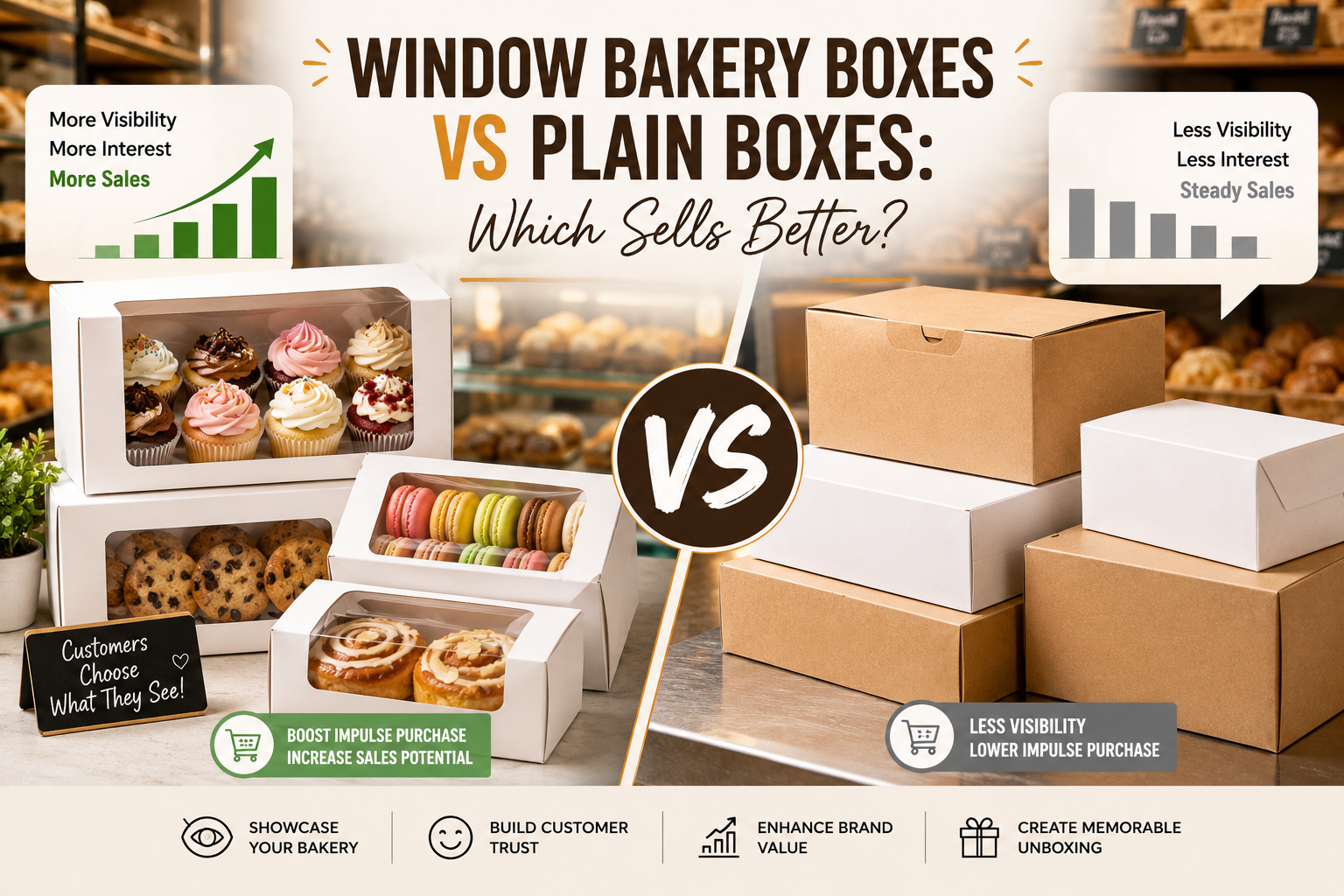
Why This Packaging Choice Actually Matters for Your Business
TL;DR
Most bakeries selling in stores do better with window boxes. Customers see what they’re getting, pick faster, and grab extra stuff without thinking. Plain boxes are cheaper, work better for shipping, protect fragile items, and let you control branding without a window breaking up the design. Pick what fits: window for in-store, plain for shipping. Think about what you sell and how you print or fulfill. Skip generic templates. Build each box around your product’s actual size, layout, and structure.
Seeing the Product Makes People Buy Faster
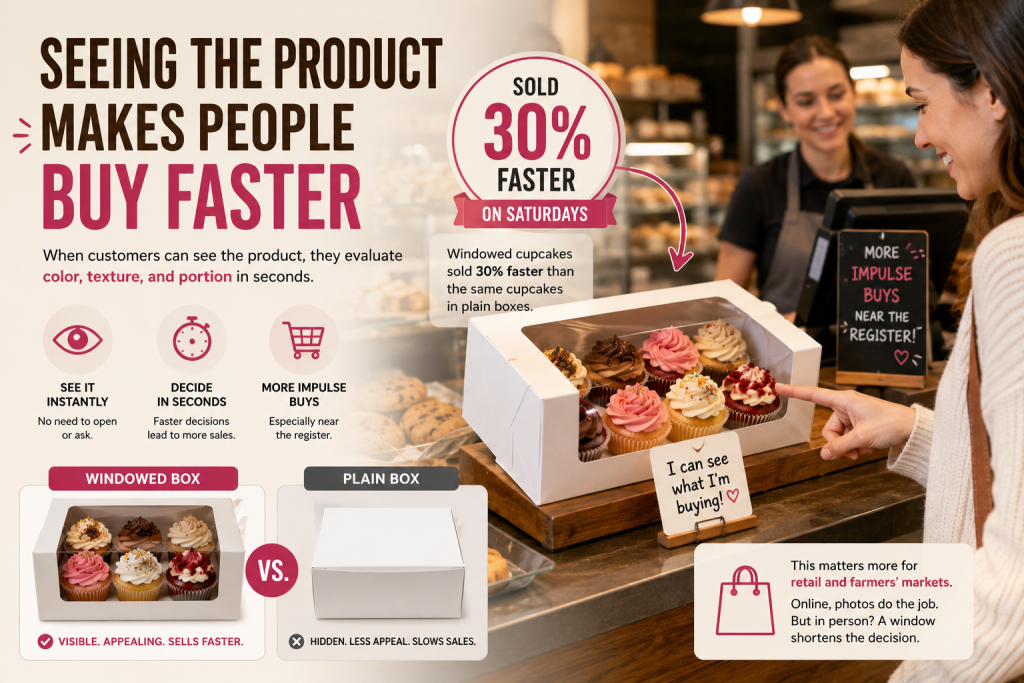
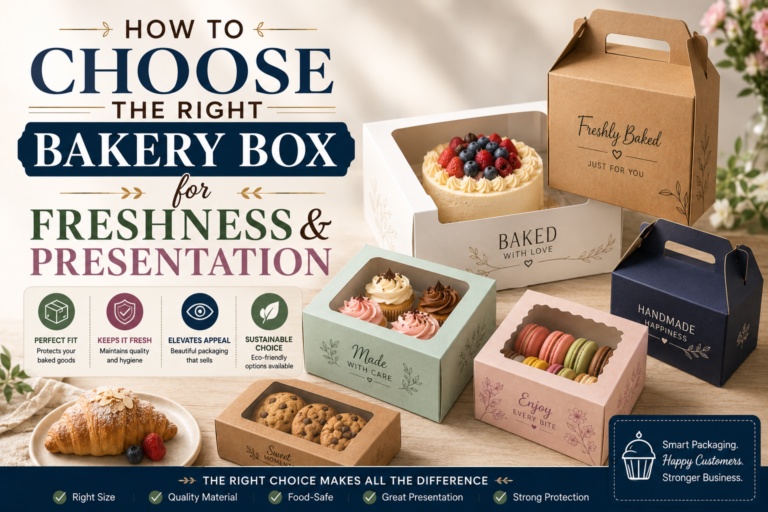
When customers can see the product, they don’t need to ask staff to open it. They evaluate color, texture, and portion in seconds. At a bakery I checked out last month, cupcakes in windowed trays sold 30% faster on Saturdays than the same cupcakes in plain boxes. Staff said more impulse buys happened near the register when people could actually see what they were grabbing.
This matters more for retail and farmers’ markets. Online, photos do the job. But in person? A window shortens the decision.
Where Plain Boxes Win
Plain boxes aren’t the “lesser” option — they’re just better for different situations:
Shipping and protection: Plain boxes with thicker board and no window hold up better against compression and humidity. If you ship low-drop, long-distance orders, plain corrugated or solid SBS (folding carton) works better.
Full branding canvas: You want full-bleed printing, embossing, or hot-foil? Plain boxes give uninterrupted surfaces. No window cutting through your art. If luxury unboxing matters, go plain.
Cost: Plain bakery boxes often cost less per unit. They’re easier to stock in multiple sizes without worrying about window placement messing with product fit.
Light-sensitive fillings: Some frostings or fillings discolor under light. A plain box keeps them dark.
Window Boxes: What They Do Right (and Where They Fall)
The good:
- • Visual merchandising wins — windows help shelf conversion, especially at café counters and retail
- • Less handling — staff and customers open fewer boxes, which means better hygiene and less damage at point of sale
- • Mixed packs sell faster — cookie samplers, variety tarts, people want to see what’s inside
The bad:
- • Printing gets tricky — windows interrupt full-bleed graphics. If you’re doing CMYK + spot colors, window placement has to avoid key art or die-lines
- • Structural weakness — cutouts reduce board rigidity. Without reinforcements (double-walls, thicker board), windows flex and crush during transit
- • Fogging and clarity — PVC or PET film can fog in humid spots or scratch. Presentation degrades over time
- • Sustainability — some buyers want compostable options, and not all clear films qualify
The Technical Details You Actually Need to Know
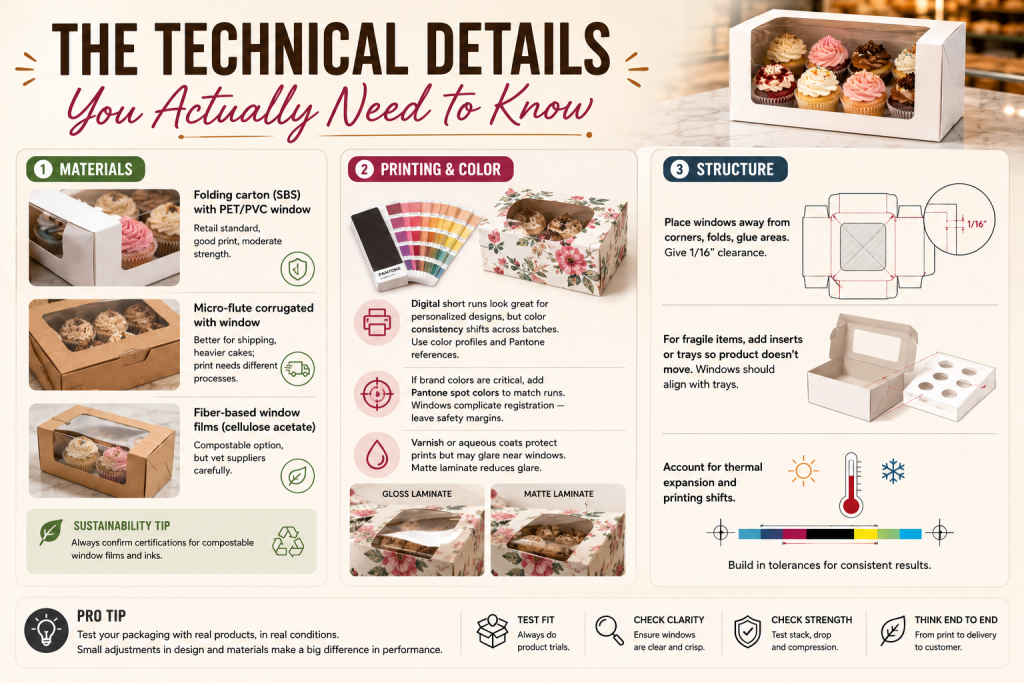
Materials
- Folding carton (SBS) with PET/PVC window: Retail standard, good print, moderate strength
- Micro-flute corrugated with window: Better for shipping, heavier cakes; print needs different processes
- Fiber-based window films (cellulose acetate): Compostable option, but vet suppliers carefully
Printing and Color
- Digital short runs look great for personalized designs, but color consistency shifts across batches. Use color profiles and Pantone references.
- If brand colors are critical, add Pantone spot colors to match runs. Windows complicate registration — leave safety margins.
- Varnish or aqueous coats protect prints but may glare near windows. Matte laminate reduces glare.
Structure
- Place windows away from corners, folds, glue areas. Give 1/16″ clearance.
- For fragile items, add inserts or trays so product doesn’t move. Windows should align with trays.
- Account for thermal expansion and printing shifts.
Real Mistakes I’ve Seen (and How to Fix Them)
Window too close to product edge: Condensation builds, product sticks to film. Fix: increase clearance, add ventilation holes.
Thin board to save cost: Boxes crush under retail stacking. Fix: test with real stacking loads, add reinforcement.
Swapping film suppliers mid-run: Clarity and gloss change, consistency drops. Fix: standardize supplier specs, test approval samples.
Over-designed windows: Fancy shapes look cool but complicate die cutting, brittle edges. Fix: rectangles or rounded rectangles work best.
Window vs Plain: Which Actually Sells Better?
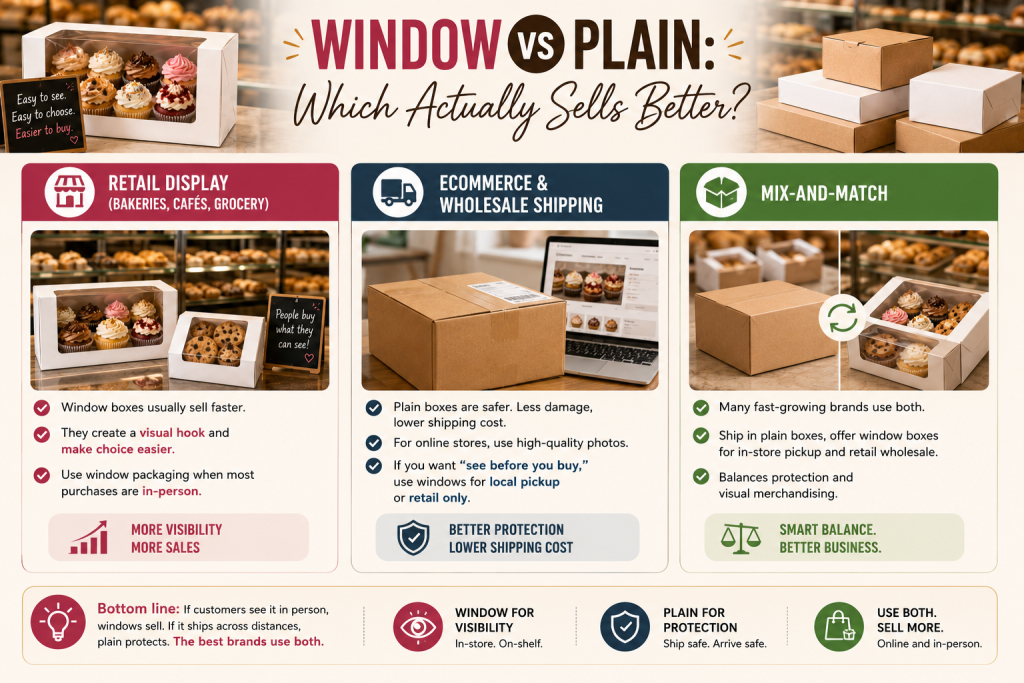
Retail display (bakeries, cafés, grocery): Window boxes usually sell faster. They create a visual hook, make choice easier. Use window packaging when most purchases are in-person.
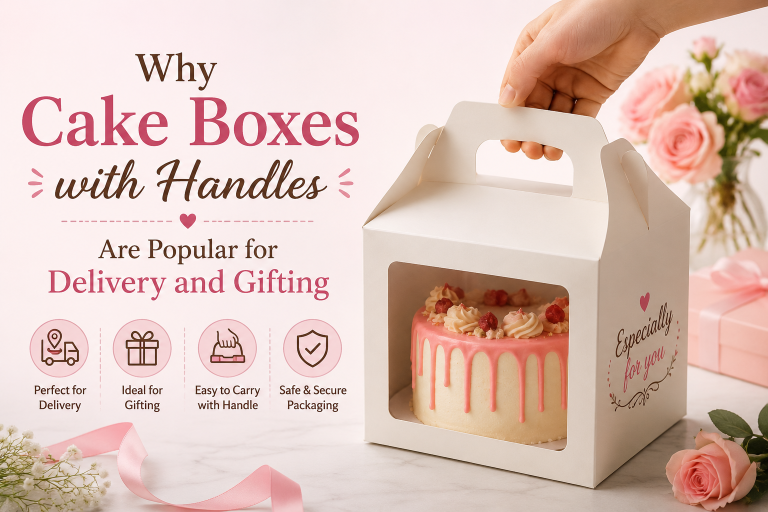
eCommerce and wholesale shipping: Plain boxes are safer. Less damage, lower shipping cost. For online stores, use high-quality photos. If you want “see before you buy,” use windows for local pickup or retail only.
Mix-and-match: Many fast-growing brands use both. Ship in plain boxes, offer window boxes for in-store pickup and retail wholesale. Balances protection and visual merchandising.
Three Quick Examples That Show How This Works
Example 1: A small bakery expanded to farmers’ markets. Switched from plain to window boxes for counter sales. Saw 20% more add-on sales (cookies, mini tarts) because customers could see variety.
Example 2: A regional eCommerce cake seller started shipping in plain micro-flute boxes with foam trays. Damaged shipments dropped 60%. For local retail partners, they supply windowed display boxes to boost retail velocity.
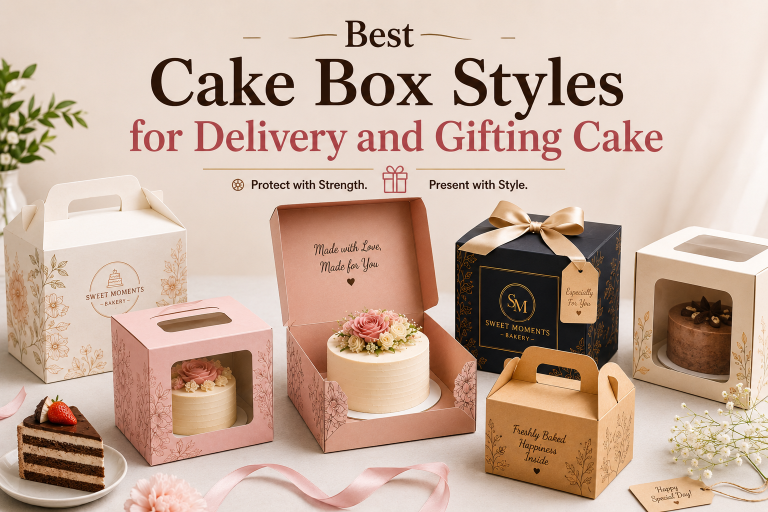
Example 3: Holiday cookie assortments use window boxes for gift appeal. For long-distance holiday subscriptions, same assortments ship in plain boxes with a printed sleeve that looks like a window.
Practical Tips Before You Order
- Match packaging to sales channel: retail = window, shipping = plain
- Prototype with your actual product. Don’t rely on supplier mockups. Test full production samples with real fillings, glazes, shipping simulations
- Ask for color proofs and dielines. Approve printed proofs and structural fit before full runs
- Consider mixed SKUs: one box style with adjustable trays for several products
- Specify film properties: PET film >0.5 mil for clarity, anti-fog grades if humidity’s an issue
- For compostable windows, work with suppliers on cellulose acetate and verify certification
Here’s My Advice If You’re Unsure
If you’re unsure which route fits your business, run a small A/B test. Same SKU, limited retail runs: window boxes vs plain boxes. Compare sell-through, check returns or damages. If you want help recommending box specs based on your dimensions and sales channels, we can point you right.
Every box is built around your product’s actual size, layout, and structure, not from pre-made templates. Custom bakery boxes from a partner like Hello Custom Boxes USA let you balance window placement, board weight, and print finishes to match how you sell.
Need More Help? Check These Out
- For dieline and prototype help: Hello Custom Boxes USA design services
- For materials and finish options: our packaging materials guide
- For shipping frequently: our shipping-safe bakery packaging page