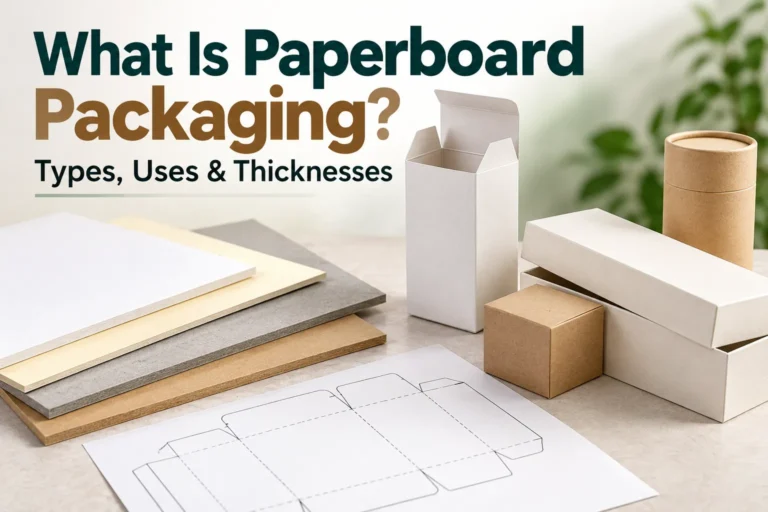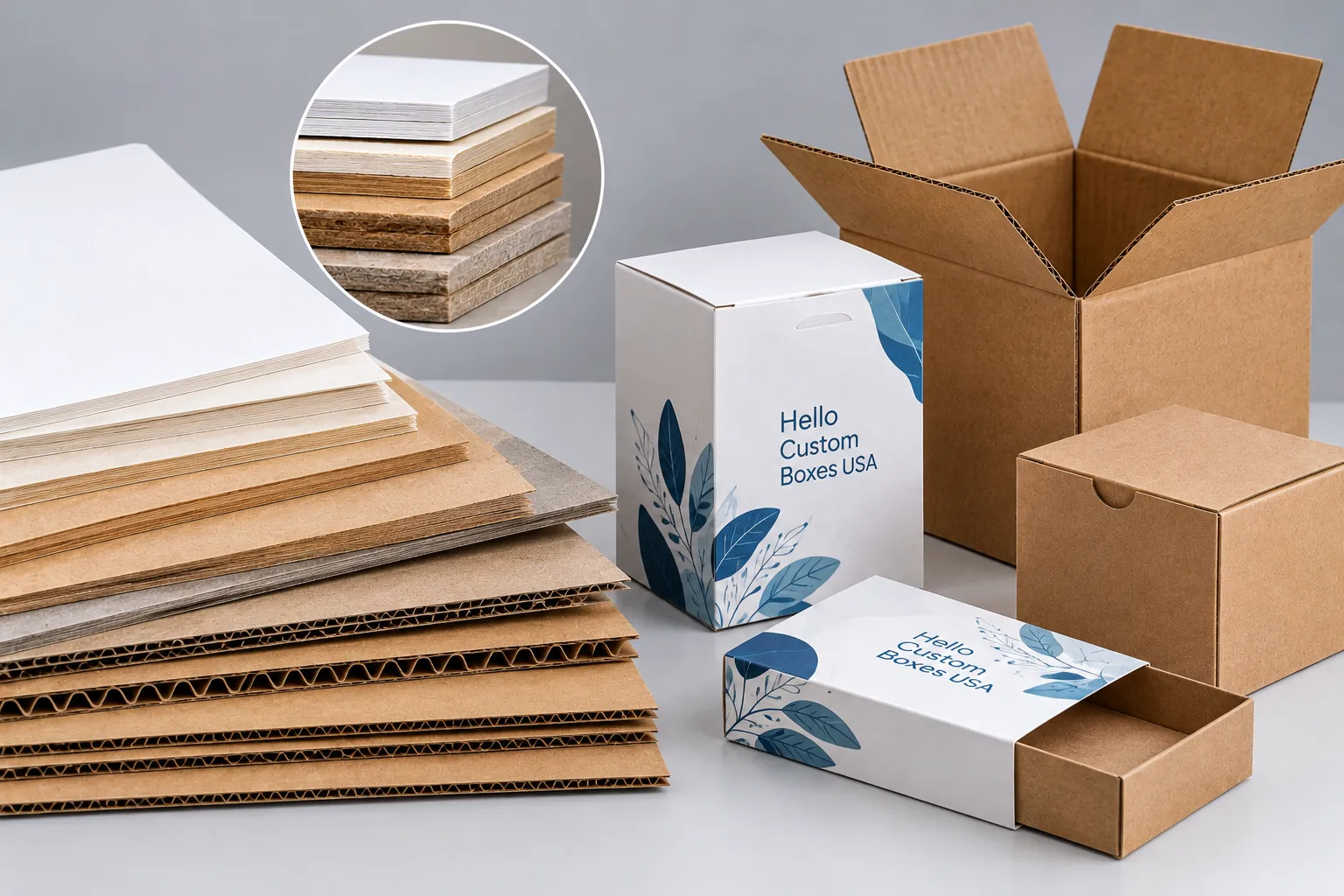
A supplier quotes 300 GSM paperboard for your product boxes. Another recommends 350 GSM. The second option sounds stronger, but is it worth paying more for?
That depends on the board itself.
Two sheets can have different weights yet perform similarly once they’re folded into boxes. They may also have the same GSM and feel noticeably different. Paper fibers, density, coatings, and thickness all affect the result.
Understanding GSM in packaging helps you make sense of these specifications before approving a material, especially when comparing folding cartons, printed sleeves, and cardboard packaging.
What Is GSM, and What Does It Actually Measure?
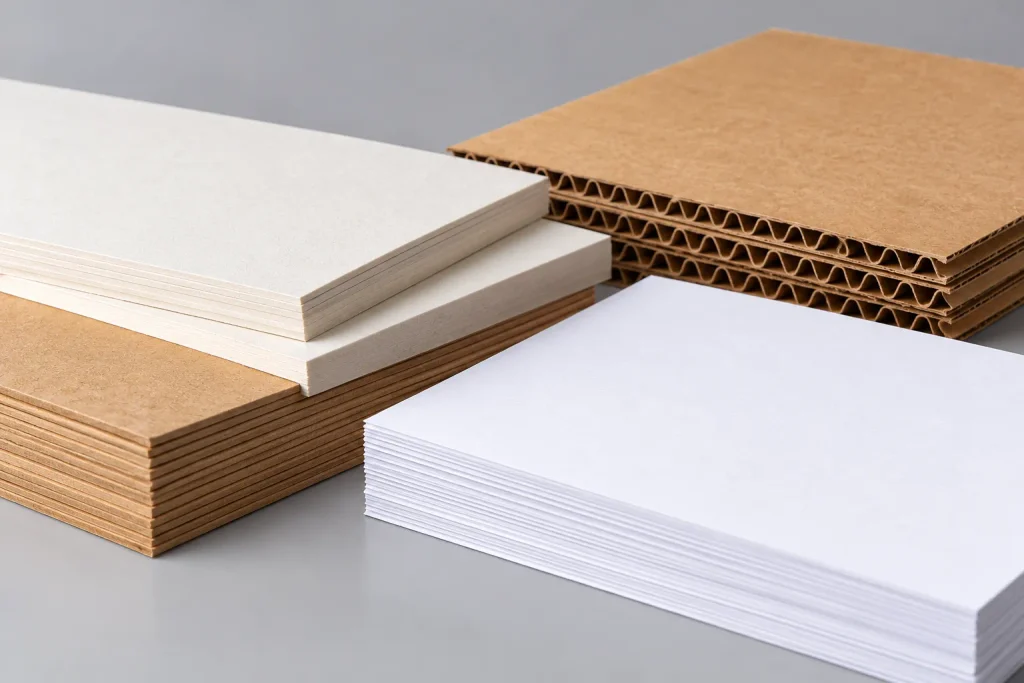
GSM stands for grams per square meter. It measures the weight of paper or cardboard over an area of one square meter.
A 200 GSM sheet weighs 200 grams per square meter. A 350 GSM board weighs 350 grams over the same area.
It doesn’t matter whether the material is supplied as a large sheet or cut into smaller pieces. The GSM rating stays the same because it’s based on weight relative to area.
This makes GSM useful for comparing paper grades, but it doesn’t tell you the material’s exact thickness, bending stiffness, or finished box strength.
In the United States, paper is also specified in pounds, such as 20 lb bond or 100 lb cover. Those ratings follow a different system, which we’ll cover below.
How Is Paper GSM Calculated?
The calculation is straightforward:
GSM = Paper weight in grams ÷ Area in square meters
Suppose you cut a paper sample measuring 20 × 25 centimeters. Its area is 0.05 square meters.
If that sample weighs 15 grams:
15 ÷ 0.05 = 300 GSM
Paper mills use controlled sampling and weighing procedures to determine basis weight accurately. Temperature, humidity, and sample conditioning matter because paper absorbs moisture.
For packaging buyers, you normally won’t need to calculate GSM yourself. The value should appear in the supplier’s material specification.
Paper GSM Chart: Common Weights and Uses
The following ranges provide a general comparison between everyday printing paper and heavier packaging materials.
These are approximate application ranges, not universal specifications.
A 300 GSM board designed for folding cartons may have different stiffness and printing characteristics from another 300 GSM material intended for graphic printing.
That difference matters more than simply moving up or down the chart.
Does Higher GSM Mean Thicker Cardboard?
Not necessarily.
GSM measures weight. Caliper measures thickness.
Caliper is usually expressed in microns (µm), millimeters, or points (pt). One point equals 0.001 inch.
Imagine two paperboards that both weigh 300 GSM. One has tightly compressed fibers, while the other has a bulkier structure.
The bulkier board may be thicker even though both have identical basis weights.
This is where paperboard bulk becomes relevant. Bulk describes the relationship between material volume and mass. A higher-bulk board generally provides greater thickness at the same GSM.
Coatings can also affect the comparison. A coated sheet may contain additional coating weight without a proportional increase in thickness.
Can GSM Be Converted to Microns?
Not accurately from GSM alone.
You would also need the material’s density or bulk. A universal GSM-to-thickness conversion chart can therefore give misleading results when comparing different paperboard grades.
When thickness matters, ask the supplier for the actual caliper rather than estimating it from GSM.
200 vs. 300 vs. 350 GSM: What’s the Difference?
These three weights are frequently discussed in printing and retail packaging.
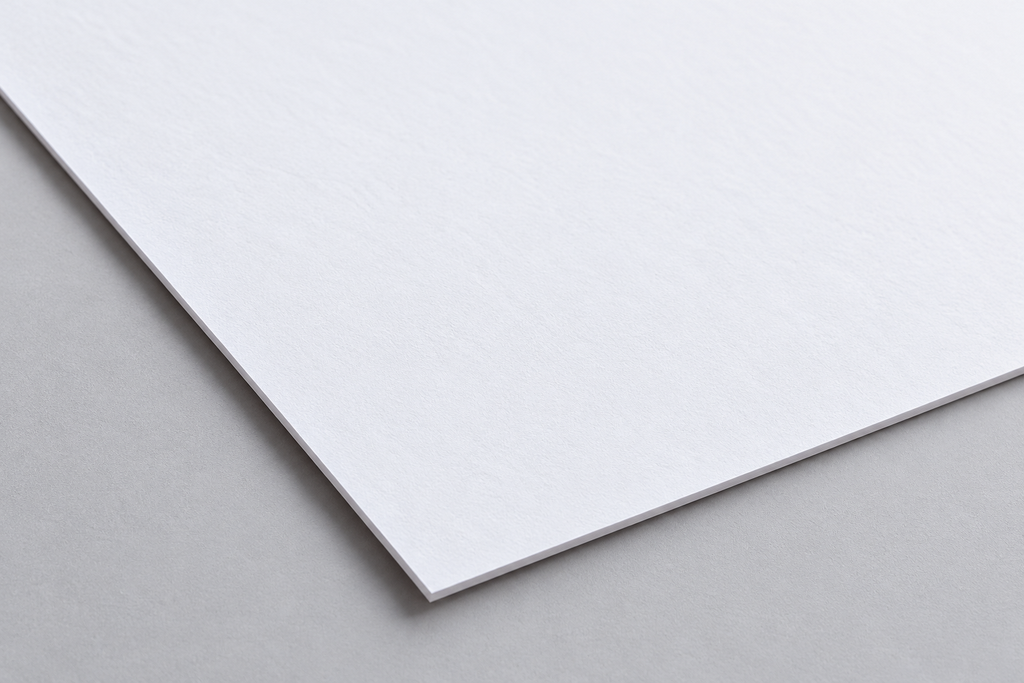
200 GSM
Heavy paper or lightweight cardstock. Commonly used for printed covers, tags, promotional cards, and certain packaging sleeves. It may not provide enough stiffness for every freestanding carton.
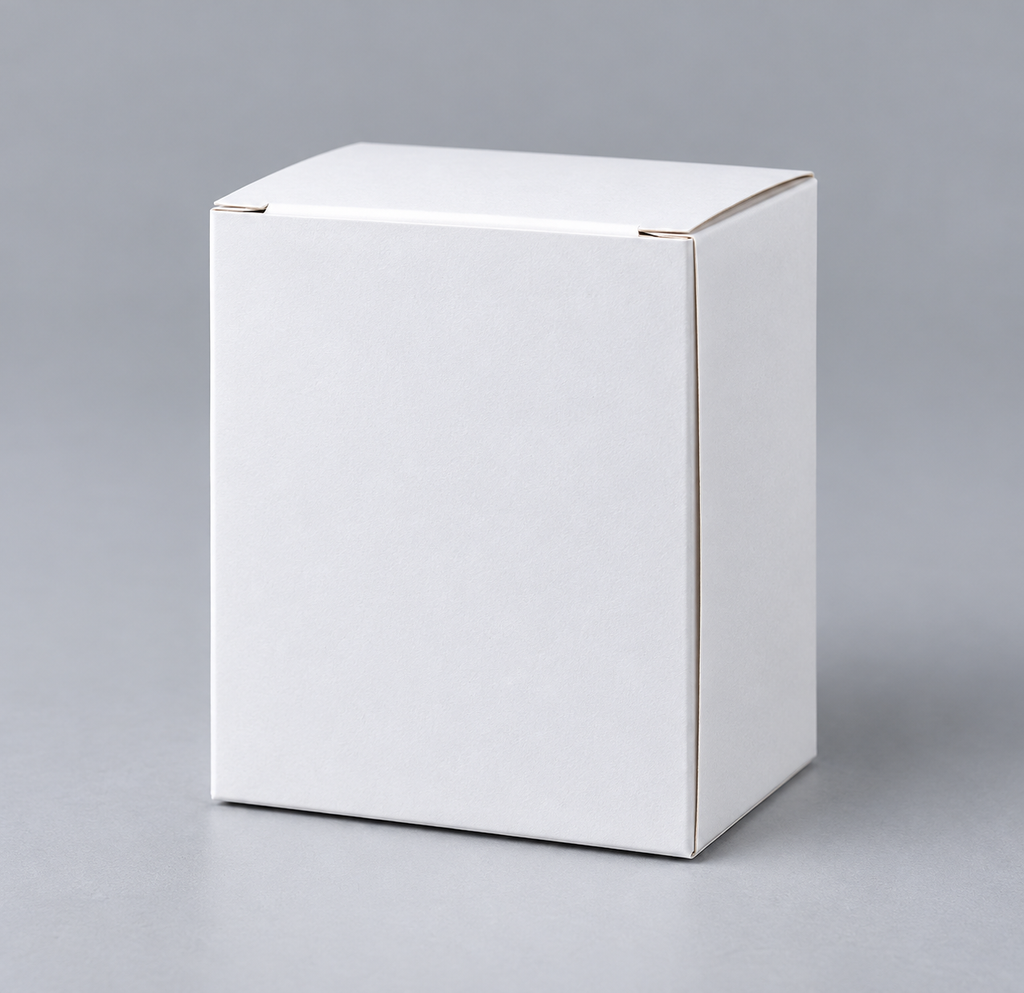
300 GSM
A common option to evaluate for lightweight folding cartons. Its suitability depends on the board grade, panel dimensions, and product weight.
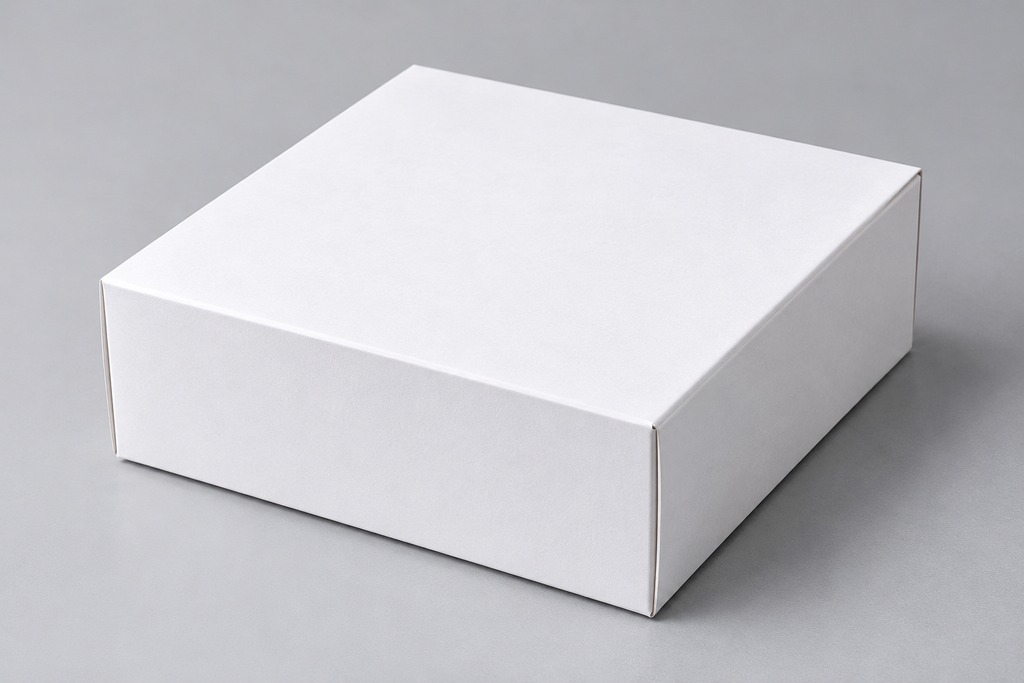
350 GSM
Heavier paperboard that may provide a more substantial feel within the same material family. Often considered for retail cartons where stiffness and presentation are important.
Moving from 300 to 350 GSM increases basis weight by about 16.7%. It does not guarantee a 16.7% increase in thickness or strength.
A small carton made from a suitable 300 GSM board could perform better than a larger carton made from 350 GSM material. The box’s proportions and construction influence the outcome.
Why Paperboard Type Matters as Much as GSM
Not all cardboard is manufactured in the same way.
Three material families commonly encountered in folding carton specifications are:
A 300 GSM SBS sheet and a 300 GSM FBB sheet don’t necessarily have identical calipers or bending stiffness.
Coated and uncoated surfaces introduce another difference. Coatings influence smoothness, ink holdout, and printed appearance. Uncoated materials generally have a different surface texture and ink interaction.
For custom printed packaging, specify the board grade and finish alongside GSM, not just the weight.
What GSM Is Best for Packaging Boxes?
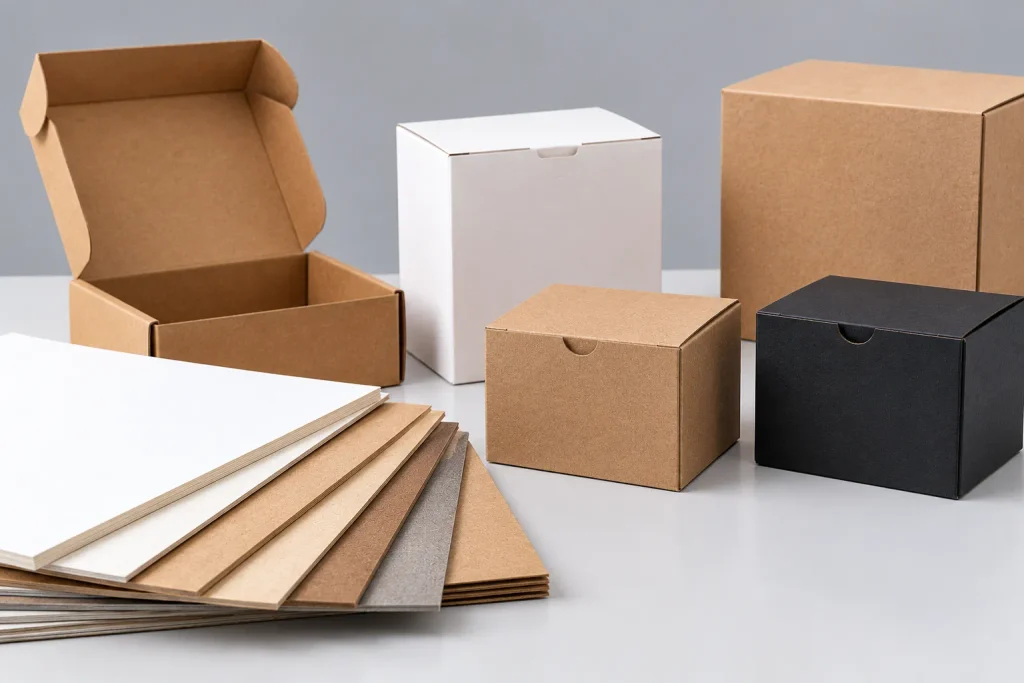
There isn’t one ideal GSM for every box.
A small lip balm carton has short panels and carries little weight. A large gift carton made from the same board may flex more because its panels span a greater distance.
For many folding carton applications, paperboard around 250–400 GSM is a reasonable range to investigate. It isn’t a universal recommendation.
Cosmetic packaging, lightweight retail cartons, and printed sleeves may all use different grades within that range.
Rigid boxes are different. Their thick structural board is often specified by caliper and construction, while the decorative wrapping paper has its own GSM.
Corrugated shipping boxes require another approach entirely.
How Does GSM Work in Corrugated Packaging?
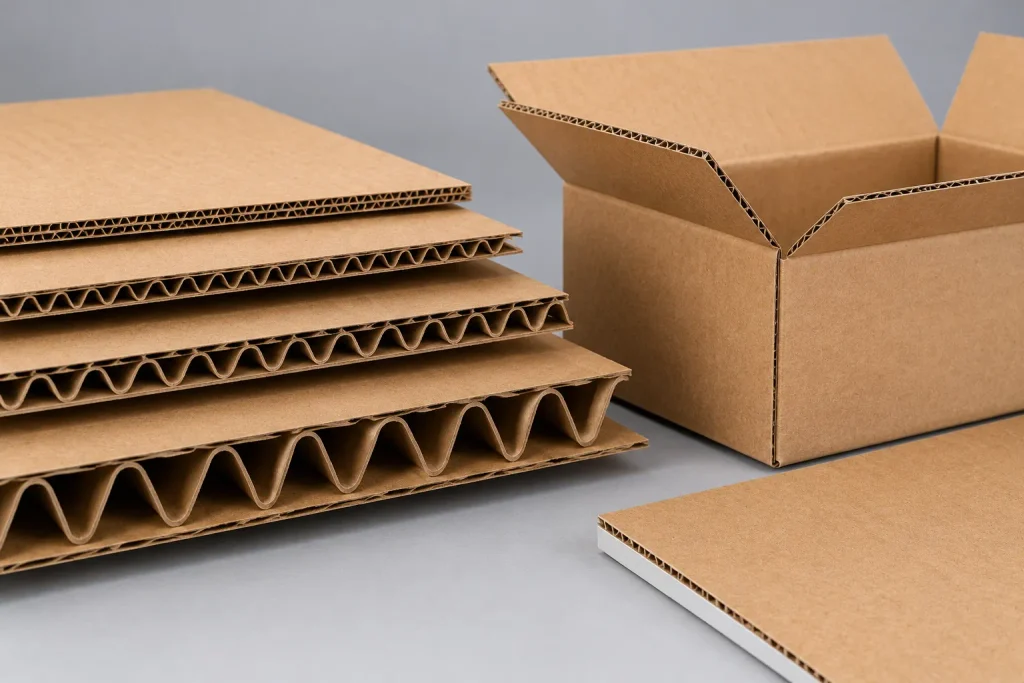
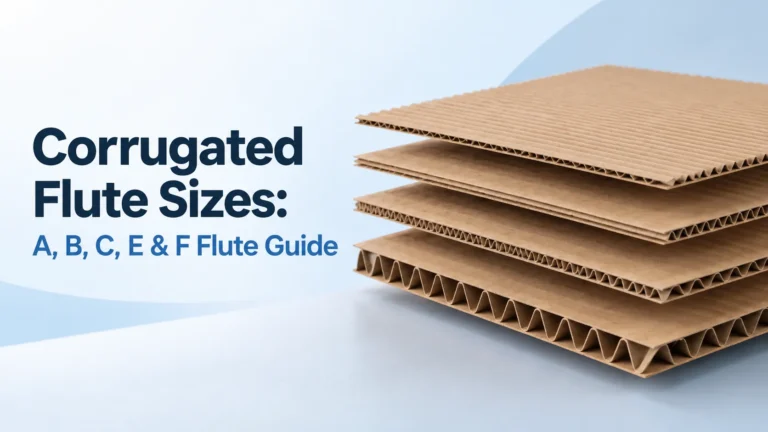
Corrugated cardboard contains linerboard and a fluted paper medium. Each paper component can have its own basis weight.
The finished board’s performance depends on those materials, but also on the flute profile, number of walls, bonding, and box design.
For example, E-flute is commonly used where a relatively thin corrugated profile is desirable. B- and C-flute are frequently used for protective shipping applications.
When selecting corrugated packaging, GSM alone won’t establish the finished box’s performance.
Other specifications, including the Edge Crush Test (ECT), may be needed for stacking and shipping requirements.
GSM and U.S. Paper Weight: What’s the Difference?
American paper suppliers frequently use pound ratings rather than GSM.
A standard 20 lb bond paper is approximately 75 GSM. However, 20 lb bond and 20 lb cover aren’t equivalent materials.
The reason is that U.S. basis-weight ratings use different reference sheet dimensions for different paper categories.
Here are approximate examples:
These conversions depend on the paper category. Always identify whether a pound rating refers to bond, cover, text, or another stock type.
For buyers comparing U.S. and international quotations, GSM provides a consistent basis-weight measurement.
How GSM Affects Printing, Folding, and Packaging Cost
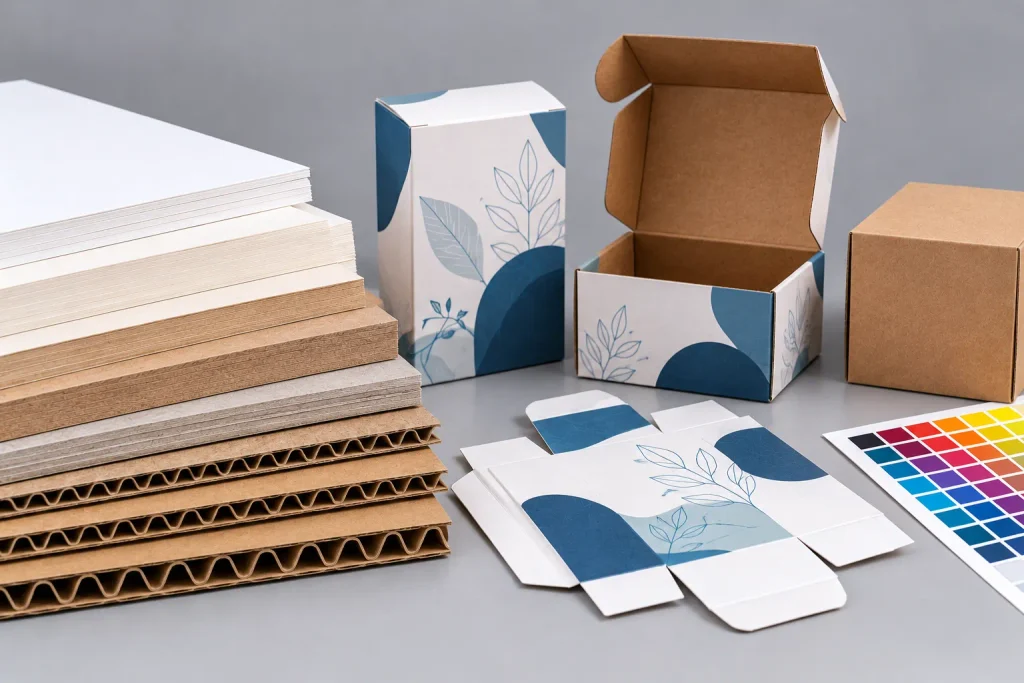
A heavier paperboard can change how a package feels, but GSM alone doesn’t determine print quality.
A smooth coated board may reproduce fine graphics differently from a rougher uncoated sheet. Ink, printing method, and surface treatment influence the finished appearance.
Folding is another consideration. Stiffer paperboard may need appropriate scoring or creasing, particularly along tight folds. Poorly prepared creases can lead to cracking in the printed surface.
Material weight can also affect cost. Using more paperboard mass for the same sheet area may increase material consumption, although actual prices depend on grade, sourcing, finishing, and production volume.
The better choice isn’t always the heavier sheet. It’s the one that meets the packaging requirements without unnecessary material.
What Should You Check Before Ordering?
Suppose you’re comparing 300 GSM coated SBS with 350 GSM uncoated recycled paperboard.
The higher number doesn’t tell you which option is better for your box.
Ask for the material grade, caliper, surface finish, and intended application. Then examine samples using the actual box dimensions.
Put the product inside. Check whether the panels bow, whether the folds close cleanly, and whether the package maintains its shape.
If the box will travel through parcel shipping, evaluate its protective construction under representative handling conditions.
A finished sample often reveals differences that aren’t obvious from a material specification sheet.
Frequently Asked Questions
Choosing Paperboard That Actually Works
GSM is useful when comparing paper and cardboard weights, but it’s only one part of a packaging specification.
A material that looks suitable on paper may behave differently once it’s printed, creased, and folded into a box. Check its board grade, thickness, stiffness, and intended application before making the final choice.
For custom packaging, a properly constructed sample is often more useful than choosing the highest GSM available.