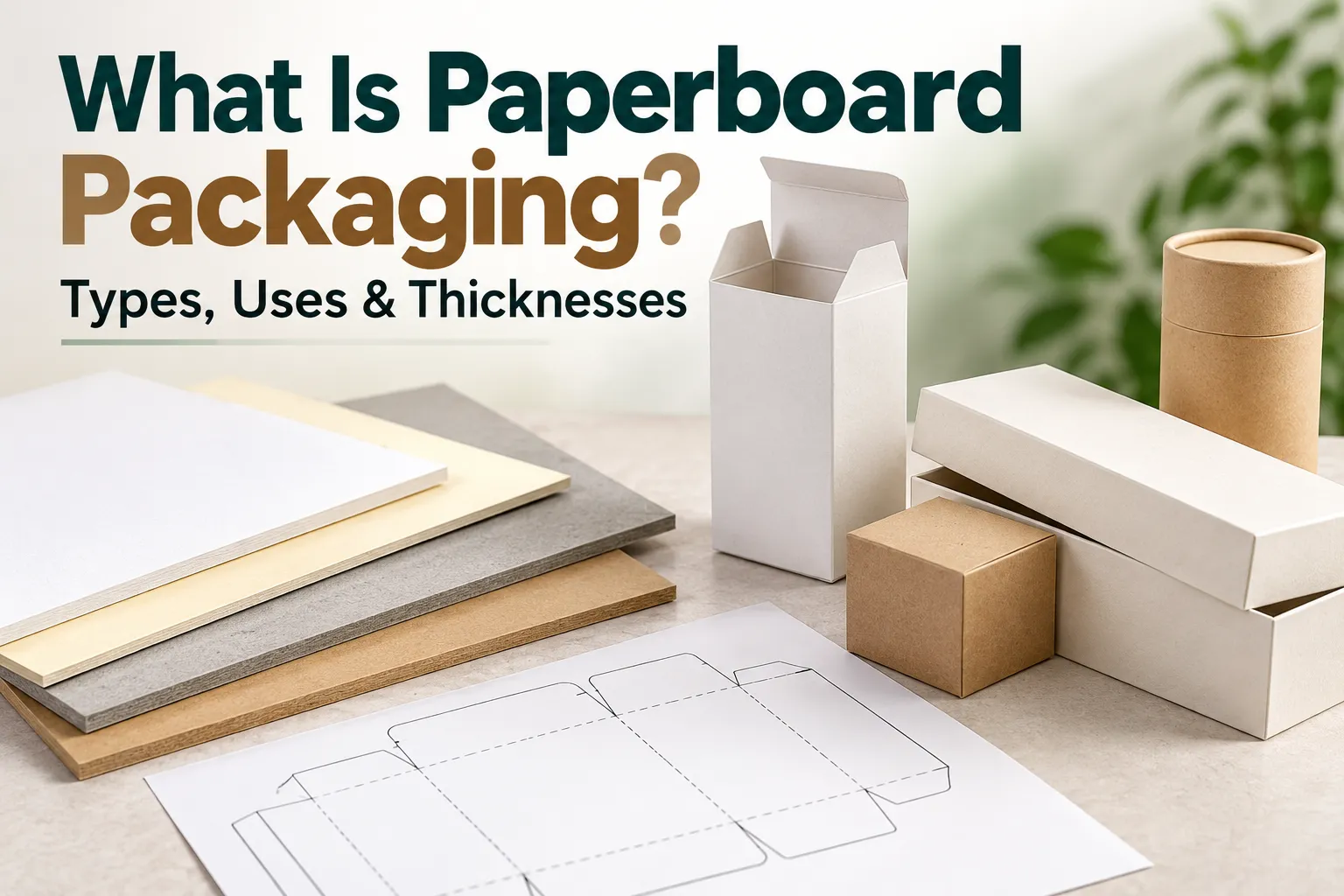
A toothpaste carton, a perfume gift box, and a cardboard tube may look nothing alike, yet all three can be made using paperboard. The difference lies in how the material is manufactured, how thick it is, and what kind of packaging structure it forms.
Paperboard packaging refers to boxes, cartons, sleeves, tubes, and other packaging components made from relatively thick, stiff paper-based materials. Some grades are designed for detailed retail printing, while others provide the bulk needed for rigid boxes or the stiffness required for folding cartons.
Choosing between them isn’t simply a matter of picking the thickest board. A lightweight cosmetic carton, for example, needs different material properties from a rigid gift box or a package intended to support a heavier product.
What Is Paperboard Packaging?
Paperboard is a thick, relatively stiff sheet material made from virgin paper fibers, recycled fibers, or a combination of both. Depending on the grade, it may have a single-layer or multilayer construction.
It’s widely used for retail packaging because it can be printed, cut, creased, folded, or combined with other materials to create different packaging structures.
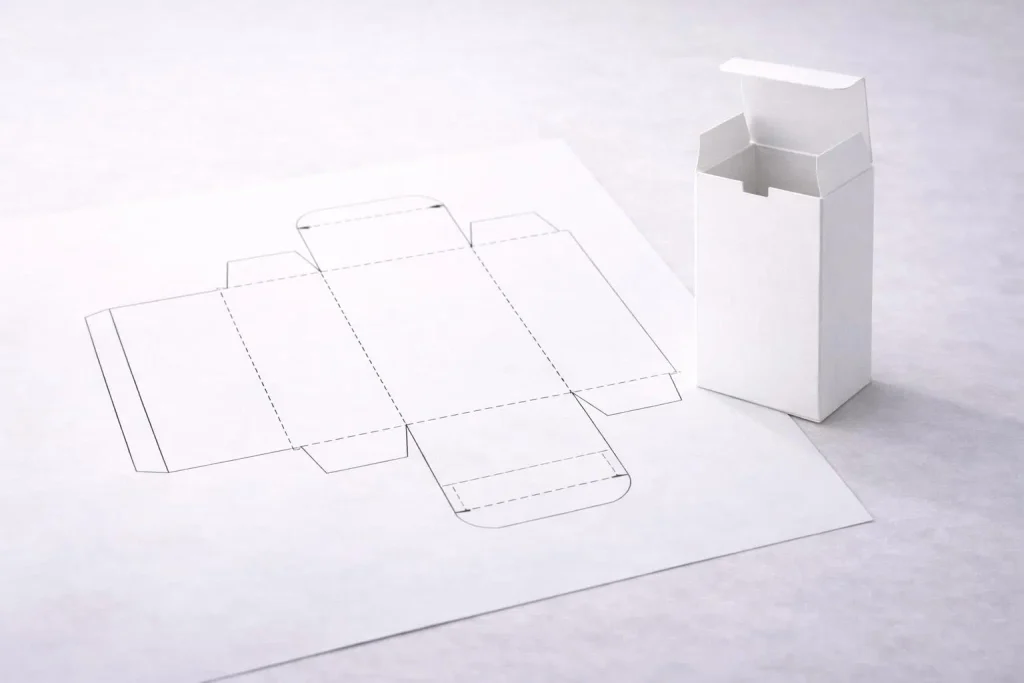
A typical paperboard carton starts as a flat sheet. Once printed and die-cut, it can be folded into a box with tuck flaps, a locking base, or another closure.
Not all paperboard packaging is foldable, though. Thick greyboard can form the walls of rigid setup boxes, while multiple paper layers can be wound together to produce tubes and cores.
This variety makes paperboard useful for everything from small product cartons to premium presentation packaging.
How Paperboard Becomes a Packaging Box
For folding cartons, production begins with a dieline showing the box panels, cut lines, creases, closure flaps, and glue areas.
Artwork is placed on the dieline before printing. The board is then die-cut to shape and creased along the intended fold lines. Some cartons are glued along a side seam and delivered flat, ready for filling.
Creasing is particularly important. If the score is unsuitable for the board’s thickness or grain direction, the material may resist folding or develop surface cracks.
Rigid boxes follow a different process. Thick board pieces are cut and assembled into a fixed structure, often covered with printed or decorative paper.
The manufacturing method therefore depends on the packaging format, not just the paperboard grade.
Types of Paperboard Used in Packaging
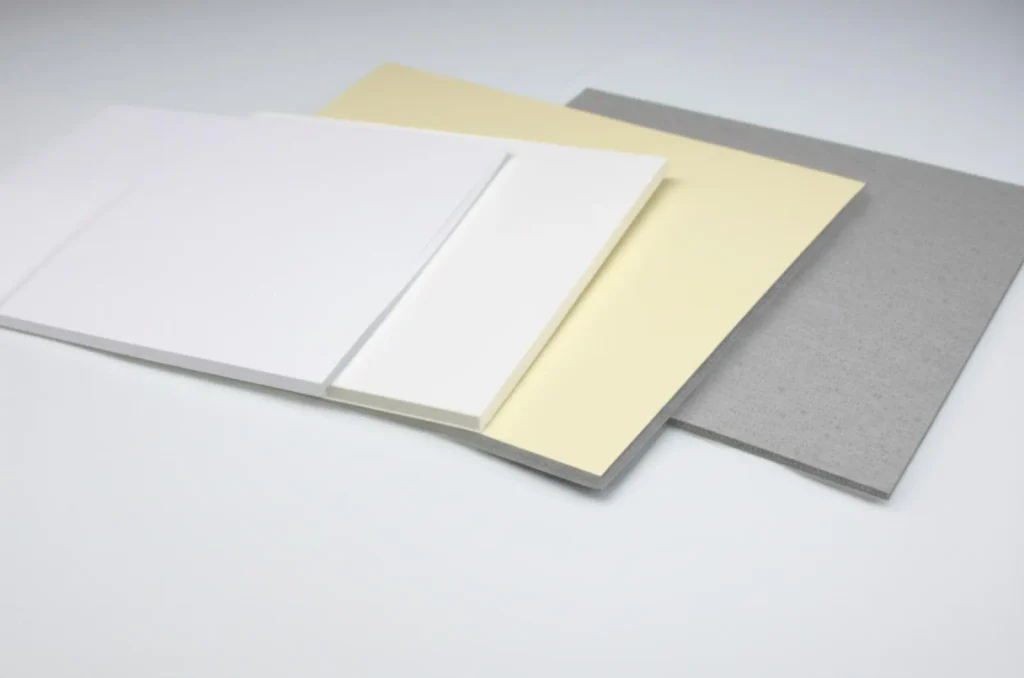
Different paperboard grades offer different combinations of printability, stiffness, surface appearance, and fiber composition.
The following comparison covers common grades and terms used in packaging specifications.
Some terms overlap across suppliers and regional markets. For example, CRB and WLC can describe closely related recycled-board products rather than entirely separate material families.
SBS and FBB for Printed Folding Cartons
SBS is commonly selected when a clean white surface and detailed printing are important. It’s often used for cosmetics, personal care products, and premium retail packaging.
FBB generally uses a multilayer structure with a bulkier middle layer. This can provide useful stiffness at a relatively low material weight, making it suitable for a variety of folding cartons.
Neither grade is automatically the better option. The choice depends on the carton dimensions, printing requirements, product weight, and available specifications.
Recycled Paperboard: CRB and WLC
Recycled paperboard packaging uses recovered paper fibers. CRB and WLC are common terms for grades that can offer printable surfaces while incorporating recycled material.
Their appearance varies. Some have white-coated fronts and gray backs, while others use different surface treatments.
These boards can work for sleeves, partitions, and retail cartons. For direct food contact or other sensitive applications, the selected grade must meet applicable requirements.
Unbleached Kraft Grades: SUS and CUK
SUS and CUK are associated with unbleached fiber-based boards, although their exact construction and surface treatment differ.
These materials may be considered where stiffness, a kraft-based structure, or particular printing properties are required.
The natural brown appearance of a board doesn’t establish whether it’s recycled or environmentally preferable. Fiber sourcing, coatings, manufacturing, and disposal conditions all matter.
Folding Cartons, Rigid Boxes, and Paperboard Tubes
Paperboard packaging isn’t limited to one box construction. The material can be converted into several formats, each serving a different purpose.
Folding Paperboard Cartons
Folding cartons are made from board that can be creased and folded into shape.
Straight tuck-end and reverse tuck-end cartons are common for cosmetics, soaps, stationery, and small retail products. Auto-bottom cartons use a pre-glued base that opens into position during assembly.
These structures can often be stored and shipped flat before filling, helping reduce the space required for empty packaging.
Rigid Paperboard Boxes
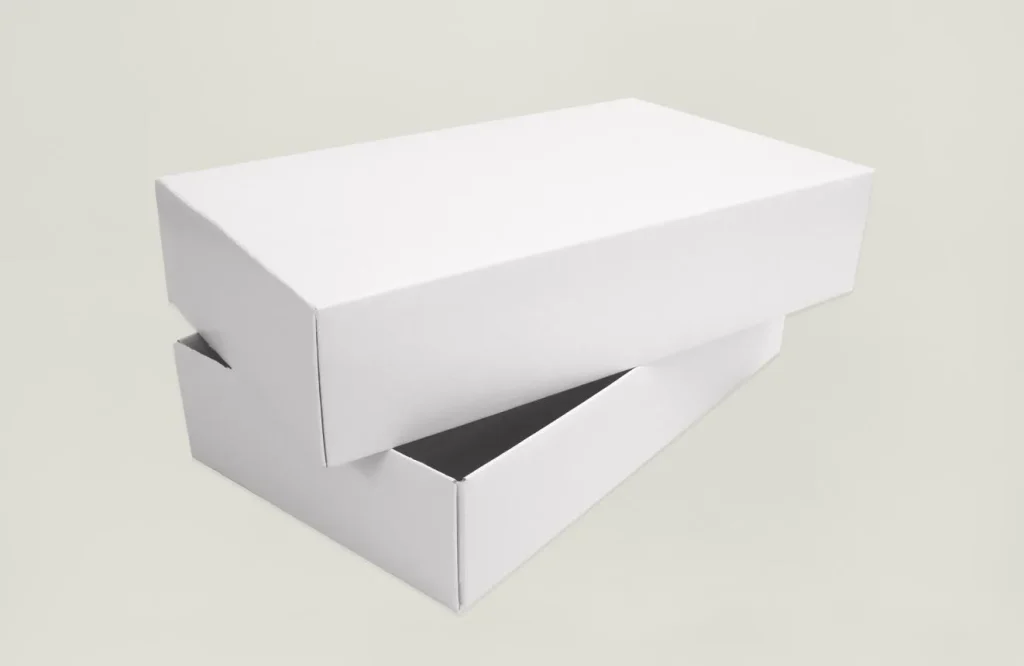
Rigid setup boxes use thicker, relatively non-bending board, often called greyboard or chipboard.
Unlike ordinary folding cartons, conventional rigid setup boxes retain their assembled shape. They’re commonly wrapped with decorative or printed paper.
This construction is frequently used for premium gift boxes, presentation packaging, and products that benefit from a more substantial box.
Rigid board is generally specified by thickness and construction rather than selected using the same assumptions as lightweight folding-carton stock.
Paperboard Tubes and Cores
Paperboard tubes are commonly manufactured by winding multiple paper layers around a forming mandrel.
Depending on their design, tubes can be used for product packaging, mailing containers, and industrial cores.
A retail tube may include a printed outer wrap and fitted end closures. Its wall thickness and construction differ from those of a conventional folding carton.
Sleeves, Windows, and Inserts
Paperboard sleeves fit around products or existing containers, adding printed information without necessarily enclosing every side.
Window cartons use a die-cut opening to reveal the product. Inserts and partitions help separate items or support their position inside the package.
These components can be used alongside folding or rigid boxes, depending on the product.
Where Paperboard Packaging Works Best
Paperboard is especially useful when packaging needs to combine product presentation, printed information, and a relatively lightweight structure.
Cosmetic brands use folding cartons for skincare, makeup, and personal care products. Food brands use suitable paperboard grades for cereal, tea, confectionery, and other packaged goods. Small electronics accessories, stationery, soaps, and household products are also common applications.
Rigid paperboard boxes are more appropriate for certain premium presentations where the box itself is part of the product experience.
However, paperboard has limitations.
Moisture exposure can reduce stiffness in many grades, while large unsupported panels may bend under load. Conventional folding cartons also provide limited cushioning for fragile products during parcel shipping.
A small skincare carton may perform well as retail packaging, but a heavy glass product shipped directly to a customer could require an insert and a protective corrugated outer box.
Material selection should reflect how the package will actually be handled, not just how it looks on a shelf.
How Thick Is Paperboard Packaging?
Paperboard thickness is commonly described using caliper, often expressed in points (pt) in the United States.
One point equals 0.001 inch. A 20 pt board therefore has a nominal thickness of 0.020 inches.
These figures describe physical thickness, not guaranteed strength or suitability for a particular product.
For example, a compact 18 pt folding carton may hold its shape well, while a much larger carton made from the same material could have panels that flex noticeably.
Suppliers may also specify GSM (grams per square meter). GSM measures material weight per unit area, not thickness.
Two paperboards with the same GSM can have different calipers because their density, fiber composition, and construction differ.
When selecting paperboard for packaging, stiffness, panel size, grain direction, and carton structure should be considered alongside thickness.
Paperboard vs. Corrugated Cardboard
In everyday U.S. English, cardboard can refer to several paper-based packaging materials.
In technical packaging discussions, it’s useful to distinguish solid paperboard from corrugated board.
Corrugated board is often selected for shipping because its fluted structure provides different cushioning and structural properties.
A product may use both materials: a printed paperboard carton for retail presentation and corrugated packaging for transportation.
Printing and Recycling Considerations
Paperboard packaging design can include detailed graphics, brand colors, product information, and decorative finishes.
Coated paperboard generally offers a smoother surface for printing, while uncoated grades have different textures and ink-absorption characteristics.
Depending on the material and production method, options may include CMYK printing, spot colors, embossing, debossing, foil stamping, and matte or gloss finishes.
Finishes should be evaluated alongside the carton structure. Heavy coatings and unsuitable crease preparation can contribute to cracking around folds.
Many paperboard cartons are recyclable where appropriate collection and processing facilities exist. However, laminations, attached components, coatings, and contamination can affect local acceptance.
Recycled content and recyclability are separate characteristics. A carton made from recovered fibers isn’t automatically recyclable in every recycling system.
Specifying Paperboard for a Custom Box
Suppose you’re ordering a printed carton for a small cosmetic product.
The supplier needs the product dimensions, but box size alone won’t determine the right material.
A useful specification should identify the internal dimensions, product weight, carton style, board grade, caliper or GSM, printing requirements, and any inserts or special closures.
How the product will be packed also matters.
A carton assembled by hand may use a different closure from one filled on an automated line. Packaging displayed on a retail shelf may have different performance requirements from a product shipped directly to customers.
For sizing, the custom box dimensions guide explains why internal measurements and product clearance matter.
Before approving a production order, review a physical sample made with the proposed board and construction. Check the fit, panel stiffness, closure operation, and how the package supports its contents.
A finished sample often reveals issues that aren’t obvious from a material specification or flat dieline.
Frequently Asked Questions
A good paperboard package starts with understanding the product and the conditions it will encounter. The right combination of board grade, thickness, and structure can provide an effective retail carton without unnecessary material or cost.