A client once approved a box that looked clean on screen. The logo was there, centered, sharp. But when the physical packaging arrived, something felt missing. The print was fine, colors were accurate, still, it didn’t feel premium in hand.
We tested the same design again, this time with a slight emboss.
Same artwork. Same box. Completely different reaction.
That’s usually where the conversation around embossing vs debossing packaging starts. Not from design theory, but from how a box actually feels when someone picks it up.
TL;DR — Embossing vs Debossing Packaging
- Embossing vs debossing packaging comes down to raised vs pressed surface effects
- Embossing lifts the design outward, debossing pushes it inward
- Both improve brand perception without heavy printing
- Works best on rigid, cardboard, and premium kraft materials
- Small structural changes can dramatically change how packaging feels
- Choosing the right technique depends on product positioning and material
What Is Embossing vs Debossing Packaging?
At its simplest, this is about how your design interacts with the surface of the box.
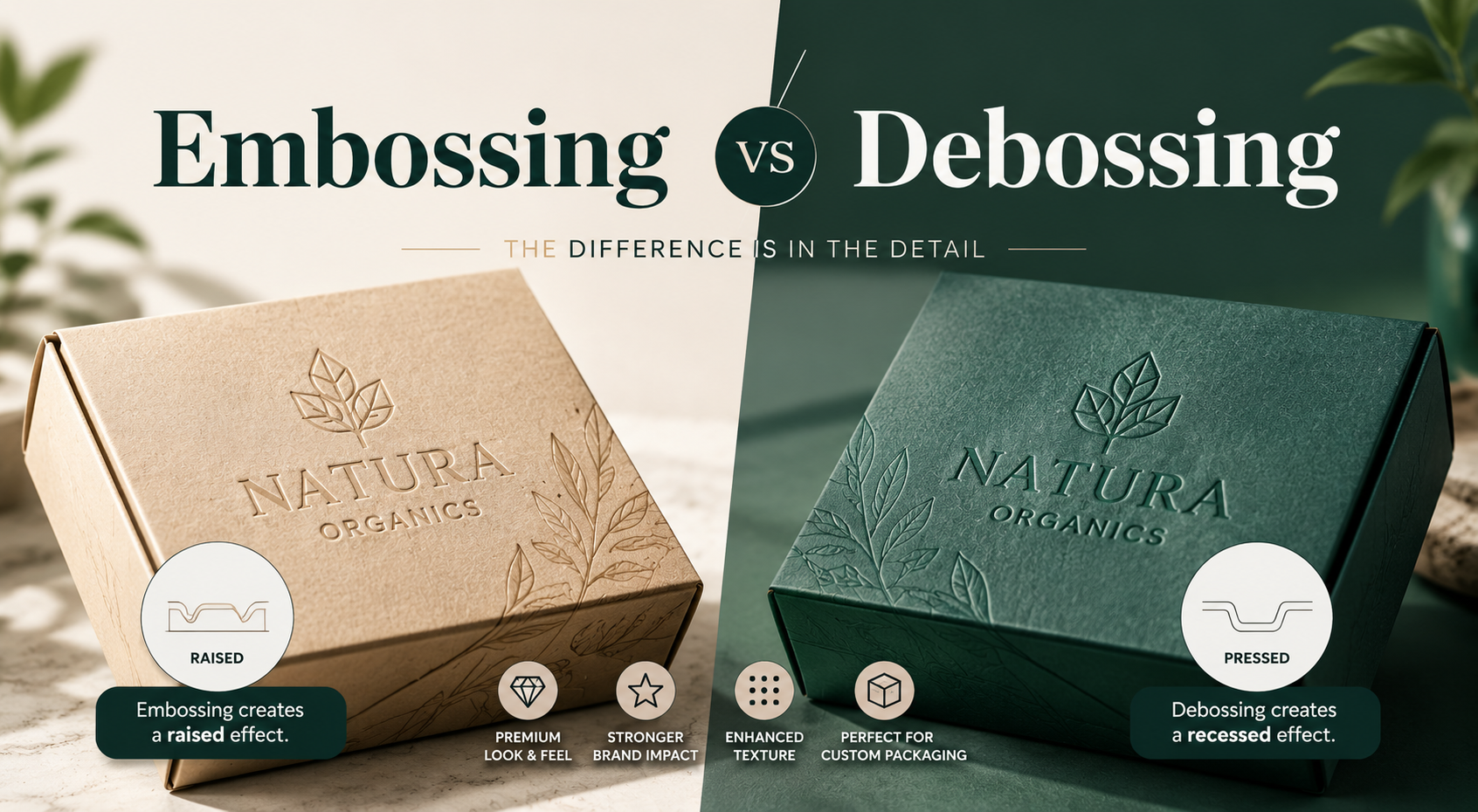
With embossing in packaging, the design is pushed upward. You can feel it immediately when you run your fingers over the box.
With debossing in packaging, the opposite happens. The design is pressed into the surface, creating a subtle indentation.
Both are part of packaging finishing techniques, but they behave differently depending on:
- Material thickness
- Pressure applied during production
- Surface coating
A thin board won’t hold depth well. I’ve seen embossing flatten out slightly after stacking if the structure isn’t right.
Why It Matters for U.S. Businesses
For many U.S. brands, packaging is the first physical interaction with a customer.
Not just visual. Physical.
A flat printed logo can look good, but it doesn’t create the same response as a textured one. That slight depth, even if it’s minimal, changes how premium the product feels.
In retail, this matters even more. Under store lighting, embossed elements catch light differently. Debossed designs create shadow depth.
It’s subtle. But customers notice these things without realizing why.
Types of Packaging Finishes You’ll Actually Use
Embossing (Raised Effect)
Best for:
- Logos
- Brand names
- Highlight areas
Works well when you want something to stand out physically.
But there’s a catch. If pressure isn’t controlled, edges can look too sharp or slightly cracked on lower-quality board.
Debossing (Pressed Effect)
Best for:
- Minimal branding
- Luxury packaging
- Subtle designs
A debossed logo packaging style often feels more refined. Less loud, more controlled.
It doesn’t reflect light as much as embossing, but it creates depth in a different way.
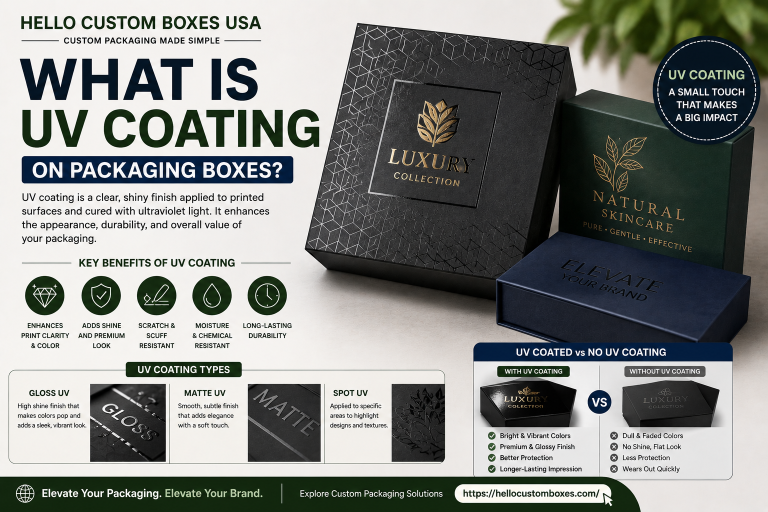
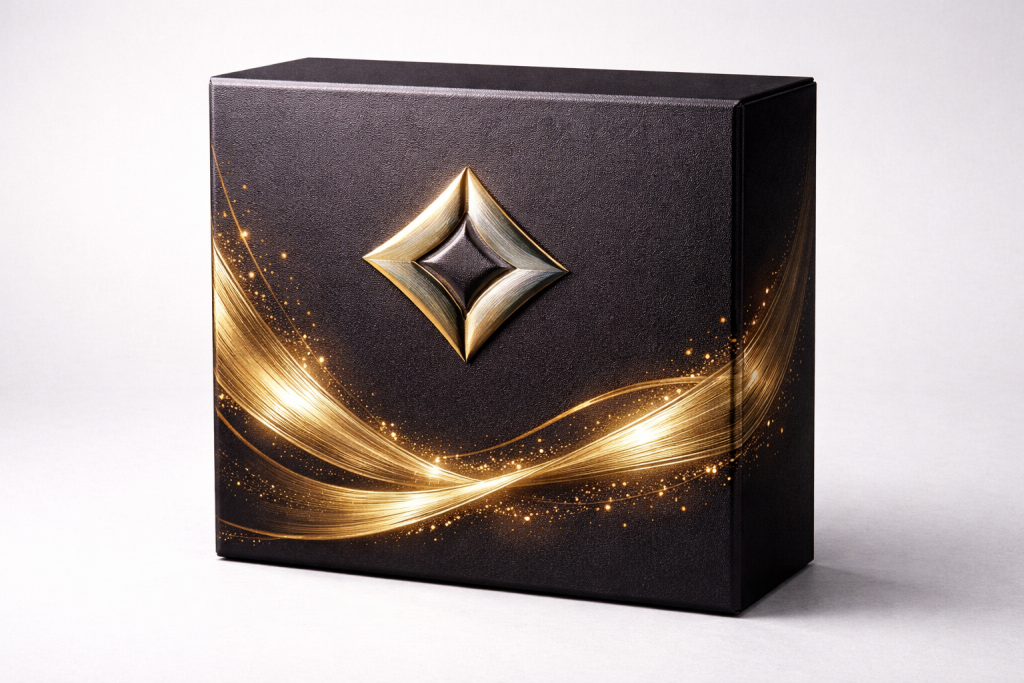
Emboss + Foil Combination
This is where things move into premium territory.
You get:
- Raised surface
- Metallic reflection
Often used in luxury packaging embossing for cosmetics or high-end retail.
But alignment matters. Even slight misplacement between foil and emboss becomes visible.
Materials and Printing Behavior
Not every material responds the same way.
- Rigid boxes hold embossing depth best
- Cardboard works well for both emboss and deboss
- Kraft absorbs pressure differently, giving softer edges
- Corrugated is less suitable for detailed embossing
Moisture also plays a role. In humid conditions, softer boards can lose sharpness over time.
Printing matters too:
- CMYK works fine underneath embossing
- PMS helps maintain brand color accuracy
- Matte surfaces enhance texture visibility
- Gloss can reduce depth perception
Common Mistakes Brands Still Make
This is where things usually go wrong:
- Using embossing on thin material that can’t hold shape
- Overdoing depth, making the box look distorted
- Ignoring how stacking pressure affects raised areas
- Misaligning foil with emboss layers
- Choosing finish before confirming box structure
One mistake I’ve seen often, brands approve a sample, then switch material later. The finish behaves differently, and the result doesn’t match expectations.
How Hello Custom Boxes Solves This
The approach isn’t just about adding a finish on top of a design.
It starts earlier, with structure and material alignment.
Every box is built around your product’s actual size, layout, and structure, not from pre-made templates.
That includes:
- Choosing the right board for emboss depth
- Adjusting pressure based on material
- Testing how the finish behaves after handling
So the result doesn’t just look right, it holds up in real conditions.
Where This Works Best
Ecommerce Packaging
Adds perceived value without increasing print complexity
Retail Packaging
Helps products stand out through light and shadow, not just color
Cosmetic and Food Packaging
Used to signal premium quality, especially for branding elements
Each industry uses these finishes differently, but the goal stays the same, improve perception without overcomplicating design.
Expert Tips from Real Packaging Work
- Keep emboss depth controlled, deeper isn’t always better
- Test samples after stacking, not just fresh production
- Avoid placing emboss near folds or edges
- Use debossing when you want a cleaner, less reflective finish
- Combine emboss with matte surfaces for better contrast
These aren’t design rules. They come from how boxes behave after production.
If you’re planning custom embossed packaging boxes or exploring custom printed packaging, it helps to align finish choices with material and structure early.
A Simple Direction Before You Choose
Before deciding between emboss or deboss, check:
- What material you’re using
- How the box will be handled
- Where the product will be displayed
These factors matter more than the effect itself.
Conclusion
The choice between embossing and debossing isn’t about which one looks better.
It’s about how the packaging feels in real use.
As brands move toward more refined presentation, especially in U.S. markets, these small surface details carry more weight than heavy design.
Get the structure right, choose the finish carefully, and the difference becomes noticeable immediately.
FAQs
Is embossing better than debossing?
Not always. Embossing stands out more, debossing feels more subtle. It depends on your product and branding.
Which is more durable?
Debossing tends to hold shape better under pressure, especially during shipping.
Can both be used together?
Yes, often combined with foil for premium packaging.
Does embossing increase cost significantly?
It adds cost, but not as much as full design changes. It’s a targeted upgrade.
What material works best for embossing?
Rigid and thick cardboard materials usually give the best results.