Quick Summary
- Standard shoe boxes differ by shoe type — men’s, women’s, and kids’ sizes all vary slightly.
- The average men’s box measures about 13 × 8 × 5 inches, while women’s typically falls around 12 × 7 × 4.5 inches.
- Shoe box size directly affects storage, display, and shipping costs, so choosing the right dimensions saves both space and money.
- Always measure the length, width, and height of the shoes before placing a packaging order to guarantee the perfect fit.
Sizing a shoe box looks simple, until a return shows up with crushed toe caps or you realize you’re paying to ship air. Too tight and the uppers crease. Too roomy and pairs rattle around, bumping corners. The sweet spot keeps shoes protected, stacks cleanly, and doesn’t inflate shipping costs.
If you sell footwear, the box is part of the product. It’s the first thing customers touch, the thing stock-room teams stack, and the last thing couriers see before it leaves your door. Get it right and the whole operation feels smoother.
Why Shoe Box Size Matters
Dimensions aren’t just numbers, they decide:
- Protection: snug enough to prevent movement, not so tight that leather or mesh gets pressure lines.
- Stacking: uniform sizes make life easy on shelves, in stockrooms, and on pallets.
- Costs: a half-inch here or there changes volumetric weight and, often, your shipping bracket.
- Presentation: a tidy, well-fitted box quietly signals quality control.
Collectors and retailers love consistency for the same reason: same sizes stack better, keep dust out, and make pulls faster.
Typical Custom Shoe Box Sizes (quick reference)
These are common interior dimensions and they cover most mainstream styles. Brands tweak slightly for last shape, outsole thickness, and inserts.
| Shoe Type | Typical Dimensions (inches) | Common Uses |
|---|---|---|
| Men’s | 13 × 8 × 5 | Sneakers, loafers, everyday shoes |
| Women’s | 12 × 7 × 4.5 | Heels, flats, sandals |
| Kids’ | 10 × 6 × 4 | Trainers, school shoes, mini boots |
Think of it like a simple range:
- Small (kids): ~10 × 6 × 4
- Medium (women’s): ~12 × 7 × 4.5
- Large (men’s): ~13 × 8 × 5
If your line spans many styles, keeping S/M/L as standard SKUs covers most pairs without custom quoting every time.
How to Measure Shoes for Custom Packaging
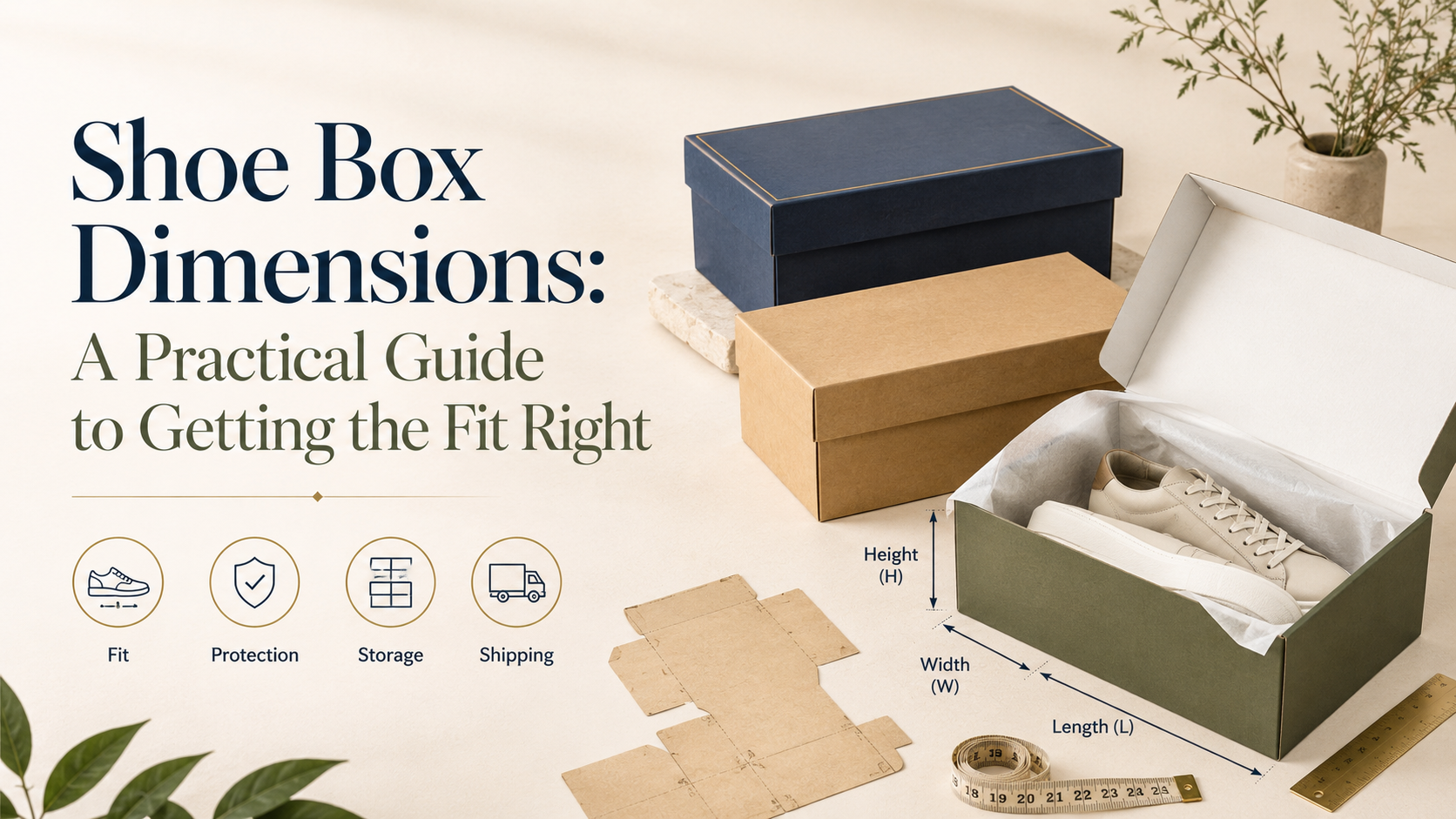
Grab a tape measure and note three numbers on the shoe, then translate them to the box:
- Length: heel to toe.
- Width: the widest point across the forefoot.
- Height: outsole to highest point on the upper (heel counter or toe spring), then add room for tissue/inserts.
Add 0.25–0.5 inches on each axis for wrap and tolerance. Example: a men’s size 10 runner measuring 12.3″ × 4.6″ × 4.6″ is happiest in something near 13 × 8 × 5 with tissue and a simple card insert. Pointed-toe heels often need the same length but a touch more height if you’re adding dust bags.
Storage smarts:
- Uniformity wins: one footprint per category stacks straighter, looks cleaner, and speeds counts.
- Visibility helps: clear lids or small side windows are great for fast ID without unboxing, useful in both stockrooms and home closets.
- Material matters: keep lids rigid enough that the bottom box doesn’t collapse under a 6-high stack.
Shoe Box Storage Shipping and Weight
Most adult shoe boxes, complete with shoes and standard board, land around 1.5–2 lb total. Card weight and inserts shift that number more than you’d expect:
- Light single-wall board: cheaper postage, fair protection for retail transfers.
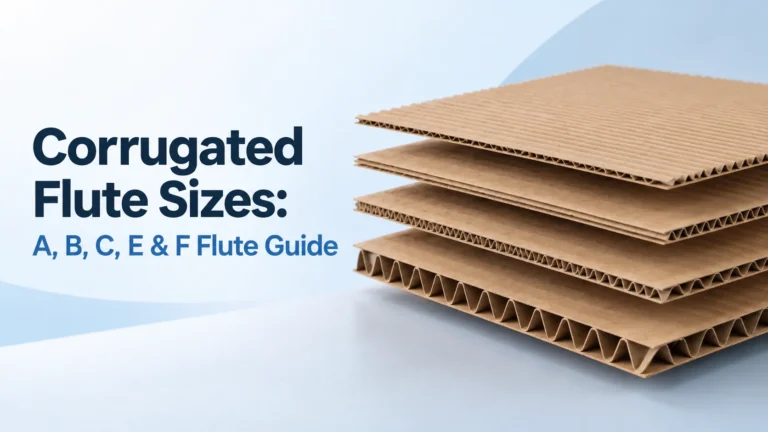
- Corrugated (E-flute or similar): better for courier miles and heavier soles.
If you’re shipping in volume, consistent dimensions let you Tetris master cartons and pallets, which lowers void fill and reduces damaged returns.
Brand tweaks without breaking the fit
You can stay within those sizes and still make it feel like you:
- Print + finish: a crisp one-color logo on kraft looks honest and eco-aware; soft-touch lamination with a blind deboss reads premium.
- Inserts: simple die-cut cradles stop heels from stabbing the vamp, and they don’t add much height if designed well.
- Reinforcement: if you sell boots or chunky soles, reinforce corners or use a heavier board before jumping to a bigger box.
Minimal brands often choose slimmer profiles to save space; luxury lines usually go thicker on board, sometimes with a wrapped rigid lid for that slow, satisfying lift.
Quick troubleshooting
- Creased uppers? Add 0.25″ height or switch to a low-profile insert instead of stuffing.
- Boxes bowing in stacks? Increase lid strength or reduce stack height from 7 to 5.
- Shipping costs spiking? Check outer-carton utilization; shaving 0.5″ width can let three columns become four.
The takeaway
Standard sizes cover most of the market and keep operations tidy. But the right box is the one that fits your shoe, your shelving, and your shipping method. Measure the shoe, allow a little breathing room, keep sizes consistent across SKUs, then add the brand details that make unboxing feel intentional. It’s still a box, sure, but it’s also proof that you care about what’s inside.