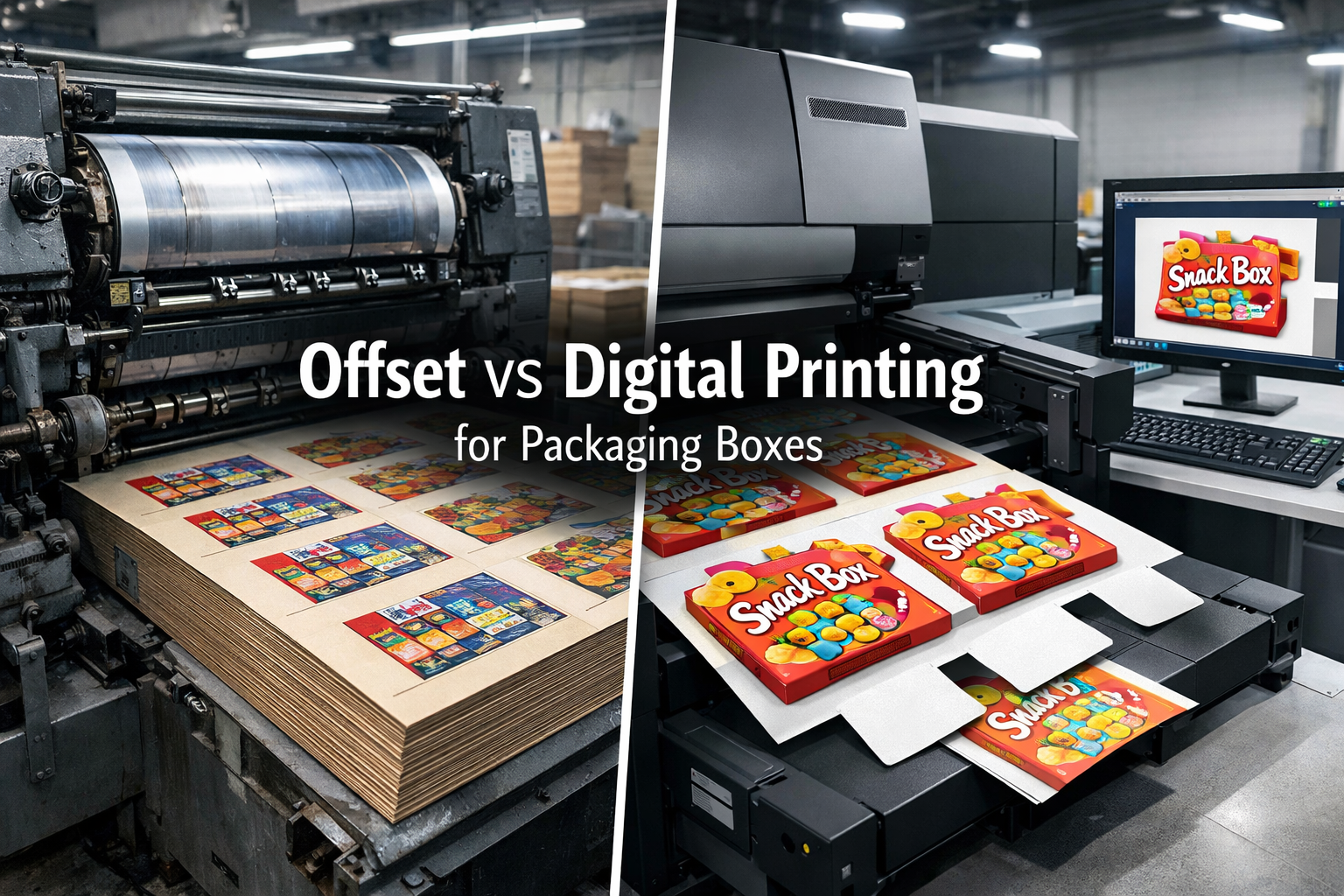
When it comes to printing packaging boxes, most projects end up choosing between offset and digital. Both methods work. The real difference shows up later — in how much you spend, how quickly production moves, and how consistent the final boxes look.
Offset Printing vs Digital Printing for Packaging Boxes
Most brands think about design first. Colors, layout, logo placement. The printing method often becomes an afterthought.
That’s understandable. But the way your boxes are printed affects more than people realize. It influences how consistent your colors look across thousands of units, how quickly production starts, and how your overall budget behaves.
Offset and digital printing are not competitors. They simply solve different problems.
How Offset Printing Fits Into Packaging Production
Offset printing has been around for a long time. It uses plates to transfer ink onto packaging material. There’s a setup stage involved, which takes a bit more preparation compared to digital.
Once everything is running though, offset handles volume extremely well.
If you’re producing tens of thousands of boxes, offset printing tends to offer strong consistency. Colors stay stable from the first batch to the last. That matters when brand identity needs to stay locked in.
It’s also known for clean detail. Fine lines, solid fills, and Pantone color matching often feel more controlled with offset, especially on larger runs like premium rigid box packaging.
The trade-off? Setup cost. Plates must be created before production begins. That makes small quantities less efficient.
Where Digital Printing Makes More Sense
Digital printing works differently. There are no plates involved. The file goes directly from computer to printer.
That eliminates part of the setup process. Production can start faster, which is useful when timelines are tight.
For smaller quantities, digital usually feels more practical. You’re not paying for plate creation, and you can adjust designs more easily between runs.
It’s also helpful when brands want to test packaging variations or produce limited seasonal batches as part of their custom packaging solutions. Flexibility is one of its strengths.
At very high volumes though, the per-unit cost doesn’t drop the way it does with offset.
Is There a Noticeable Quality Difference?
In many everyday retail situations, most customers won’t see a dramatic difference.
Modern digital printing has improved significantly. For standard packaging jobs, it performs well.
Offset printing still has an edge when extreme precision is required. Large solid areas of color, exact Pantone matching, and long production runs often feel slightly more stable with offset.
That doesn’t mean digital looks poor. It simply means offset has advantages at scale.
Understanding how CMYK printing works also plays a role here, since both methods rely on proper color setup for consistent results.
Cost: It Depends on Quantity
There isn’t a universal “cheaper” option. The math changes based on how many boxes you’re ordering.
If you need 500 units, digital printing usually makes more sense. The setup is lighter and the total cost stays manageable.
If you’re ordering 50,000 units, offset often becomes more economical per piece because the initial setup cost spreads across a much larger quantity.
So the better question isn’t “Which is cheaper?”
It’s “How many boxes are we printing?”
Speed and Production Timelines
Digital printing typically moves faster at the beginning. No plates. Less setup. Production can begin shortly after file approval.
Offset takes more time before the first sheet runs, but once it starts, it handles bulk production efficiently.
If speed is critical and quantities are modest, digital often wins.
If volume is high and planning is structured, offset fits comfortably.
Choosing Offset Printing
Offset printing tends to work well when:
- Production volume is high
- Brand color consistency is critical
- Pantone matching is important
- The packaging is part of a premium retail presentation
It’s often the preferred route for established brands printing in bulk.
Choosing Digital Printing
Digital printing usually makes more sense when:
- Quantities are lower
- You’re launching a new product
- You want flexibility in design updates
- Turnaround time matters
It removes some of the heavier setup steps and keeps production more agile.
So Which One Should You Use?
There isn’t a universal winner.
If your focus is scale and consistency across large runs, offset printing typically makes more sense.
If you value flexibility and smaller quantities, digital printing is often the practical choice.
The printing method should align with your production size and timeline. It’s less about technology preference and more about matching the process to your goals.
At Hello Custom Boxes, the printing method is discussed before production begins. Order size, material choice, and brand requirements all influence the recommendation.
It’s easier to choose the right process early than to rethink it after production has started.
Offset and digital aren’t about which is better. They’re about which fits the job.
Frequently Asked Questions
It can offer slightly more consistent results at large volumes, especially for solid colors and Pantone matching.
For smaller quantities, usually yes. At larger scales, offset often reduces cost per unit.
Yes. Both methods can handle common packaging boards, though results may vary slightly depending on coating and surface.
Digital generally starts faster. Offset runs efficiently once setup is complete.