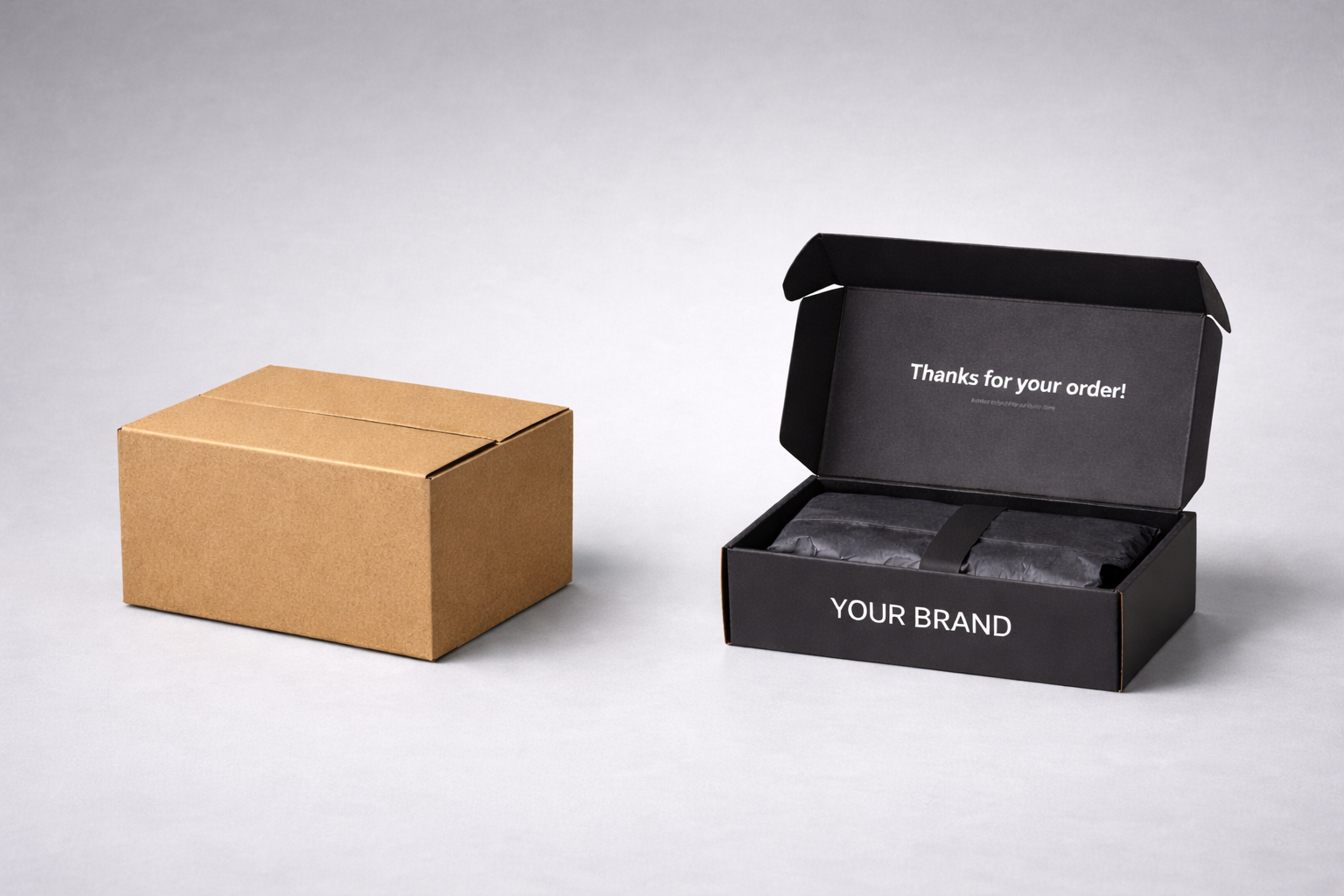
A lot of online brands are rethinking their packaging this year. Not because it looks outdated, but because it affects shipping cost, damage rates, and repeat orders. In 2026, the changes are practical. Better box structure. Smarter sizing. Packaging that works harder instead of just looking good.
Why Ecommerce Packaging Decisions Feel Heavier in 2026
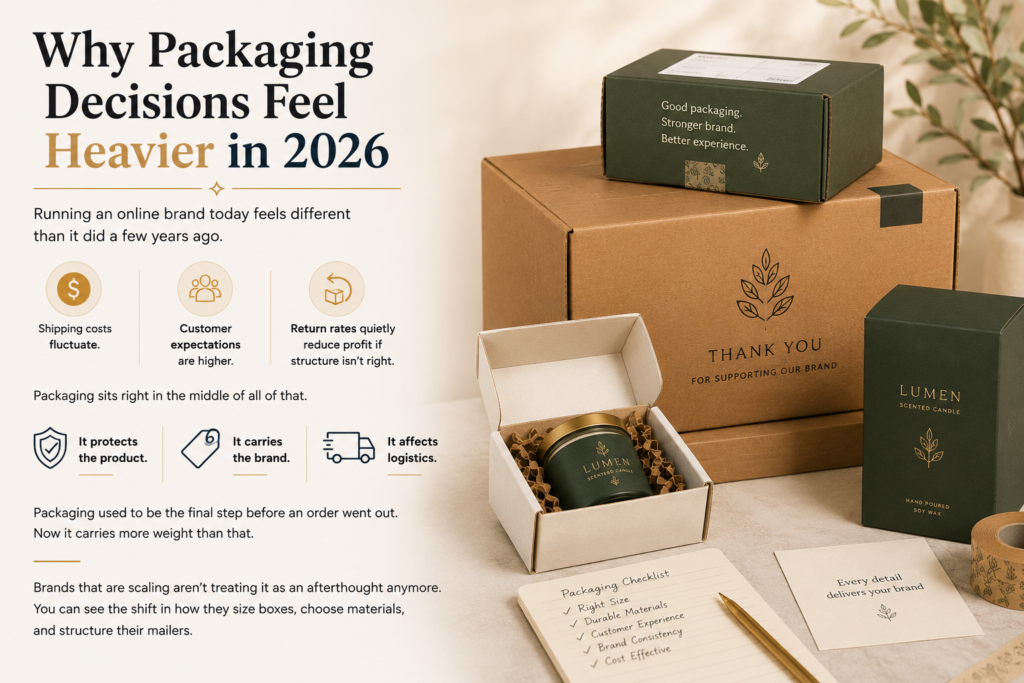
Running an online brand today feels different than it did a few years ago.
Shipping costs fluctuate. Customer expectations are higher. Return rates quietly reduce profit if structure isn’t right.
Packaging sits right in the middle of all of that.
It protects the product.
It carries the brand.
It affects logistics.
Packaging used to be the final step before an order went out. Now it carries more weight than that.
Brands that are scaling aren’t treating it as an afterthought anymore. You can see the shift in how they size boxes, choose materials, and structure their mailers.
1. Sustainable Ecommerce Packaging That Balances Protection
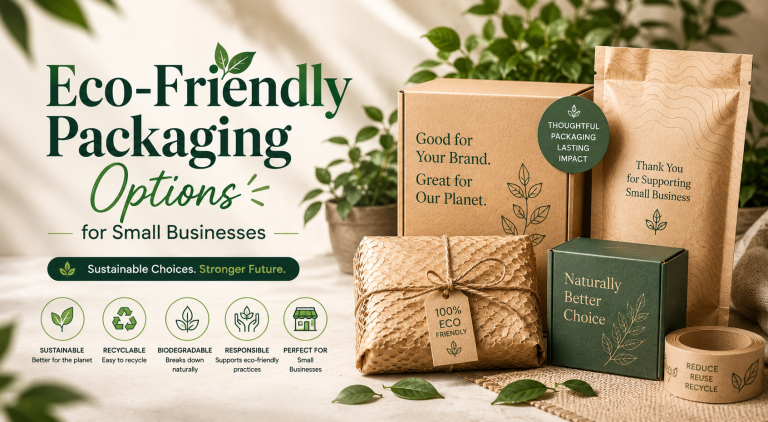
Sustainability remains important. But in 2026, it’s handled more practically.
Customers expect recyclable materials and minimal waste. At the same time, brands can’t afford higher damage rates.
That’s why sustainable ecommerce packaging is shifting toward smarter structure rather than thinner material.
We’re seeing:
- Lightweight corrugated engineering
- Recyclable kraft board with proper reinforcement
- Reduced filler through precise box sizing
- Structural redesign to eliminate empty space
Sustainability now means reducing waste without compromising durability.
2. Custom Ecommerce Packaging Designed for Retention
Plain brown cartons are easy. They’re also forgettable.
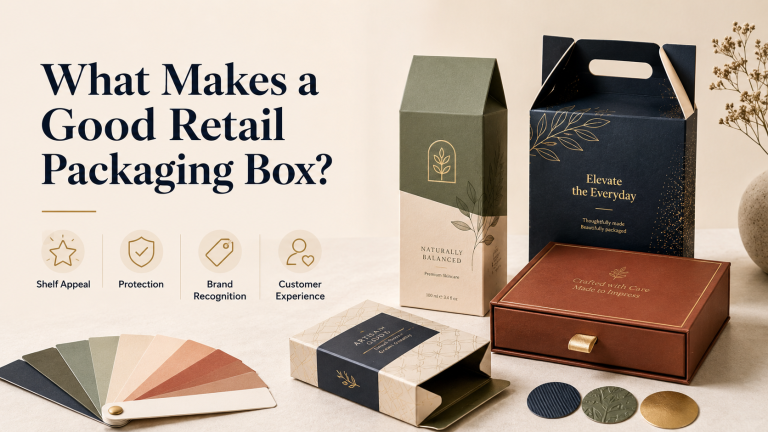
Custom ecommerce packaging has become more intentional. Instead of excessive graphics, brands are focusing on clarity and cohesion.
Exterior branding is cleaner.
Interior messaging feels purposeful.
Inserts are designed to secure the product rather than simply decorate the box.
The goal isn’t noise. It’s recognition.
When customers immediately identify your packaging, it builds familiarity. Familiarity builds trust. Trust increases repeat orders.
That’s why custom packaging for ecommerce is increasingly treated as a retention tool rather than just a branding expense.
3. Ecommerce Mailer Boxes Built for Real Shipping Conditions
Shipping damage still eats into margins more than most brands admit.
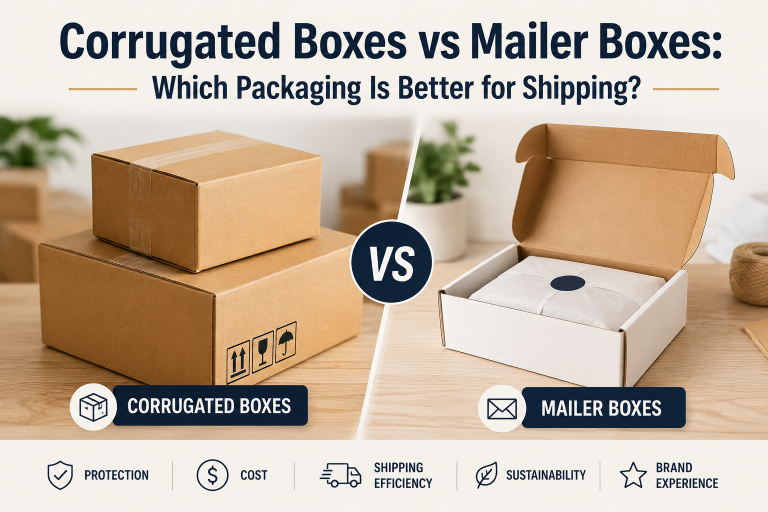
Modern ecommerce mailer boxes are being engineered with stronger locking systems, reinforced edges, and board grades selected specifically for shipping stress.
Precision sizing also matters.
Oversized packaging increases dimensional weight charges.
Undersized packaging increases compression risk.
This year, attention isn’t only on print quality. The way the box performs during shipping matters just as much in practice.
A good-looking package that arrives damaged doesn’t help anyone.
4. The Unboxing Experience Trend Has Matured
The unboxing experience trend hasn’t disappeared. It’s become more subtle.
Customers may not film every delivery anymore, but they still notice when packaging feels careless.
Brands are focusing on:
- Clean interior prints
- Secure product placement
- Minimal finishes that feel refined
- Strong typography instead of clutter
A smooth, thoughtful unboxing moment increases perceived value.
And perceived value influences whether someone comes back.
5. Cost-Aware Packaging Engineering
Shipping carriers price based on size and weight. That reality hasn’t changed.
What has changed is how seriously brands are addressing it.
Instead of defaulting to thicker board or larger boxes, businesses are reviewing:
- Structural redesign
- Weight-to-strength balance
- Box dimension optimization
- Reduction of unnecessary inserts
In Many Cases, Trimming Shipping Costs Does More For Profit Than Shaving A Little Off Printing. Small Savings Per Order Add Up Quickly.
What We’re Seeing In 2026 Isn’t A Push Toward Flashier Designs. It’s A Shift Toward Better Structure And Smarter Box Engineering.
6. Branded Shipping Boxes With Controlled Design
There’s a noticeable shift toward restraint.
Branded shipping boxes in 2026 avoid overcrowded layouts. Brands are leaning into:
- Minimal color palettes
- Clean logo placement
- Matte or soft-touch finishes
- Balanced typography
Too much design can feel forced.
Simplicity often communicates confidence.
Customers associate clean packaging with professionalism and reliability.
Why This Matters for Online Growth
Packaging influences more than presentation.
It affects:
- Damage-related returns
- Shipping cost efficiency
- Customer perception
- Review quality
- Repeat purchase behavior
Little Inefficiencies Don’t Seem Serious At First. But Across Thousands Of Orders, They Start To Show.
Brands That Pay Attention To Packaging Earlier Usually Avoid Bigger Headaches Later. It’s Less About Chasing Trends And More About Making Sure The Box Actually Supports How The Business Runs.
Applying These Trends Without Overspending
Not every packaging change needs to be dramatic.
Sometimes it’s just noticing what’s happening over time. A box that feels slightly too large. Extra filler that wasn’t really necessary. A few returns that quietly increase month after month.
Most brands don’t overhaul everything at once. They adjust small details. The board grade. The sizing. Maybe the inside print.
Those small shifts usually make more difference than a complete redesign.
At Hello Custom Boxes USA, packaging decisions aren’t made in isolation. Order volume, board type, shipping distance, and branding goals are evaluated before production begins.
It’s easier to build packaging around growth objectives than to correct structural inefficiencies after large runs are complete.
Ecommerce packaging trends 2026 aren’t about decoration. They’re about smarter decisions that protect profitability and strengthen brand positioning.
Frequently Asked Questions
Balancing sustainability with structural efficiency and cost control.
For many online brands, yes. They’re lightweight, protective, and optimized for shipping.
Not necessarily. When engineered correctly, it can reduce returns and protect margins.
Yes. Delivery experience influences perceived value and repeat purchasing.