You don’t notice the lid… until it doesn’t close right
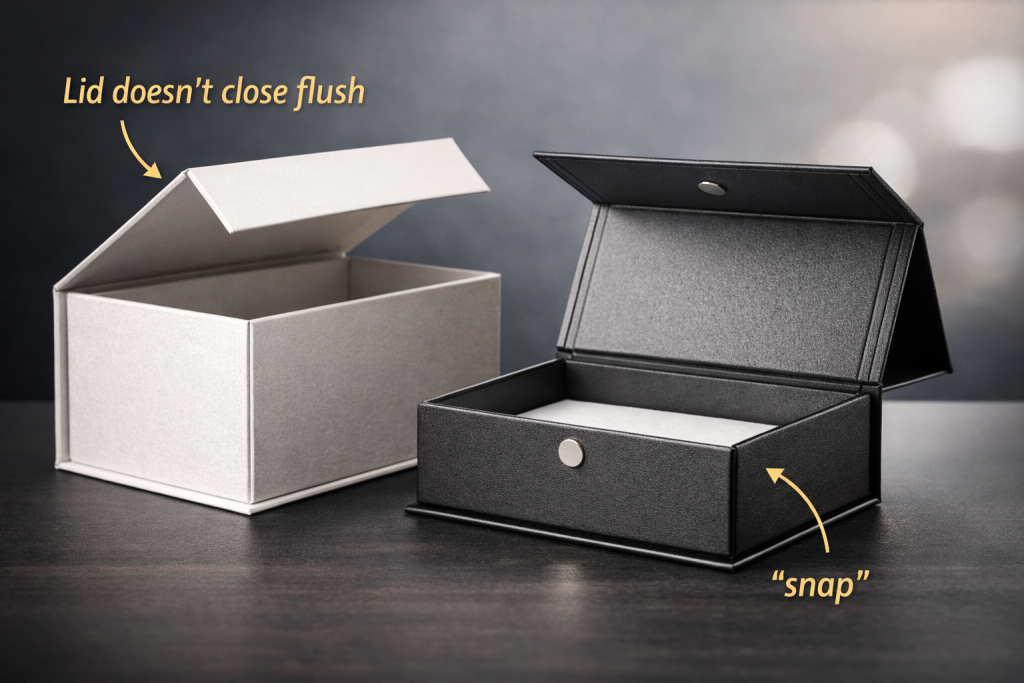
A box arrives looking premium. Thick walls, clean print, decent weight. Then you open it once, twice… and the lid doesn’t sit the same anymore. Slight gap. The “snap” isn’t there.
That’s usually where magnetic closure boxes either prove their value or expose a weak build.
It’s not really just a luxury thing. You notice it later, after using the box a few times. How it feels, whether the lid still lines up, especially after it’s been shipped around a bit.
TL;DR – Quick Answer
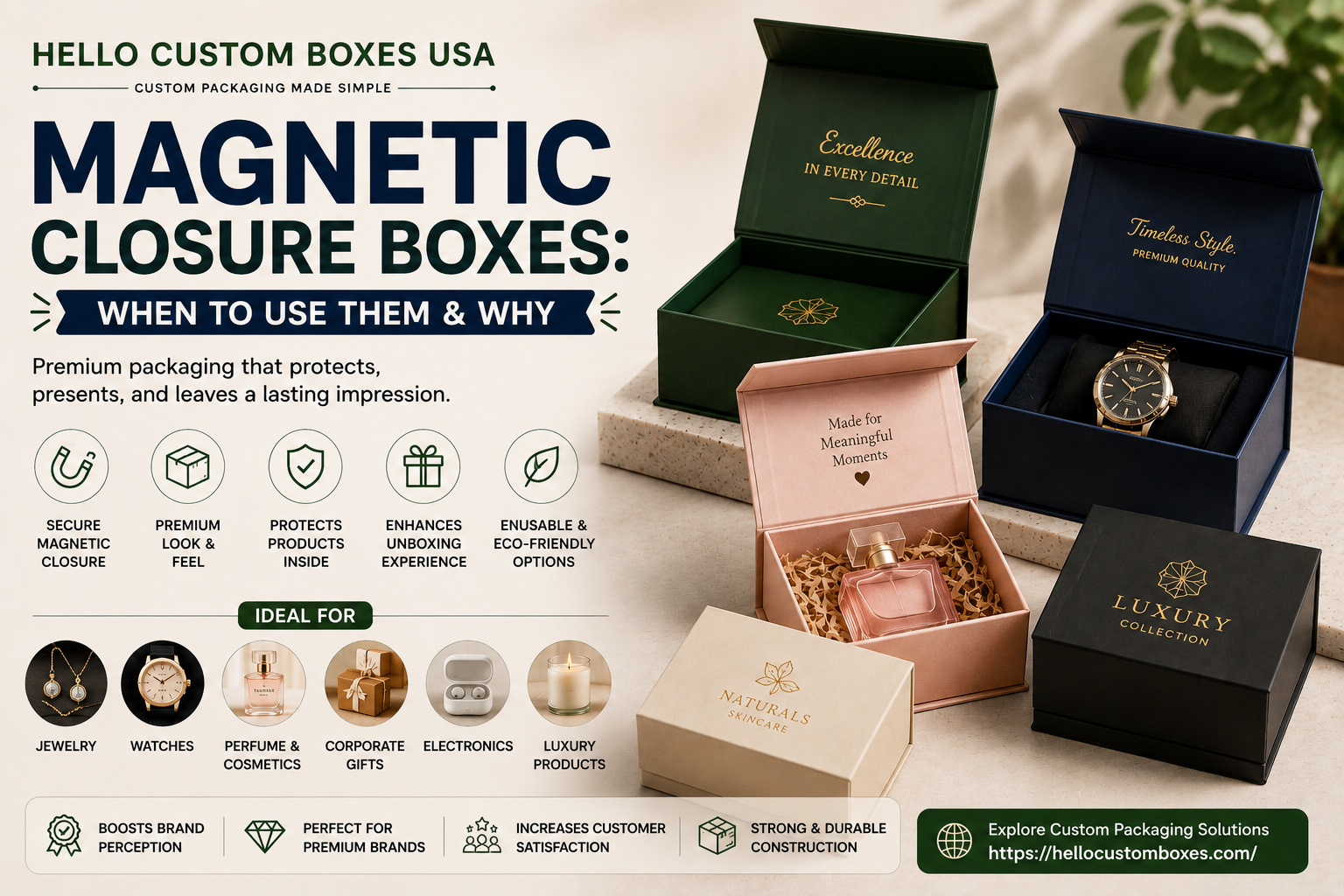
- • Magnetic closure boxes use hidden magnets to create a secure, reusable lid
- • Commonly used for premium, gift, and retail packaging
- • Best suited for rigid structures, not lightweight cartons
- • Offer a cleaner opening and closing experience compared to tuck flaps
- • Useful when presentation and reuse matter
- • Not ideal for low-cost or high-volume shipping setups
What are magnetic closure boxes?
Magnetic closure boxes are rigid packaging boxes designed with small embedded magnets inside the flap and front panel. When closed, the magnets align and hold the lid in place.
No tape. No friction lock. Just a soft, controlled closure.
You’ll usually see this in magnetic lid boxes used for:
- Gift packaging
- Product kits
- Luxury retail items
One thing people don’t always think about, the magnet itself isn’t doing all the work. The structure around it matters just as much. If the board flexes or weakens, the closure won’t feel right, even if the magnet is strong.
Why magnetic closure boxes matter for U.S. businesses
In the U.S. market, packaging often doubles as part of the product experience. Especially in retail and eCommerce.
With magnetic closure packaging, the difference shows up in small ways:
- The lid closes cleanly, without forcing it
- The box can be opened multiple times without damage
- It holds shape better during stacking
There’s also a perception shift. Customers tend to associate magnetic closures with higher-end products, even if the contents are similar.
But there’s a trade-off. These boxes are heavier and take up more space in shipping. I’ve seen brands switch to them and then realize their shipping costs increased slightly. Not a dealbreaker, but something to account for early
Types of magnetic closure boxes you’ll actually use
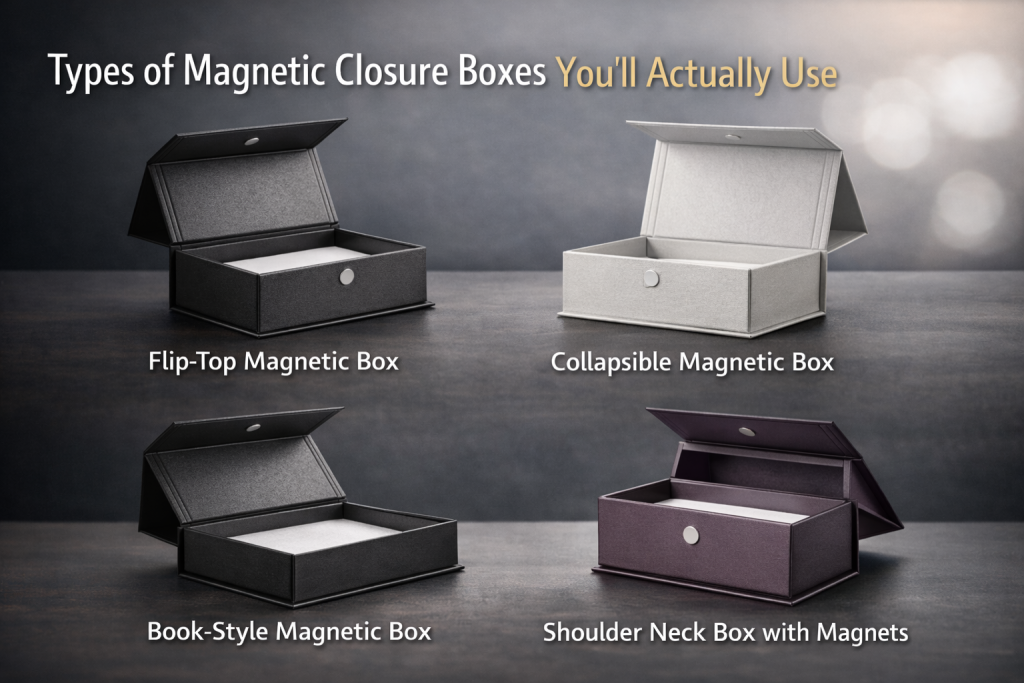
Flip-top magnetic boxes
This is the standard design. A hinged lid folds over and snaps shut. Works well for most retail and gift packaging.
Collapsible magnetic boxes
These usually come flat when you’re not using them, which helps with storage. Then you set them up when needed, and they hold their shape like a rigid box.
Book-style magnetic boxes
Open like a hardcover book. Often used for presentation kits or product sets where layout matters.
Shoulder neck boxes with magnets
More structured, often used for high-end packaging. Adds depth and a more layered opening experience.
Materials and printing, what actually affects performance
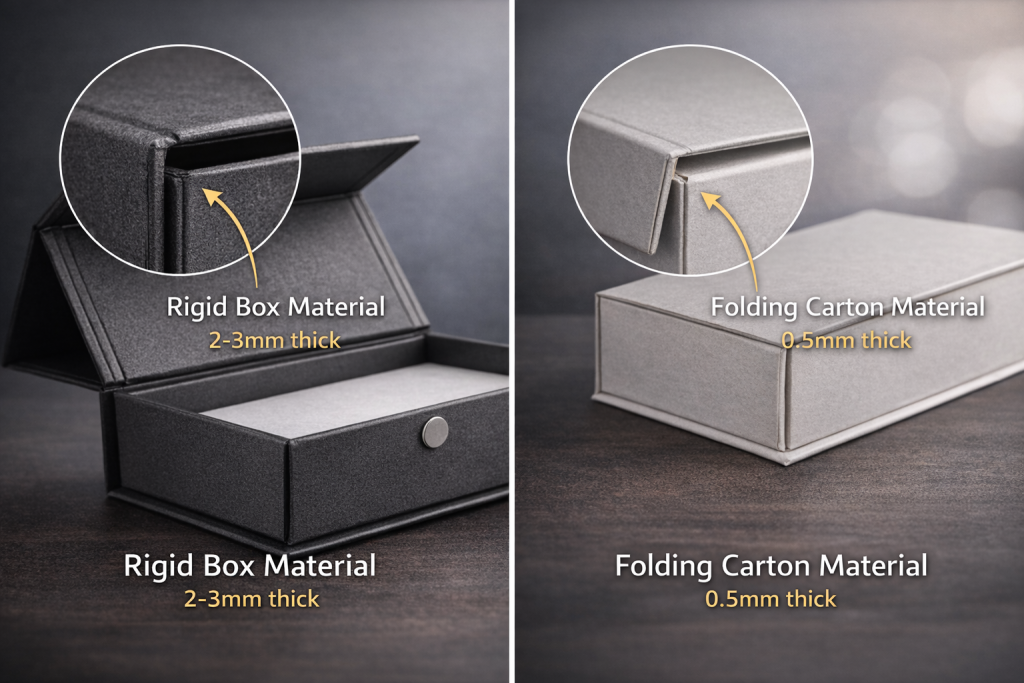
These boxes are almost always made from rigid board. That’s what gives them structure.
On rigid material, the magnets stay aligned. The lid doesn’t shift. The closure feels consistent.
With lighter materials like folding cartons, magnets don’t perform the same. The board flexes too much, and the closure feels loose.
Printing is usually CMYK or PMS, nothing unusual there. After that, matte or soft-touch finishes get added quite a bit, mostly because they work better with rigid boxes.
You’ll come across embossing and debossing in some of these boxes too. Just small changes, a bit raised here, pressed in there. Nothing major, but once you hold the box, it doesn’t feel flat anymore.
And if you’re going for premium packaging with magnetic closure, the finish matters just as much as the structure. This is where things like rigid packaging styles start to make more sense, especially when the box needs to hold its shape over time.
Where things usually go wrong with magnetic boxes
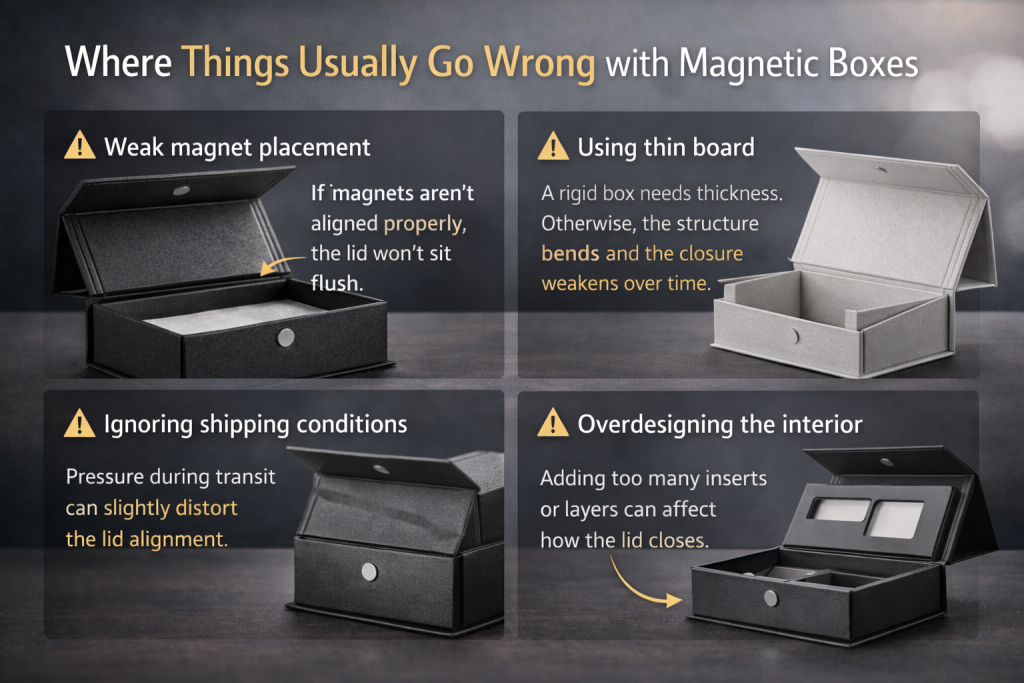
Weak magnet placement
If magnets aren’t aligned properly, the lid won’t sit flush.
Using thin board
A rigid box needs thickness. Otherwise, the structure bends and the closure weakens over time.
Ignoring shipping conditions
These boxes aren’t always ideal for tight packing. Pressure during transit can slightly distort the lid alignment.
Overdesigning the interior
Adding too many inserts or layers can affect how the lid closes.
Not testing repeated use
Some boxes feel perfect the first time. Then loosen after a few openings.
How Hello Custom Boxes approaches this
Magnetic boxes require more than just adding a magnet inside a flap. The structure, board thickness, and alignment all have to work together.
At Hello Custom Boxes, the process starts with how the box will actually be used, not just how it looks.
Every box is built around your product’s actual size, layout, and structure, not from pre-made templates.
That changes how the closure performs. The magnet placement is tested with the actual load inside the box. Not just empty prototypes.
Where magnetic closure boxes make the most sense
eCommerce packaging (select use cases)
Best for subscription kits or premium product bundles, not everyday shipping.
Retail packaging
Used where presentation affects buying decisions, cosmetics, electronics, gift items.
Gift packaging
This is where they work best. Reusable, clean opening, better perceived value.
Product launch kits
Used for PR boxes or influencer packaging where presentation matters as much as the product.
Practical tips from real packaging use
- Don’t rely on magnets alone, structure matters more
- Test closure after 10–15 openings, not just once
- Keep weight in mind, heavier boxes affect shipping cost
- Use finishes that match how the box will be handled
- Avoid overloading the lid with design or inserts
Thinking about using magnetic closure boxes?
You’ll usually lean toward magnetic boxes when the packaging gets opened more than once, or when the way it looks actually matters.
But if you’re dealing with high-volume, low-cost items, they don’t always fit.
It really comes down to how the box is used after it leaves you.
Conclusion
Magnetic closure boxes aren’t just about aesthetics. They’re about function over time, how the box opens, closes, and holds up after repeated use.
Used in the right context, they add real value. Used in the wrong one, they just add cost.