TL;DR — Quick Answer
Bux Board is a dense paperboard material used in packaging when you need more strength than standard folding cartons but less bulk than corrugated. It’s common in retail boxes, rigid-style packaging, and custom product boxes where structure, shape retention, and print performance matter.
You’ll hear “Bux Board” a lot once you get into packaging. Usually from suppliers, sometimes from printers, occasionally from someone trying to justify why your box cost just went up.
But what it actually is… doesn’t always get explained clearly.
Let’s break it in a way that actually helps when you’re ordering boxes, not just reading definitions.
So, What Is Bux Board Really?
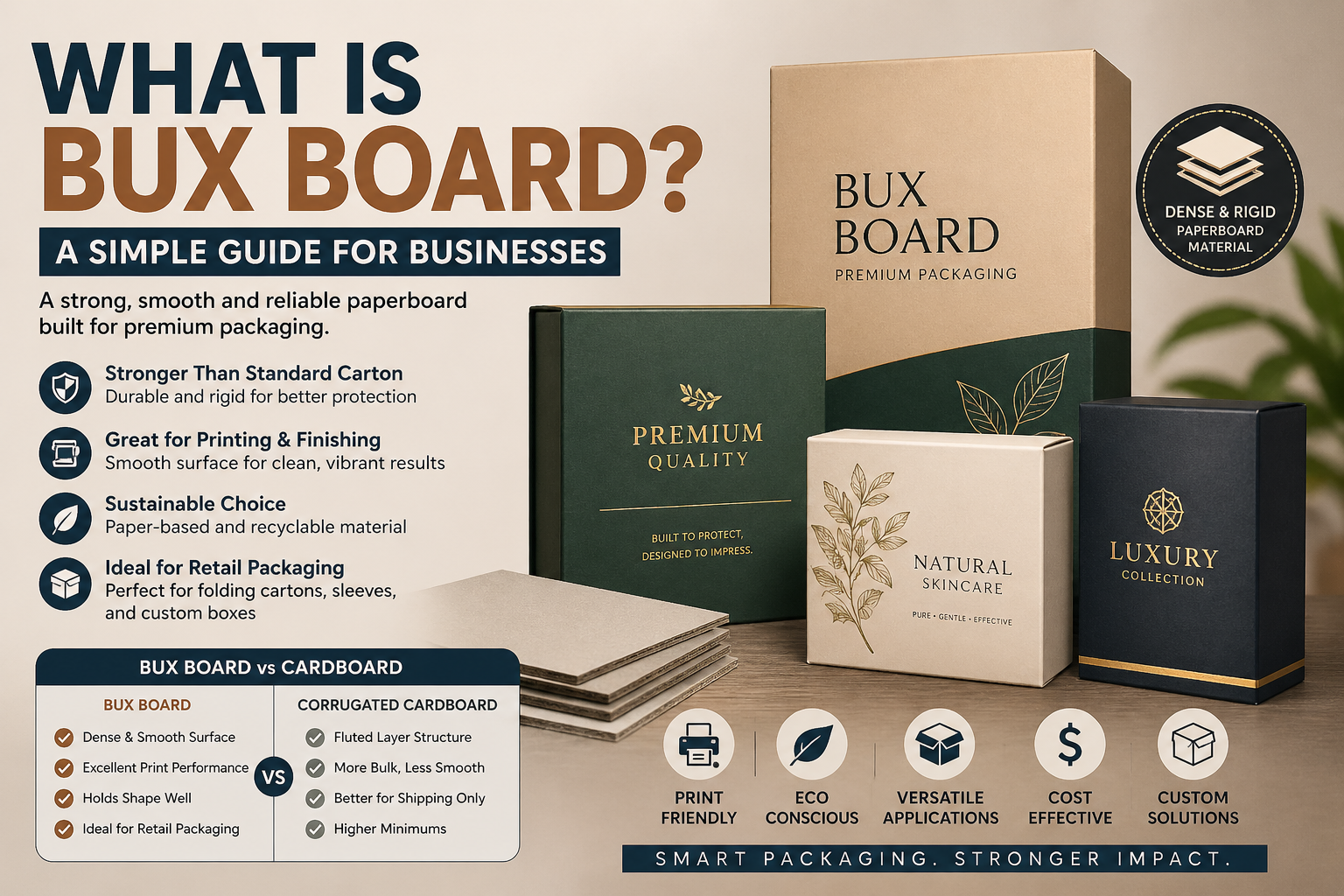
Bux Board is a type of paperboard packaging material made from compressed recycled fibers. It’s thicker and more rigid than standard folding carton stock, but not layered like corrugated.
Think of it like this:
- Not as flexible as kraft paperboard
- Not as bulky as corrugated
- More stable when folded and shaped
That middle ground is why it shows up so often in bux board boxes for retail and custom packaging.
In real production runs, it’s chosen when a product needs structure without adding unnecessary shipping volume.
Where Businesses Actually Use Bux Board
You won’t always see it labeled. But once you know what to look for, it’s everywhere.
Typical bux board packaging use cases:
- Cosmetic product boxes
- Apparel packaging (lightweight garments, scarves, etc.)
- Retail display boxes
- Sleeve-style packaging
- Small electronics packaging
One thing I’ve noticed in real orders:
Brands switch to custom bux board boxes when their original packaging starts collapsing during stacking or transit.
That’s usually the trigger.
Bux Board vs Cardboard (What People Get Wrong)
This is where confusion starts.
A lot of businesses say “cardboard” for everything. But structurally, they behave very differently.
Bux board vs cardboard:
- Bux Board: solid, dense sheet, smooth surface
- Corrugated cardboard: fluted layers, built for shipping strength
- Folding carton (SBS): lighter, better for high-end print
Here’s the real-world difference:
If you pack a small retail product in corrugated, it survives shipping… but looks bulky on the shelf.
If you use thin carton board, it looks great… but corners can crush.
Bux board sits right in between.
How It Behaves in Printing (This Matters More Than You Think)
This is where many businesses get surprised.
Bux board is not as smooth as SBS (solid bleached sulfate), so:
- Colors can look slightly muted
- Fine details may not print as sharply
- Dark backgrounds absorb more ink
I’ve seen brands approve digital proofs and then get slightly darker tones in the final run, especially when finishes like foil stamping on packaging boxes come into play. That’s not a mistake. That’s material behavior.
If you’re using:
- Foil stamping: works well
- Matte lamination: hides imperfections
- Gloss: can highlight surface inconsistencies
Understanding this upfront avoids reprints.
Thickness, GSM, and Structural Feel
When suppliers talk about bux board thickness and gsm, they’re basically defining how rigid your box will feel.
Typical ranges:
- 250–400 GSM: lighter retail packaging
- 400–800 GSM: more rigid structure
- 800+ GSM: closer to rigid box behavior
But GSM alone doesn’t tell the full story.
The fiber composition matters too.
Some types of paperboard used in packaging feel softer even at higher GSM. Others feel dense and stiff at lower thickness.
That’s why sampling matters before bulk production.
Bux Board vs Kraft — A Practical Difference
Another common comparison:
difference between bux board and kraft
- Kraft: ibrous, raw look, more flexible
- Bux Board: denser, smoother, more structured
Kraft works when you want a natural, eco look.
Bux board works when you want cleaner edges and better shape retention.
I’ve seen brands try to switch from bux board to kraft to save cost… and end up with warped boxes after stacking.
It’s not always a like-for-like replacement.
Where It Fits in the Bigger Packaging Material World
If you’re comparing packaging board types, here’s a simple way to place it:
- SBS: premium print quality
- Kraft: eco-focused, flexible
- Corrugated: shipping strength
- Bux Board: structural retail balance
That’s why it’s common in retail packaging materials and box manufacturing materials where both presentation and durability matter.
Real Problems Businesses Run Into
Let’s talk about what actually goes wrong.
Overestimating strength
Bux board is strong, but it’s not corrugated. Heavy items still need support.
Ignoring internal fit
Loose products inside rigid-looking boxes still cause damage.
Wrong finish selection
Gloss finishes can expose surface inconsistencies.
Skipping prototypes
Bulk orders without testing often lead to costly adjustments.
Using stock sizes blindly
This is a big one.
Every box is built around your product’s actual size, layout, and structure, not from pre-made templates.
When businesses ignore this, they get movement, dents, or wasted space.
When Should You Choose Bux Board?
If you’re running a small or mid-scale product line, bux board packaging for small business often makes sense when:
- You need better structure than standard cartons
- You want a clean retail look
- Your product isn’t heavy enough for corrugated
- You’re scaling into wholesale bux board boxes USA supply
It’s also a good option for affordable bux board packaging when rigid boxes are too expensive.
A Quick Note on Sustainability
Since it’s a paper-based packaging material, bux board can align with sustainable packaging solutions, especially when sourced responsibly.
But here’s the honest part:
Coatings, laminations, and inks can affect recyclability.
So “eco-friendly” depends on the full build, not just the base material.
Final Thought — Where Most Decisions Go Right (or Wrong)
Most packaging issues don’t come from the material alone.
They come from how it’s used.
Structure, fit, printing method, and finishing choices all stack together.
If you’re working with custom packaging materials, the goal isn’t just picking bux board.
It’s choosing how that material behaves around your product.
That’s where the difference shows up. In real handling, not just specs.
FAQs
Is bux board the same as cardboard?
Not exactly. Cardboard usually refers to corrugated material. Bux board is denser and smoother, used more for retail packaging than shipping.
Can bux board hold heavy products?
Up to a point. It handles light to medium-weight items well, but heavier products need inserts or stronger structures.
Does bux board print well?
Yes, but not like premium SBS. Colors can appear slightly muted, especially on darker designs.
Is bux board eco-friendly?
It can be, since it’s paper-based. But coatings and finishes can affect recyclability.
When should I avoid using bux board?
If your product is heavy, fragile, or shipped long distances without secondary packaging, corrugated may be a better choice.