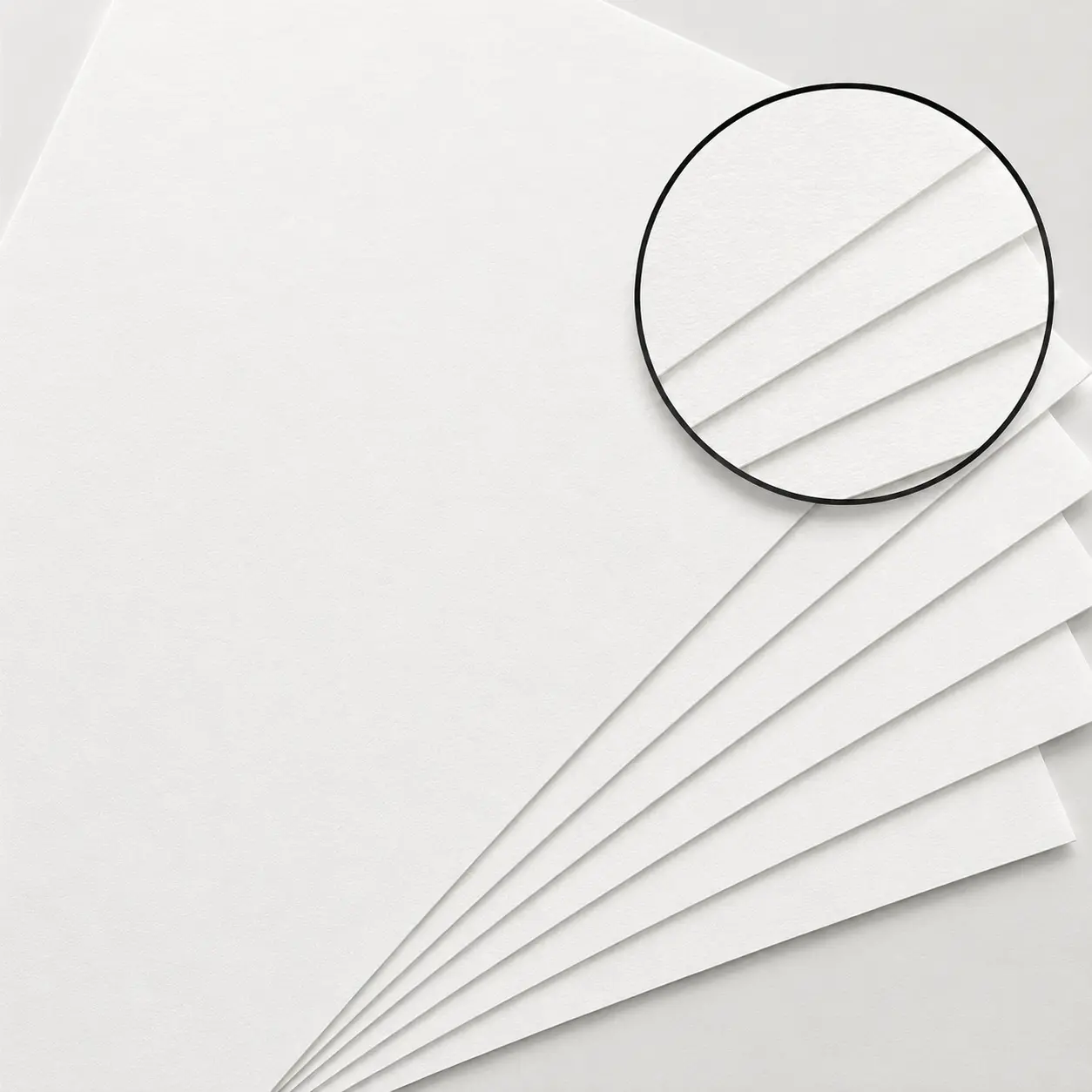
SBS Cardboard
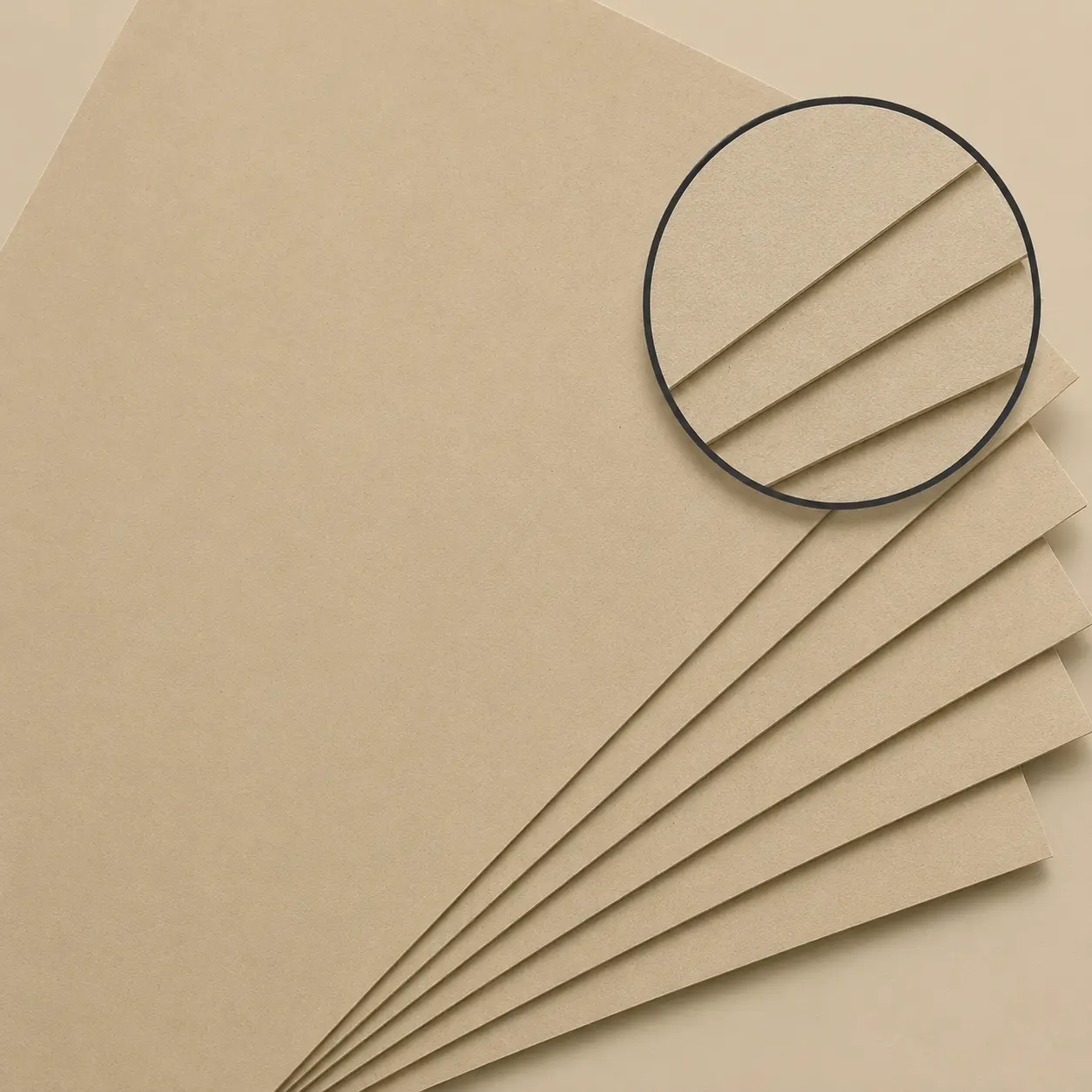
Premium bleached substrate engineered for retail-ready packaging with sharp, high-resolution print performance across bulk SKUs.
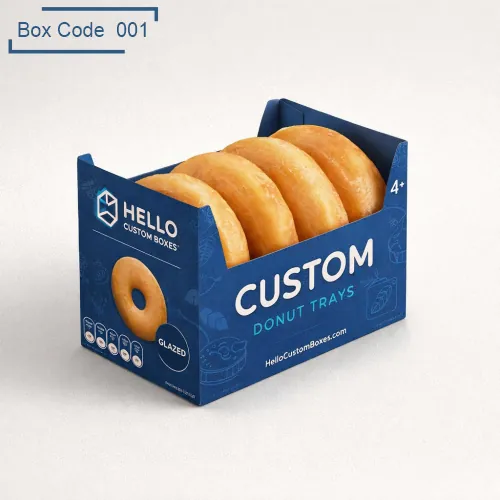
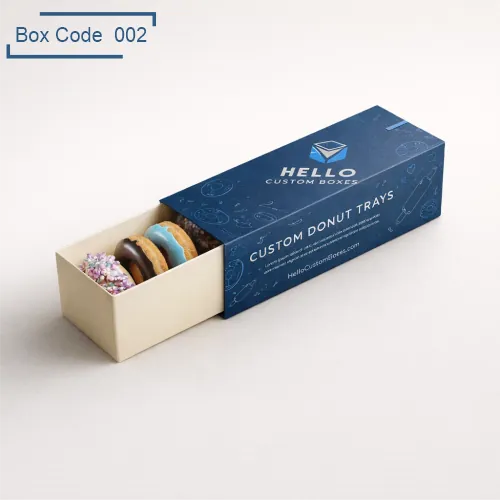
Custom donut trays are sized around your donut diameter, height, piece count, and outer bakery box to keep each piece separated during packing and handling. Choose custom cavity layouts for ring, filled, glazed, and decorated donuts, with paperboard or kraft options selected around your packing requirements. Hello Custom Boxes supplies made-to-order donut trays for bakeries, delivery orders, retail packs, and wholesale quantities across the USA.
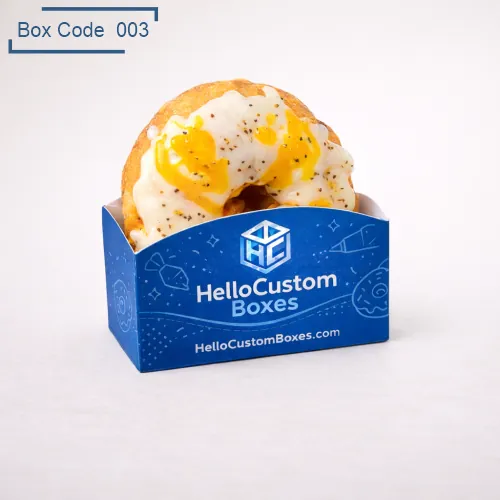
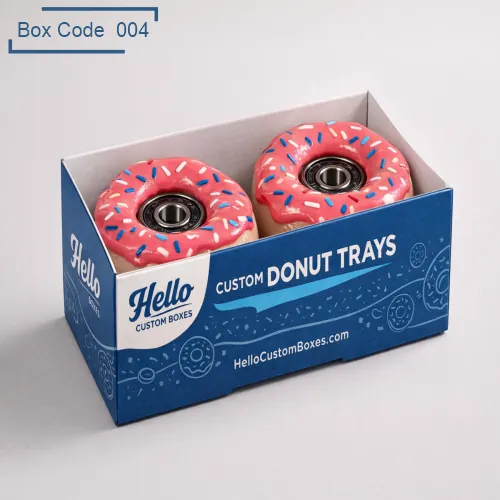
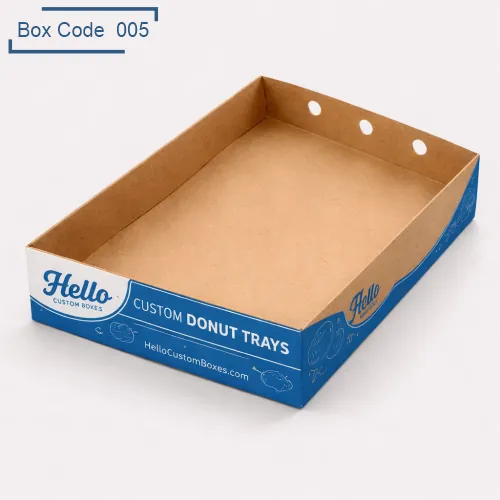
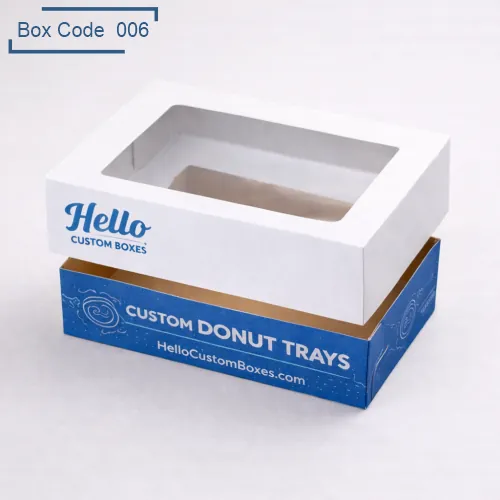
Tell us your specs and we'll send pricing within one business day.
A donut tray works best when it is designed around the product that will actually sit in it. Diameter is only one measurement. Height, toppings, filling, and the number of donuts packed together can all change the space each piece needs.
Ring donuts may sit comfortably in a relatively simple layout, while tall, filled, heavily glazed, or decorated donuts can need more clearance around the top and sides. A cavity that is too tight can contact toppings or make the donut awkward to remove. Too much space gives the product more room to shift during handling.
For that reason, custom donut trays should be developed from the actual donut dimensions and packed arrangement rather than a generic cavity size.
If several donut styles share one box, the largest or most delicate products should also be considered before the tray layout is finalized.
The tray and outer box need to work as one packaging setup.
A well-fitted tray can separate individual donuts, but it will not help much if the entire insert has excessive room to move inside the box. Tray length, width, height, cavity arrangement, and outer-box dimensions should therefore be considered together.
This is also why donut trays are generally used as an internal packaging component rather than treated as the complete package. The outer carton provides the main enclosure and branding area, while the tray organizes the donuts inside.
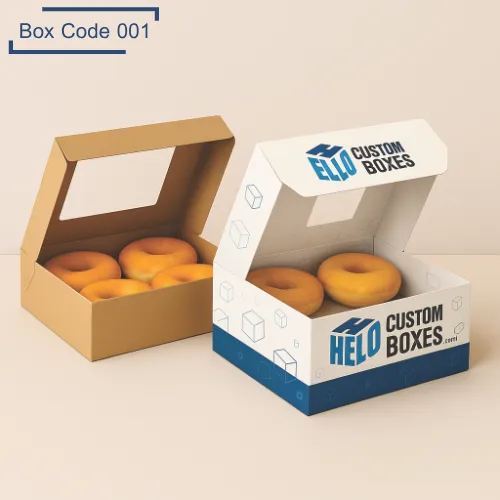
For businesses developing the complete pack, trays can be sized to work with custom donut boxes rather than forcing a stock insert into an unsuitable carton.
This approach is useful for single-layer assortments, multi-donut orders, takeaway packs, and bakery boxes where presentation matters when the lid is opened.
Donuts vary more than a standard size chart suggests.
A six-count order of plain ring donuts does not necessarily need the same cavity layout as six filled or decorated pieces. Diameter, finished height, topping coverage, and spacing between neighboring donuts all affect the fit.
The goal is not to grip each donut tightly. A practical cavity provides enough clearance for packing and removal while limiting unnecessary sideways movement.
Spacing also matters when toppings extend beyond the main body of the donut. Allowing room between neighboring pieces can reduce contact between glaze, icing, decorations, and adjacent products during normal handling.
For repeat orders, providing actual product dimensions—or a sample where appropriate—can make the tray specification more reliable than selecting cavities from assumed donut sizes.
Material choice should follow the donut, tray structure, and intended handling rather than assuming one board works best for every bakery order.
Paperboard can provide a clean, lightweight tray for many retail bakery packs. Kraft board offers a more natural presentation where that appearance suits the outer packaging. Board thickness also needs to suit the tray dimensions, cavity layout, and number of products being supported.
Glazed, iced, or oily bakery products may introduce additional surface requirements. Where grease resistance, coatings, inks, or direct food-contact considerations are relevant, those requirements should be identified when the tray specification is discussed rather than assuming every board or printed finish provides the same performance.
Printing can be kept simple when required. A logo or restrained brand detail may be enough because the outer bakery box usually carries most of the customer-facing artwork.
Brands developing a wider range can also coordinate trays with their custom bakery packaging without giving every internal component the same print treatment as the outer box.
A tray should make repeated packing more predictable, not add unnecessary work.
When each donut has an intended position, staff do not need to repeatedly rearrange pieces before closing the box. A consistent cavity layout can also make it easier to maintain the same presentation across takeaway, delivery, and larger bakery orders.
Small structural details become more noticeable at volume. Die-cut areas should release cleanly, the tray needs enough support for the packed arrangement, and any folding steps should remain practical when employees are assembling many packs.
The outer box also needs sufficient headroom for the donuts being packed. A tray can control sideways movement, but it cannot compensate for a carton lid that sits too close to tall icing or decorations.
For businesses ordering custom donut trays in bulk, the most useful structure is usually the one that balances product fit with straightforward assembly and repeat packing.
You do not need a finished tray design before requesting pricing.
Start with the donut diameter and approximate finished height, the number of pieces going into each box, and your required order quantity. If you already use an outer donut box, provide its internal dimensions or an existing sample or dieline so the tray can be considered around the available space.
For mixed assortments, include the dimensions of the largest or most delicate donut styles where possible. Let us know if the tray needs printing or if there are specific board, coating, or packing requirements to consider.
Hello Custom Boxes can use those details to determine a suitable tray size, cavity arrangement, board specification, and relationship with the outer bakery box before production.
Specifications |
|
|---|---|
| Materials | Food-grade SBS paperboard (300–400 gsm), white cardboard stock, kraft board, bux board, corrugated E-flute, FSC-certified recyclable materials, optional grease-resistant coating. |
| Tray Style | Open-top tray design, flat base with raised side walls, one-piece die-cut tray structure, stackable bakery trays, compatible with outer boxes and lids. |
| Product Protection | Die-cut donut cavities, partition dividers, grease-resistant inner surface, frosting protection, stable tray layout for secure transport. |
| Surface Finish | Smooth printable surface, matte or gloss lamination, anti-grease coating, food-safe finish, durable texture for bakery display and handling. |
| Printing | CMYK & Pantone matching, offset/digital printing, bakery artwork, logo printing, spot UV, foil stamping, inside printing optional. |
| Retail Features | Bakery counter display ready, stackable storage format, takeaway compatible, suitable for retail shelves and bakery presentation. |
| Durability | Grease and moisture-resistant structure, reinforced edges, stable base support, prevents bending during transport and handling. |
| Sizes | Custom tray sizes for 4, 6, 12, and 24 donuts with flexible spacing for standard, glazed, or filled donuts. |
| Wholesale | Low MOQ, bulk production pricing, custom dieline development, production sampling, strict print and structural quality control. |
| Sustainability | Recyclable and biodegradable materials, food-safe eco inks, plastic-free tray options, sustainable bakery packaging solutions. |
Choose from practical materials, print methods, inks, finishes, and add-ons for a better product presentation.
Premium bleached substrate engineered for retail-ready packaging with sharp, high-resolution print performance across bulk SKUs.
High-density rigid board built for wholesale cartons, structural strength, and stack-ready warehouse logistics.
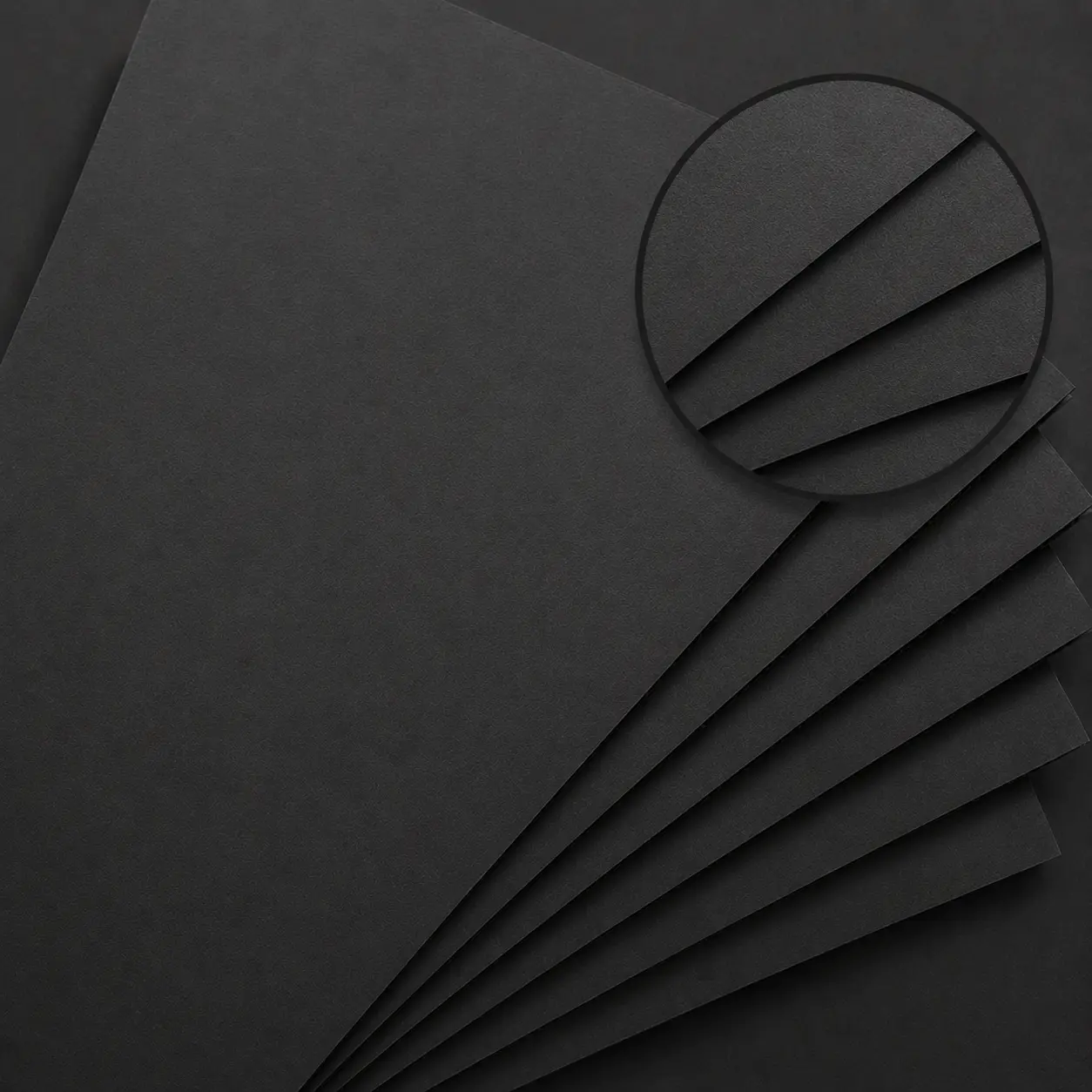
Eco-conscious black kraft for premium unboxing programs, corporate gifting, and limited-edition product lines.
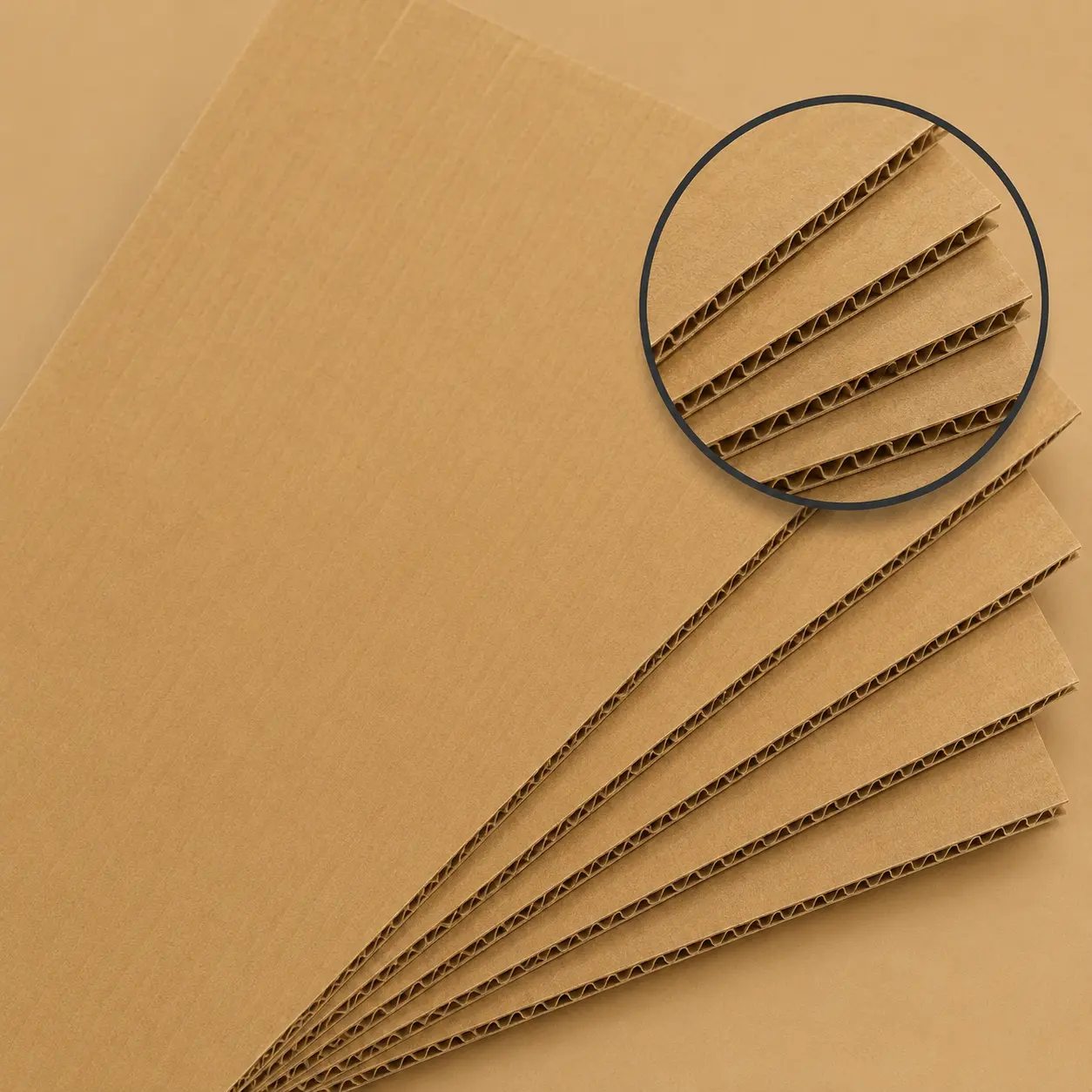
Multi-flute corrugated board built for protective shipping, e-commerce dispatch, and high-volume B2B fulfillment.
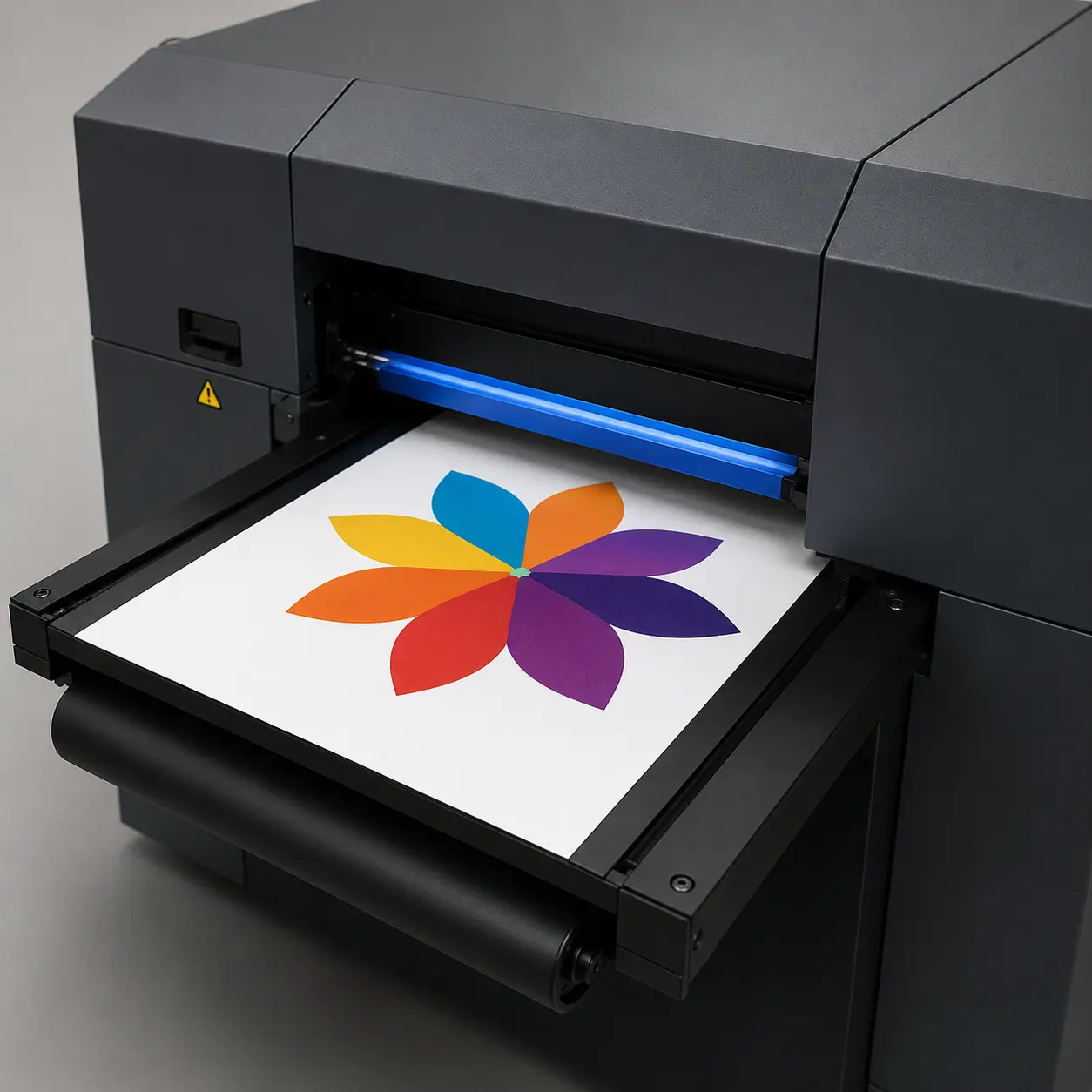
Short-run digital printing with no plate setup — ideal for prototypes, sample approvals, and quick reorders.
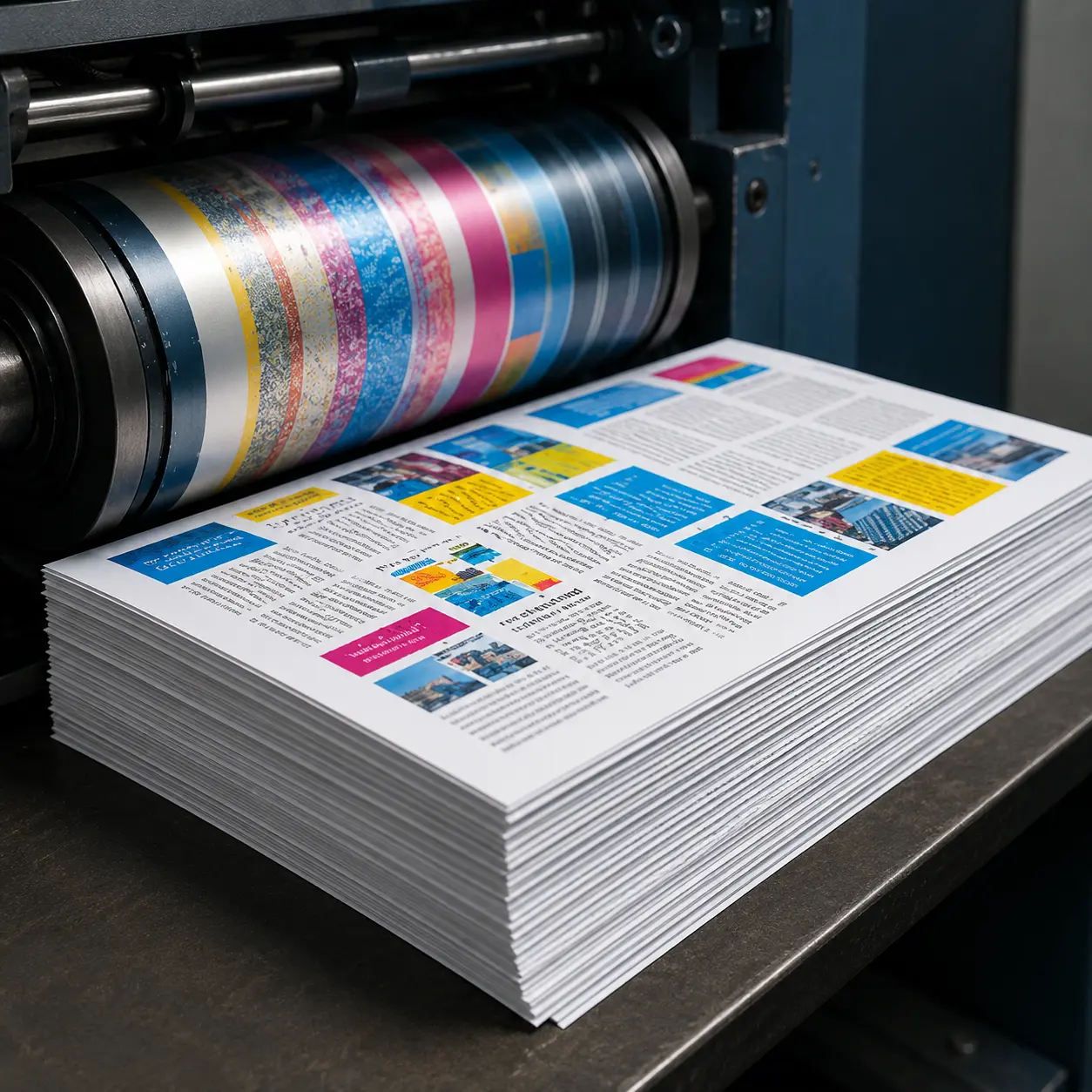
Industry-standard offset printing for high-volume runs with consistent color matching across bulk production.

Selective dimensional embellishment for premium B2B branding, tactile depth, and shelf differentiation.

Vibrant UV-cured printing suited for promotional packaging, event giveaways, and trade-show units.
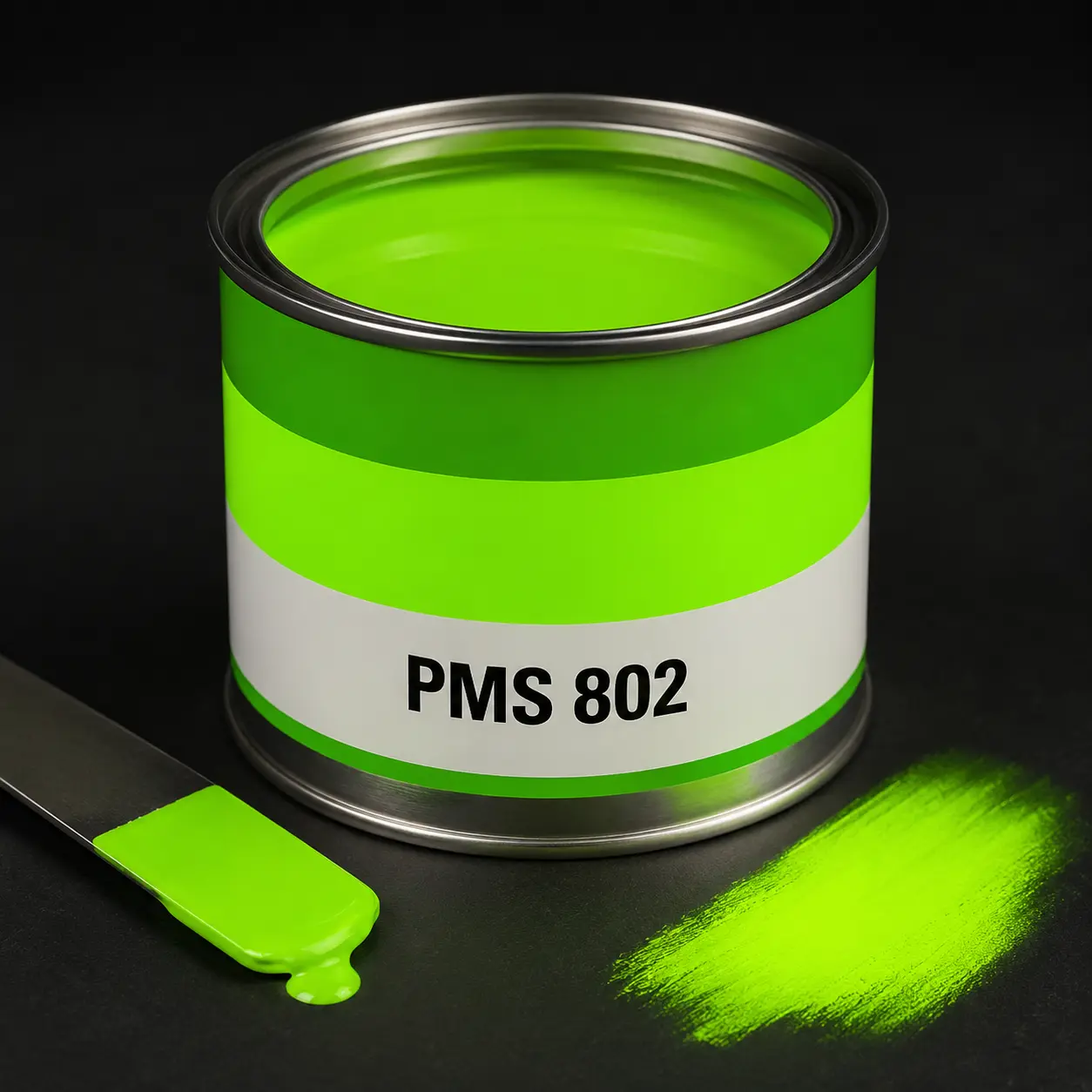
High-visibility ink system engineered for shelf impact, retail displays, and wholesale point-of-sale units.
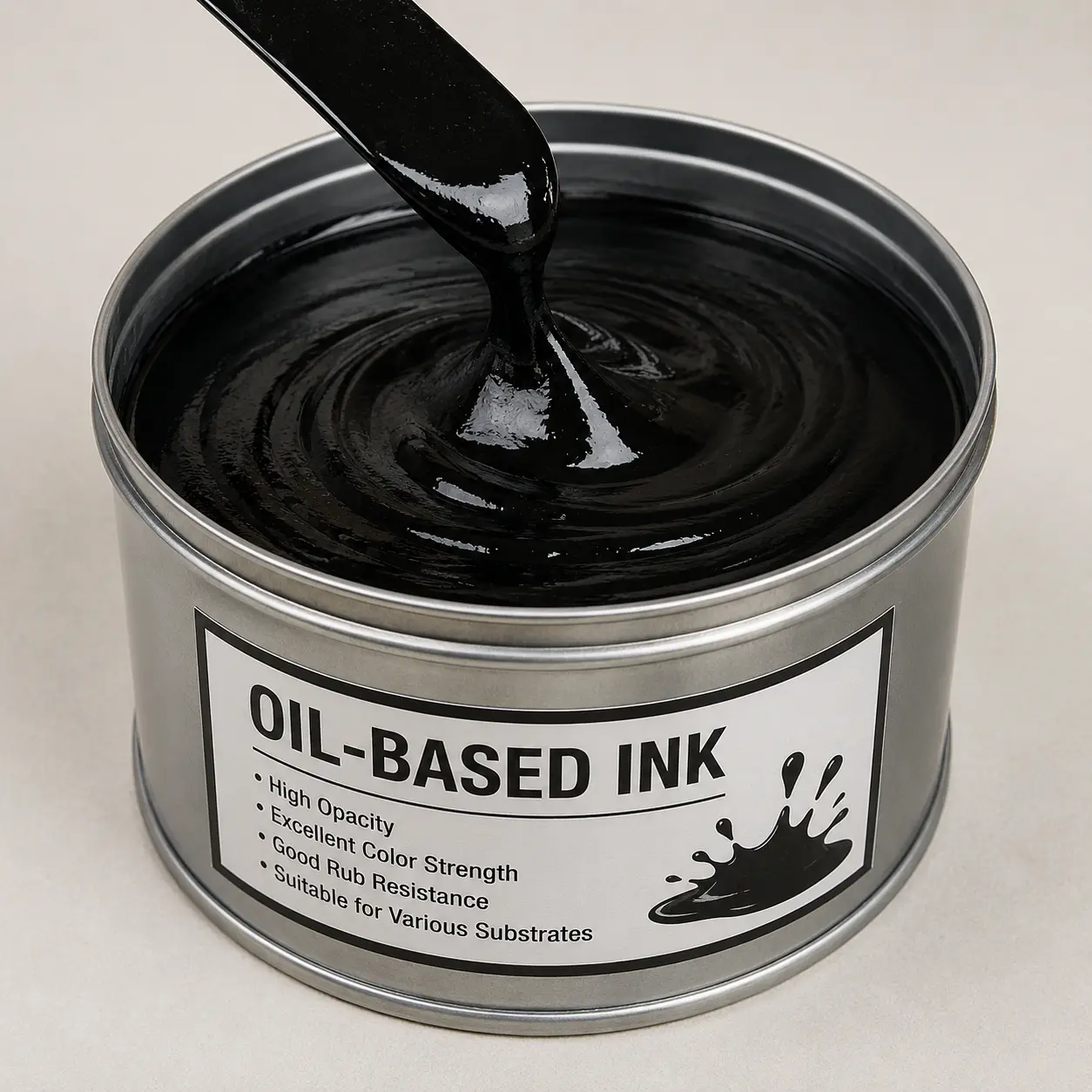
Industry-grade ink for durable, scuff-resistant production runs across long-haul distribution.

Spot-color matching to corporate brand standards — consistent identity across every SKU and reorder.

Sustainable plant-based ink for eco-certified packaging programs and ESG-aligned product launches.

Protective film extends shelf life and protects packaging during shipping and warehouse handling.

Water-based protective seal — fast-drying, food-safe-friendly finish for high-volume bulk production.

Premium tactile finish that elevates corporate gifting boxes and high-end B2B product lines.

Highlight logos and key artwork with selective gloss for maximum retail brand recognition.

Raised brand marks for tactile, premium identity on retail shelves and corporate packaging.

Pressed impressions for subtle, sophisticated branding on premium B2B product lines.

Metallic foil application — gold, silver, and custom finishes for luxury wholesale packaging.
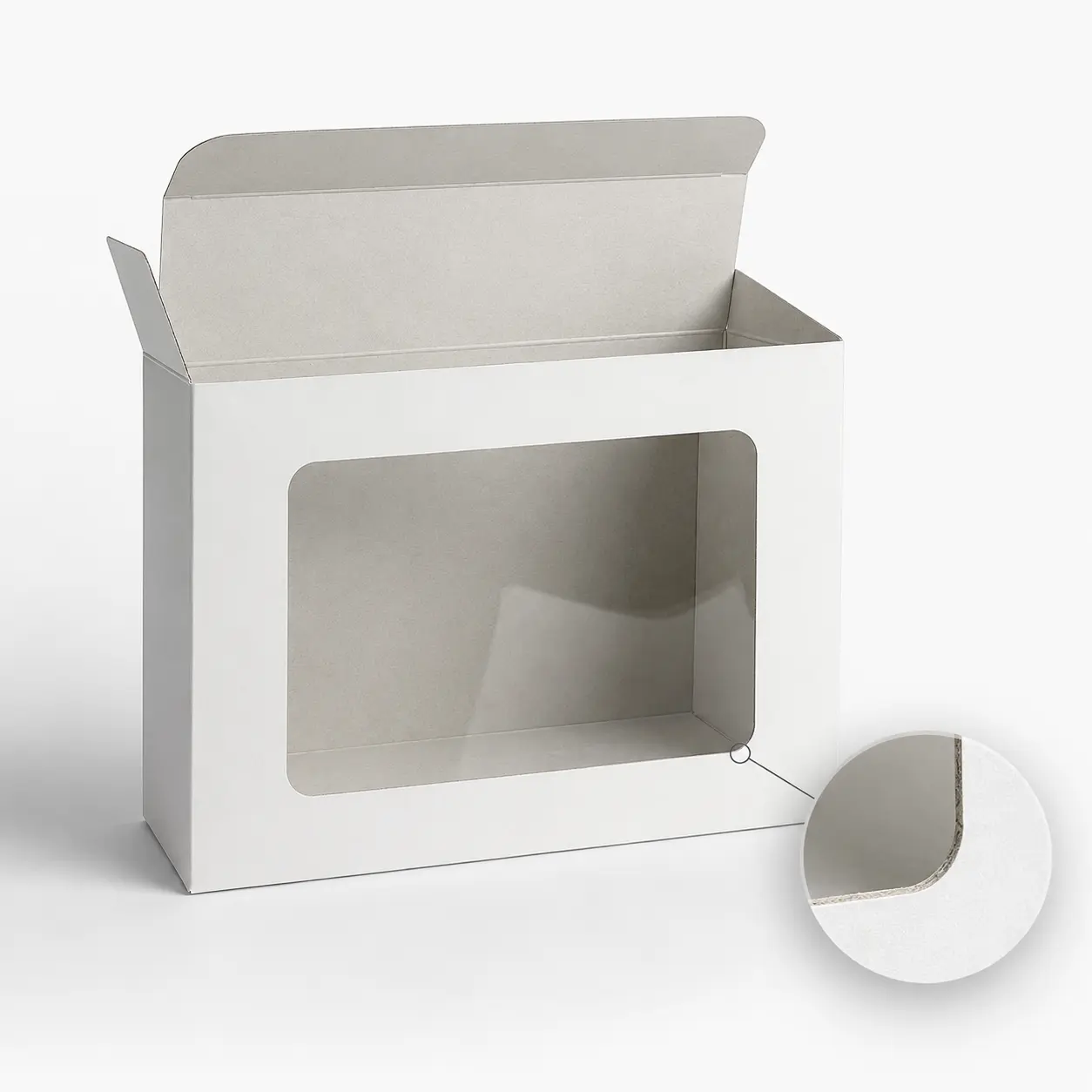
Precision die-cut openings that let customers view the product inside, with optional clear patching for better protection and presentation.
Simple, practical, and built around real B2B production needs.
Send product size, quantity, material preference, artwork, and delivery details.
Our team prepares a proof or 3D mockup so you can check design and structure.
Once approved, your packaging moves into printing, cutting, finishing, and packing.
Finished boxes are packed and shipped to your warehouse, retailer, or 3PL.
Explore similar packaging options that may fit your product line.

Reviews
There are no reviews yet.