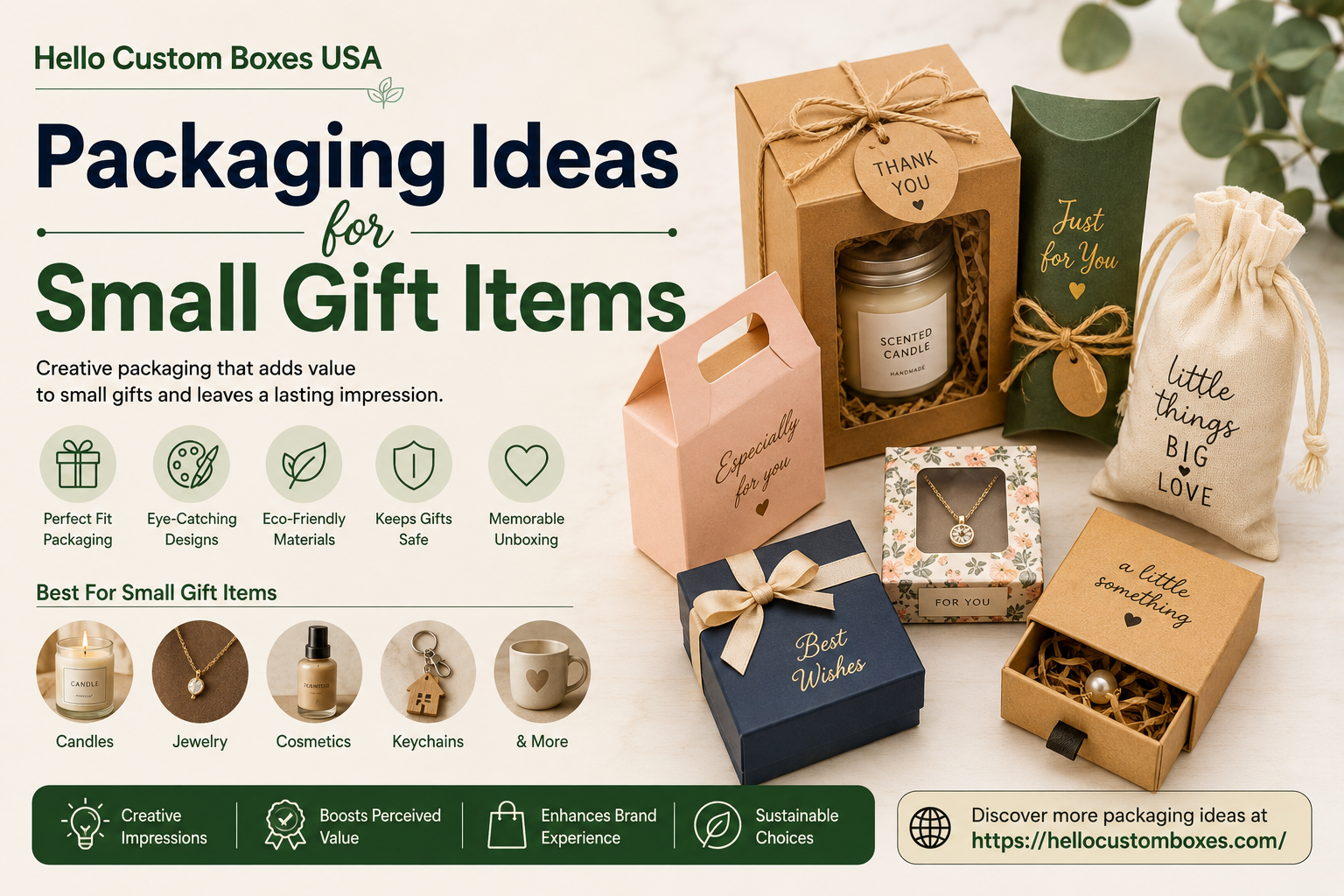
TL;DR — Quick Answer
The best packaging for small gift items depends on the product’s size, weight, fragility, and how it will be presented or shipped.
Start with the product dimensions first. Choose the structure next, then decide on materials, printing, and finishes.
Packaging Ideas for Small Gift Items That Actually Work
Small gifts are easy to overpackage.
A ring, gift card, candle, cosmetic jar, soap bar, or small accessory may need protection, but placing it inside a box with too much empty space can make the item look smaller and less considered.
The better approach is to choose packaging around the product itself.
It should hold the item securely, look proportionate when opened, and suit the way the gift reaches the customer.
Here are some practical Ideas options.
1. Rigid Boxes for Premium Small Gifts
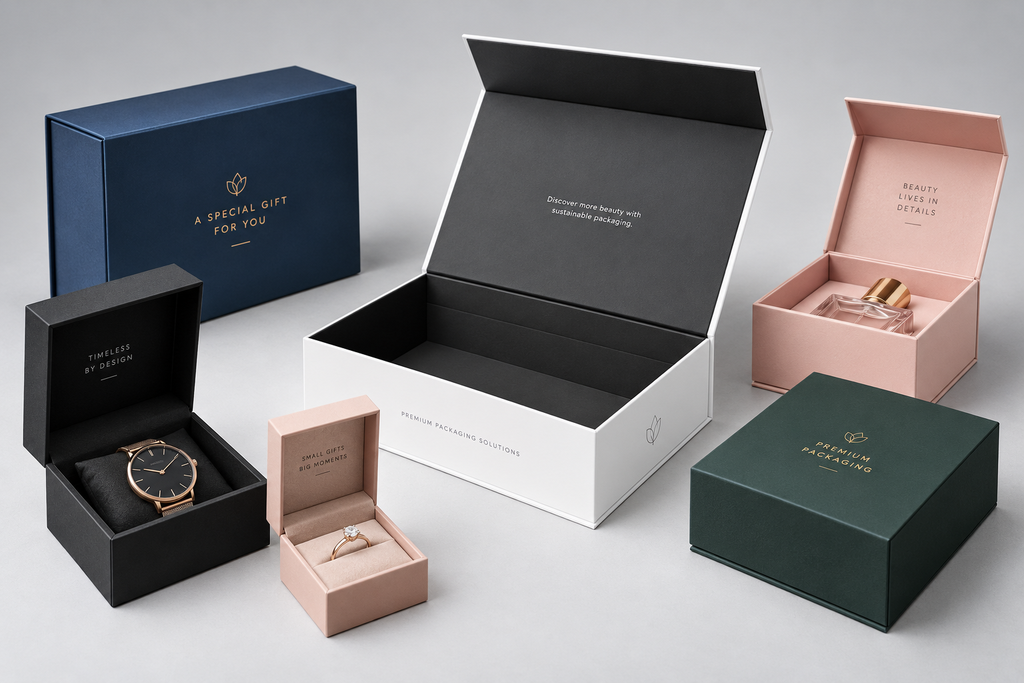
Rigid boxes work well for jewelry, candles, accessories, cosmetics, keepsakes, and other gifts where presentation matters.
Their thicker construction keeps the box in shape and gives the product a more substantial setting.
The inside still needs careful sizing. A small item placed deep inside a large rigid box can look lost. A fitted insert can raise and center it without increasing the overall dimensions.
For rings, earrings, bracelets, and similar products, properly fitted jewelry packaging boxes can provide both support and a cleaner presentation.
2. Drawer Boxes for Jewelry and Accessories
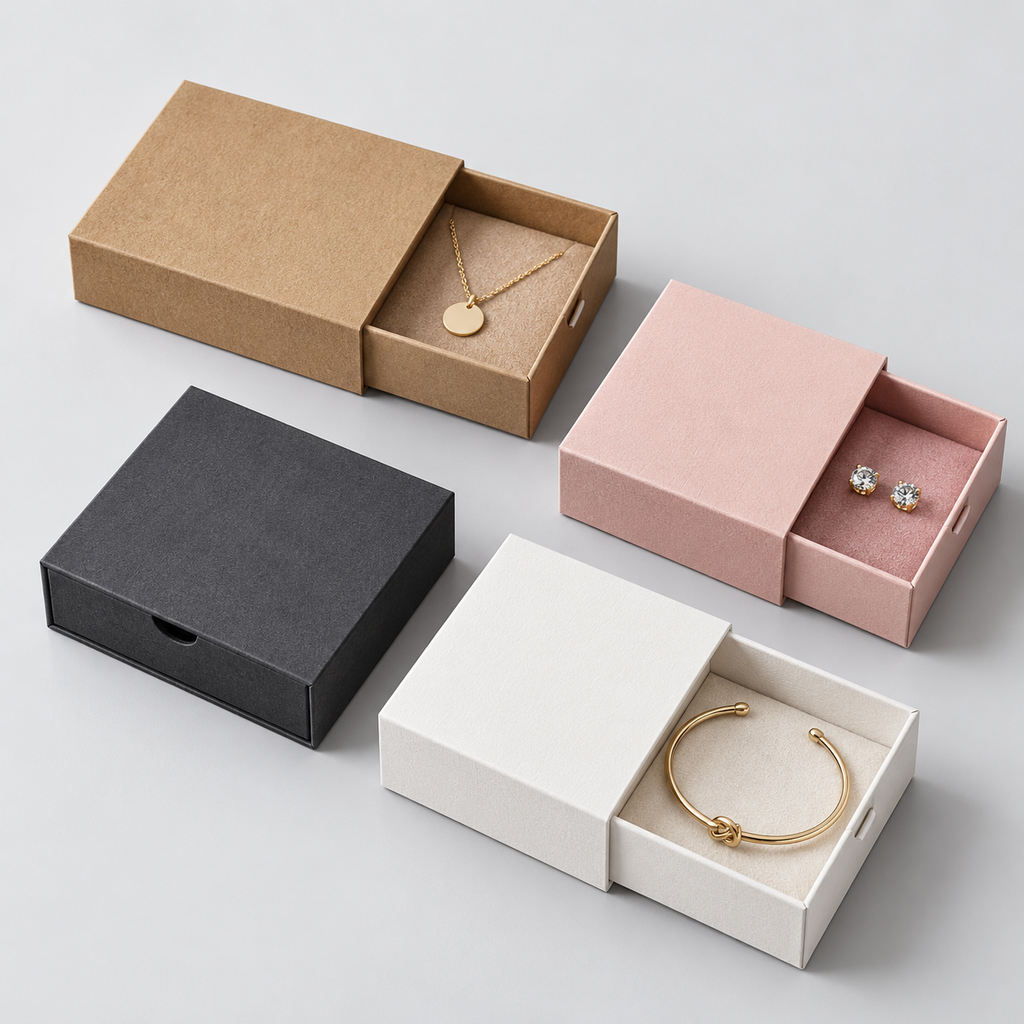
Drawer boxes use an inner tray that slides from an outer sleeve.
They suit small products such as jewelry, watches, handmade accessories, collectibles, and premium samples because the tray can be built close to the item’s dimensions.
An insert can also be added when the product needs to remain in one position.
For flatter gifts, such as vouchers or prepaid cards, a compact gift card presentation box keeps the card visible without surrounding it with unnecessary space.
3. Pillow Boxes for Lightweight Gifts
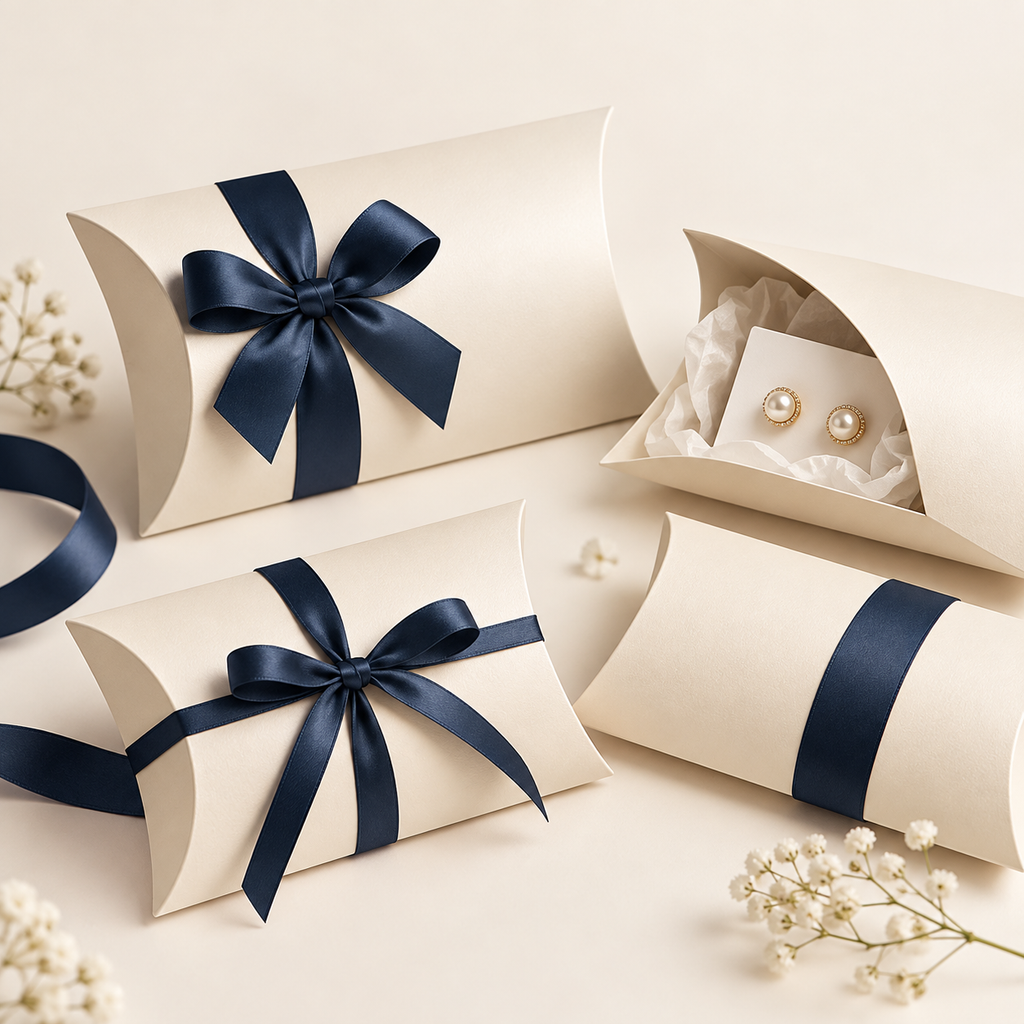
Pillow boxes are useful for lightweight items that do not require heavy structural protection.
They can work for:
- Small accessories
- Gift cards
- Wrapped sweets
- Product samples
- Event favors
- Handmade items
Their curved shape already gives them a gift-ready appearance, so a ribbon, label, printed pattern, or simple logo is often enough.
They are less suitable for heavy bottles, glass items, or products that need strong corner protection.
4. Window Boxes When the Gift Should Stay Visible
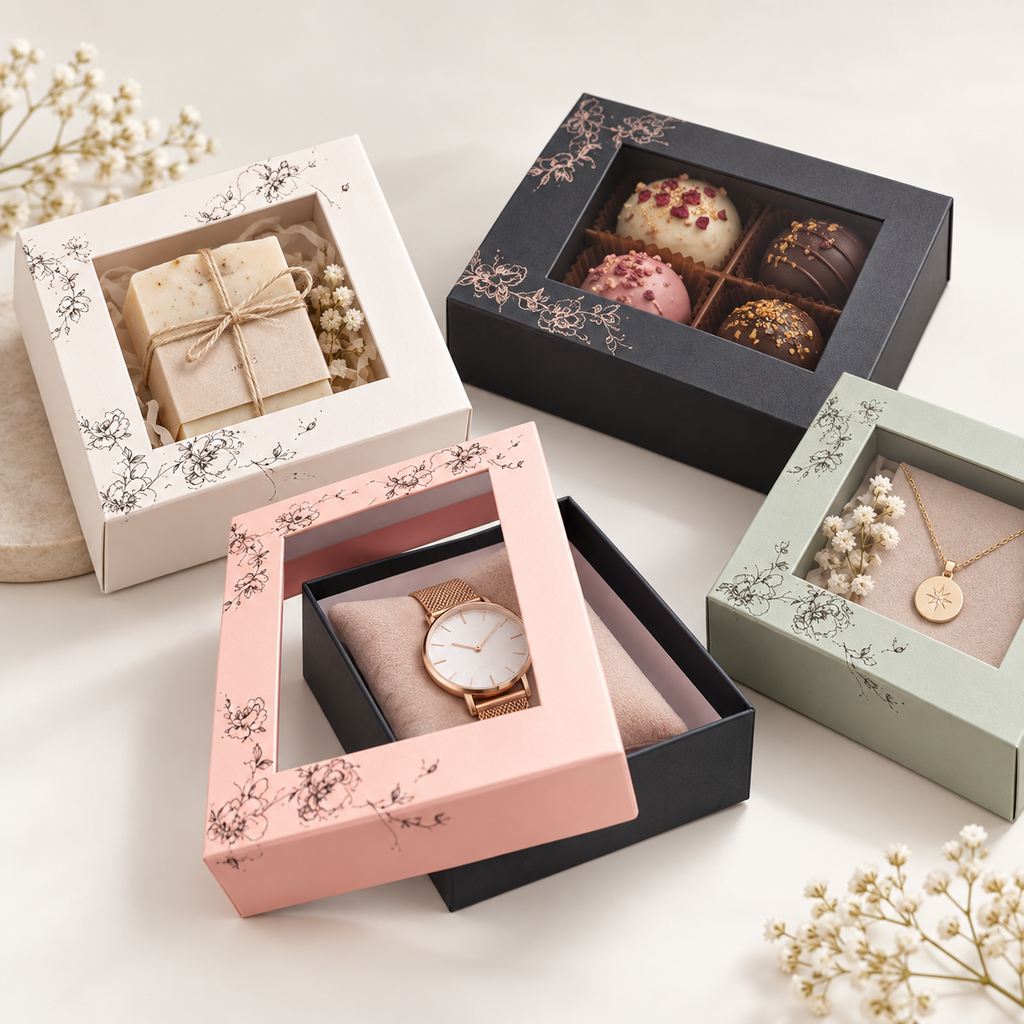
Some products benefit from being seen before the box is opened.
Candles, soaps, confectionery, cosmetics, and decorative handmade products are good examples.
In these cases, gift boxes with a display window allow the product to become part of the presentation.
The item should remain aligned with the window during handling. If it moves to one side, the display loses its effect. Close dimensions or a simple insert can help keep everything in position.
5. Gable Boxes for Party and Event Gifts
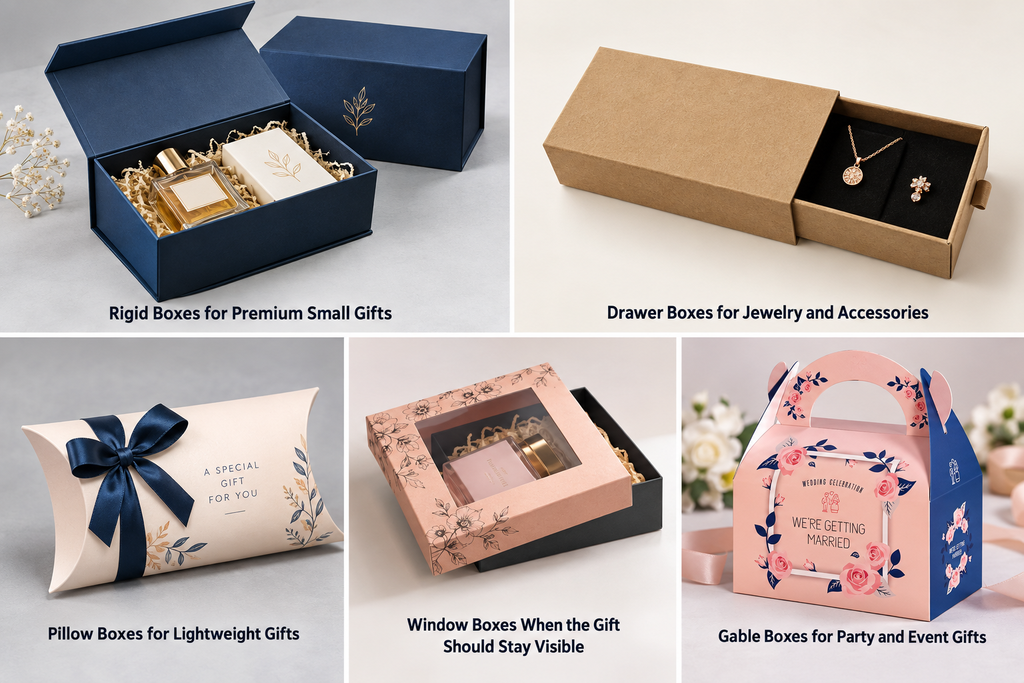
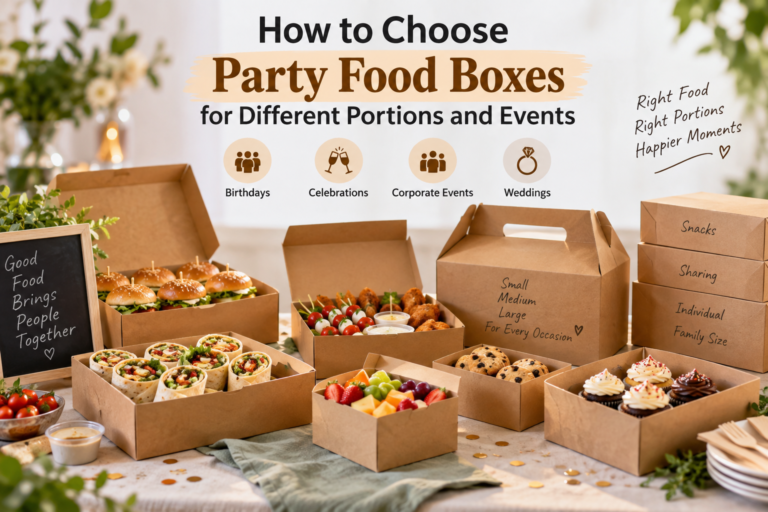
Gable boxes combine the package with a built-in handle.
That makes them useful for gifts that will be displayed, carried, and handed out directly.
They suit:
- Birthday favors
- Wedding gifts
- Small food gifts
- Holiday treats
- Promotional packs
- Event giveaways
For events where many individual packages need to be distributed, gable-style gift boxes can reduce the need for separate gift bags.
6. Folding Cartons for Larger Quantities
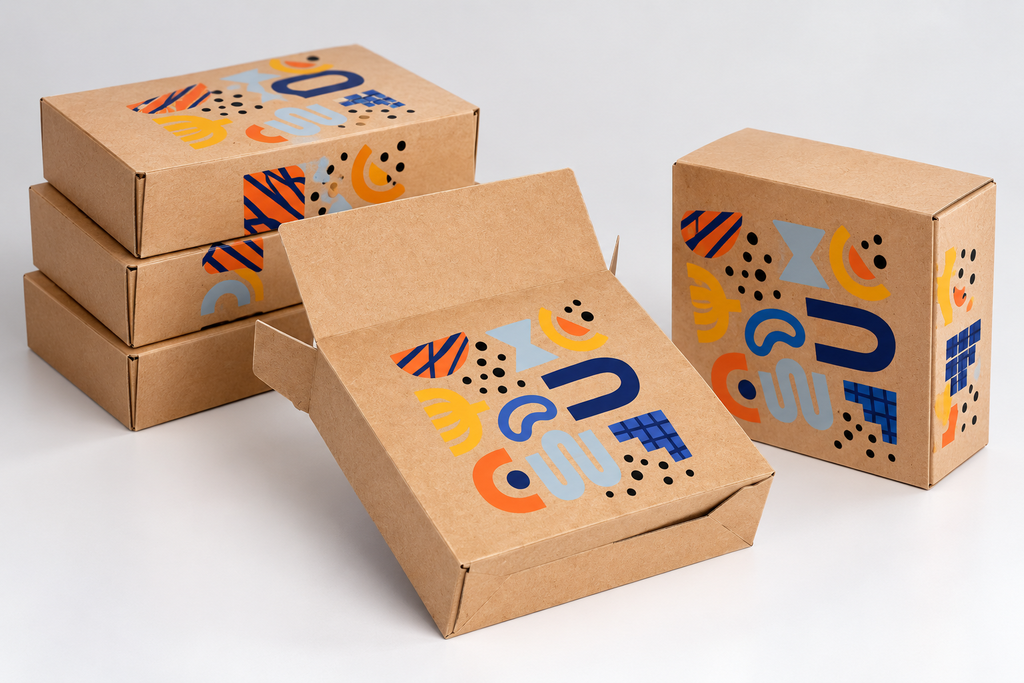
Not every small gift needs rigid packaging.
Folding cartons are practical for cosmetics, soaps, candles, accessories, promotional items, and retail products that need packaging in larger quantities.
They are lightweight and can usually be stored flat before assembly.
The main consideration is fit. Even a modest amount of unused space becomes noticeable with a small product.
If the item needs a little extra support, a paperboard insert can often solve the problem without increasing the outer box size.
7. Kraft Boxes for Handmade Gifts
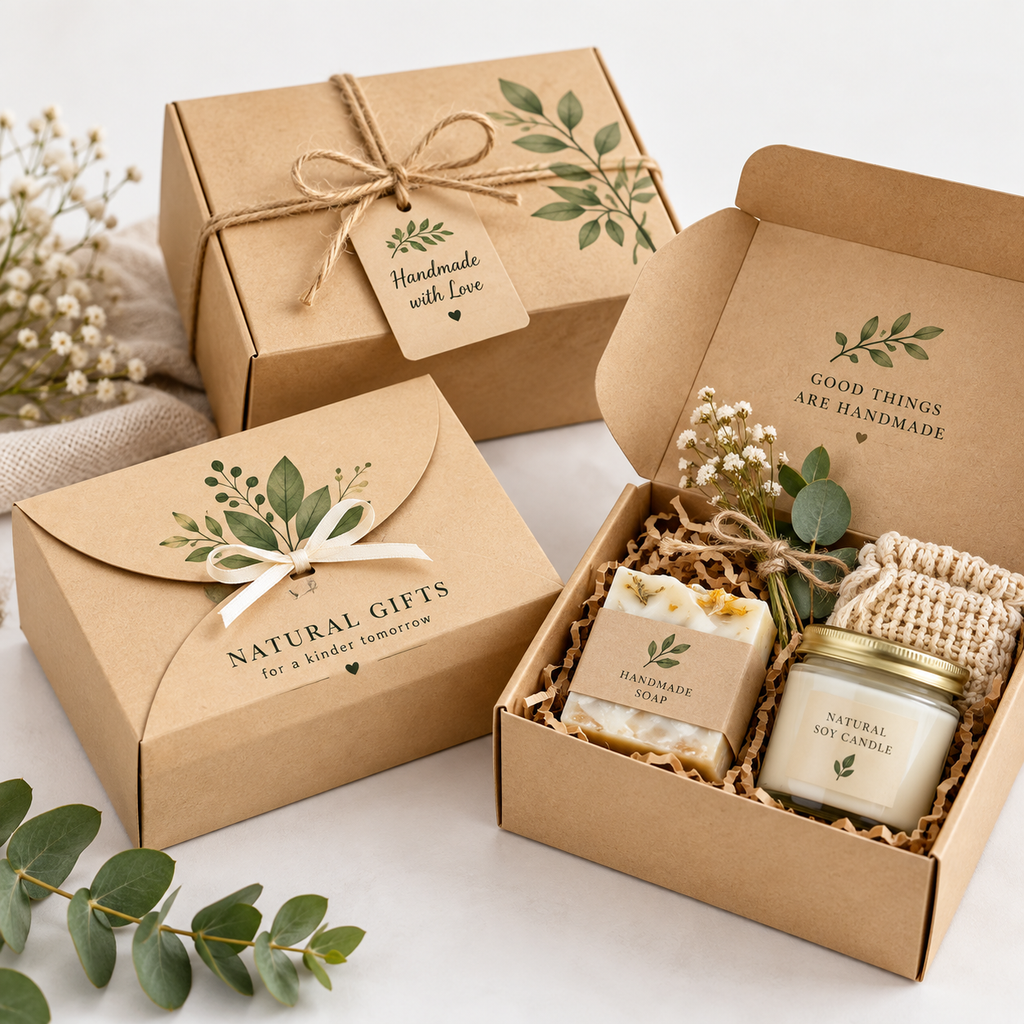
Kraft board suits products where a natural, simple appearance fits the brand.
It can work well for handmade soap, candles, jewelry, craft products, natural cosmetics, and small favors.
Kraft does not usually need heavy decoration. A restrained logo, label, sleeve, or limited-color print may be enough.
Keep in mind that printed colors can appear different on brown kraft than on white board. If color accuracy matters, review how the artwork will reproduce. HCB’s guide to RGB and CMYK printing explains the difference between screen and print color.
8. Gift Card Boxes for Flat Gifts
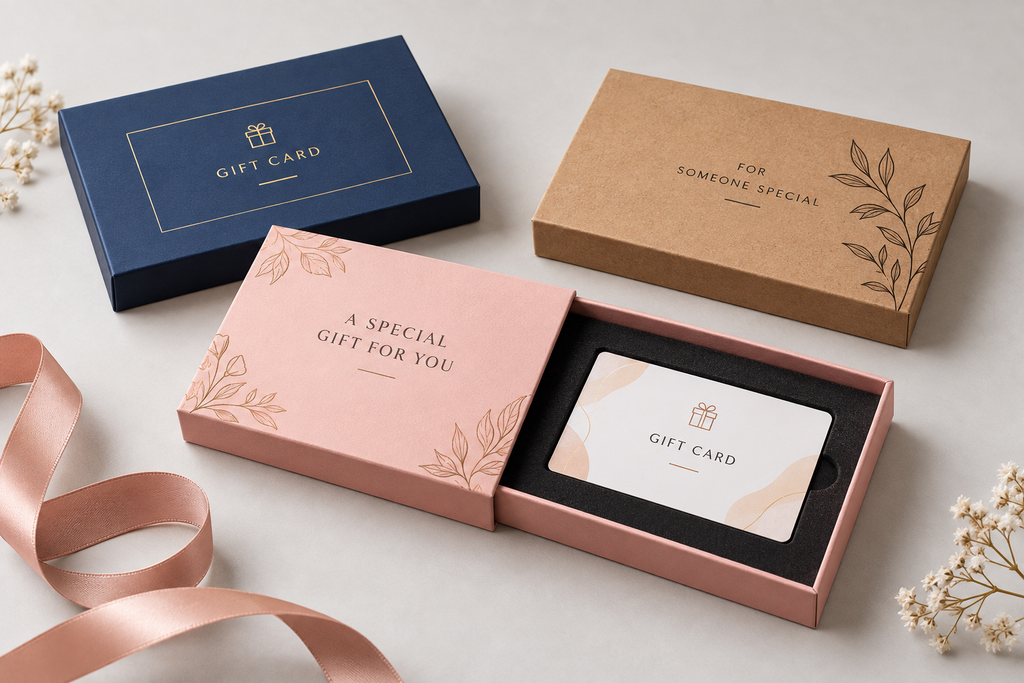
A gift card takes up very little space, so placing it loose inside a large box rarely works well.
A shallow box with a die-cut slot or fitted holder keeps the card centered and easy to see.
The same approach can be used for:
- Membership cards
- Experience vouchers
- Corporate reward cards
- Promotional cards
A printed message inside the lid can add personalization without increasing the box size.
9. Themed Boxes for Special Occasions
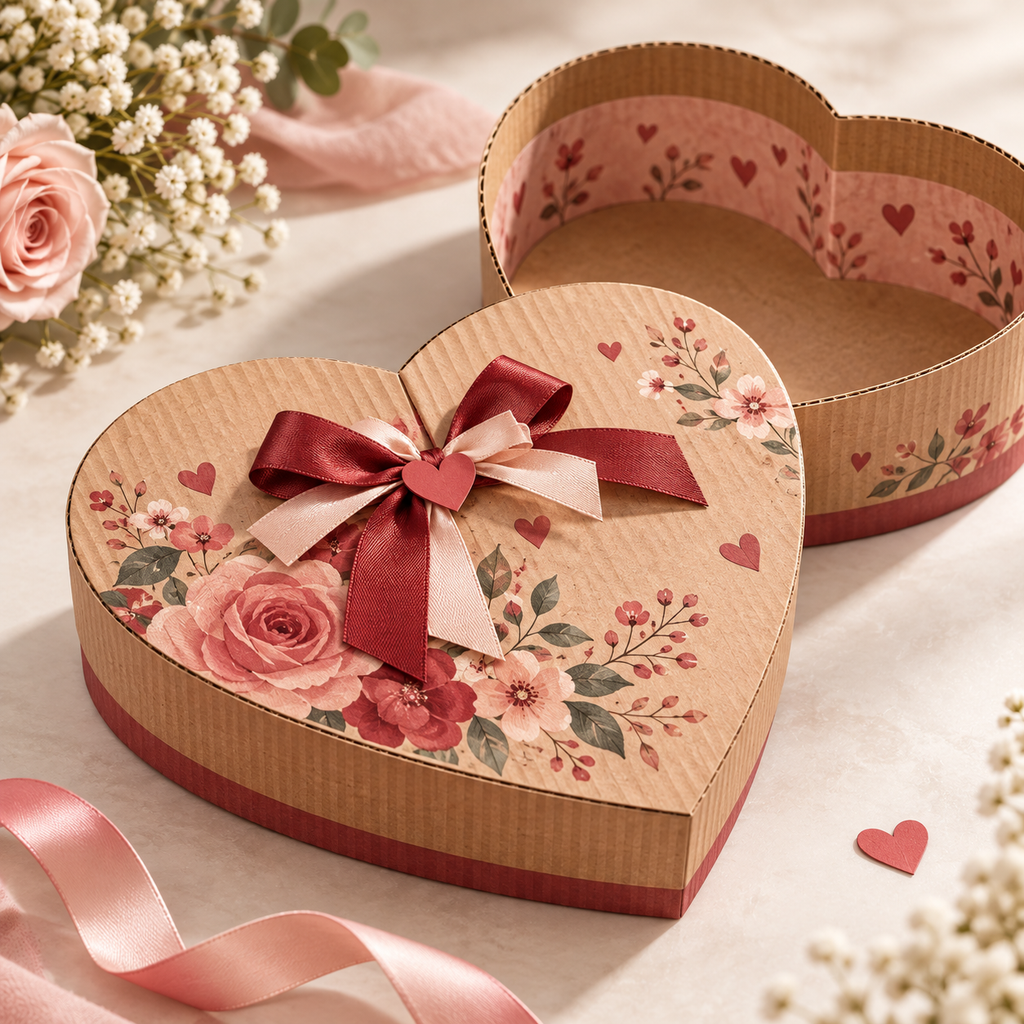
Sometimes the structure itself can support the occasion.
For Valentine’s Day, anniversaries, or romantic collections, heart-shaped gift boxes can work for chocolates, jewelry, candles, and other small gifts.
Seasonal graphics, sleeves, ribbons, or themed artwork can also change the feel of an existing box without redesigning the whole structure.
The shape should still suit the product. An unusual design is only useful when the item can sit securely inside it.
10. Gift Sets With Inserts or Dividers
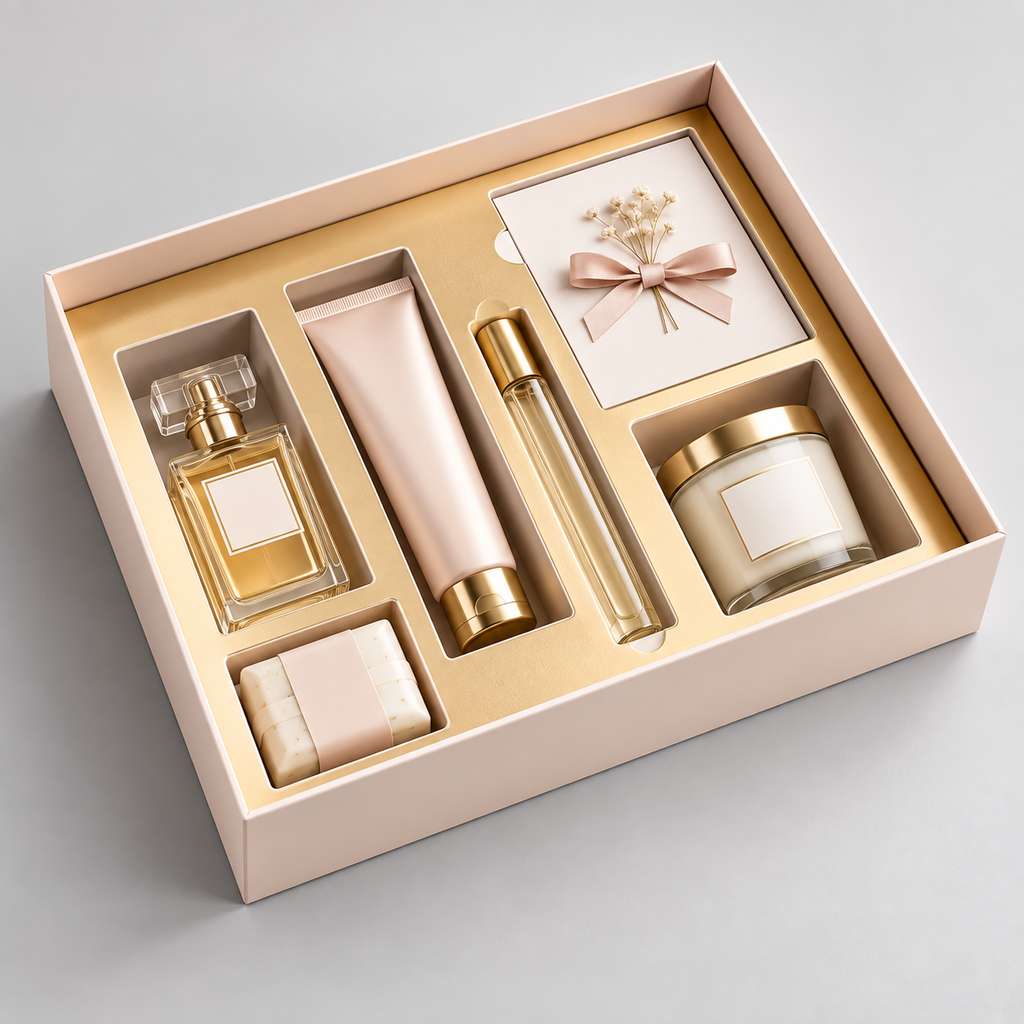
Several small items can often be presented better as one coordinated set.
A fitted tray or divider creates a dedicated position for each product and prevents items from gathering in one corner.
This works well for:
- Skincare sets
- Mini candles
- Jewelry sets
- Sample kits
- Corporate gifts
- Promotional bundles
The outer box does not need to be oversized. The aim is to organize the products efficiently and leave only the clearance needed for packing and removal.
Quick Guide: Match the Box to the Gift
The table is a starting point. Weight, fragility, display needs, and shipping conditions can change the final choice.
How to Size Packaging for Small Gifts
Sizing should come before decoration.
Measure the gift itself, including anything that stays inside the package, such as a cap, protective wrap, tray, or insert.
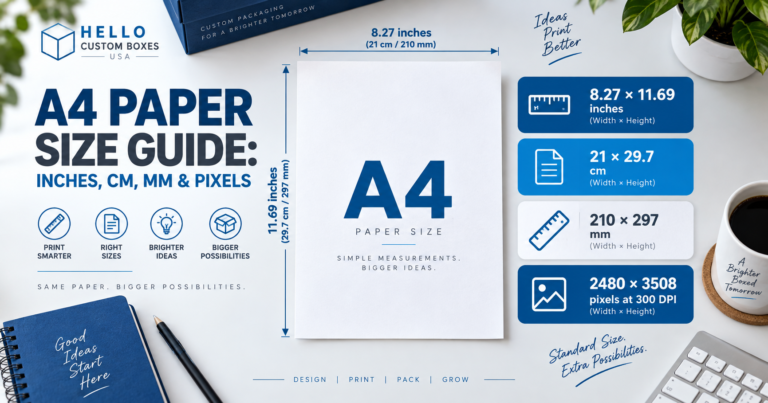
Box dimensions are generally written as:
Length × Width × Height
Before approving the size, check:
- Can the product slide from side to side?
- Can it rotate or tip over?
- Is it easy to insert and remove?
- Does the box look proportionate when opened?
HCB’s box sizes and dimensions guide explains how packaging measurements are normally taken.
Do not automatically choose a larger carton when the fit feels loose. A fitted insert is often the cleaner solution.
When Small Gifts Need an Insert
Not every product requires one.
A soap bar in a closely fitted carton may stay in place without extra support. Jewelry, bottles, candles, and multi-item sets are more likely to move.
An insert is useful when the product:
- Slides during handling
- Needs to stay centered
- Must line up with a window
- Has a delicate surface
- Contains several separate pieces
Paperboard inserts work well for many lightweight products. Corrugated supports provide more strength, while foam may be appropriate for delicate or premium items.
Use an insert because it solves a fit or protection problem, not simply to make the box look more complicated.
Choose the Material Around the Product
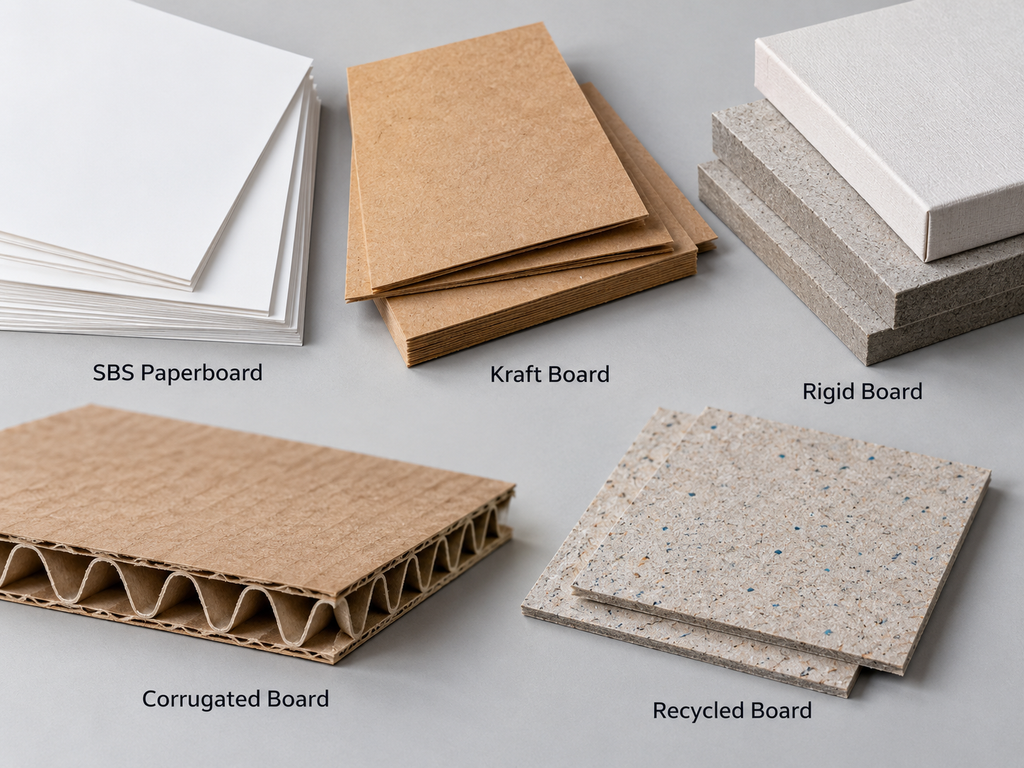
Once size and structure are clear, material selection becomes easier.
SBS paperboard provides a smooth surface for detailed printing and works well for folding cartons.
Kraft board offers a more natural appearance.
Rigid board is thicker and suits premium presentation packaging.
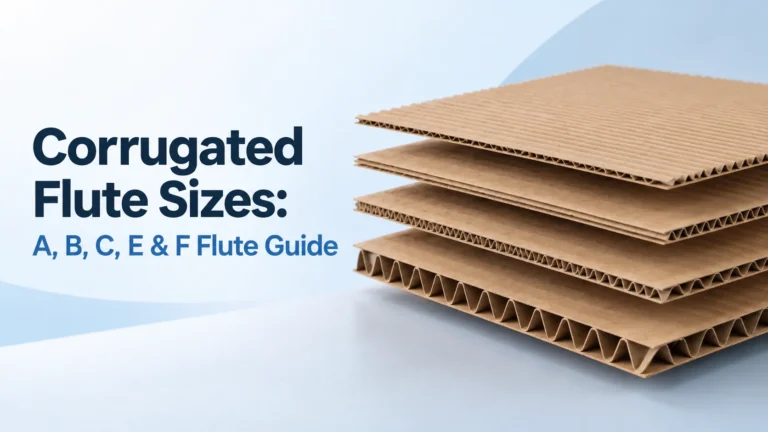
Corrugated board becomes more useful for heavier gift sets or packaging that also needs to handle shipping.
The thickest material is not automatically the best. The choice should match the weight, structure, handling conditions, and presentation required.
Finishes That Work on Smaller Boxes
Small packaging gives artwork less room, so restraint often works better.
Matte, gloss, foil, embossing, Spot UV, inside printing, and window cutouts can all be useful, but they do not need to appear together.
A foil logo or small embossed detail may create more impact than covering every panel with finishing effects.
Matte and gloss also behave differently in use. Matte gives a less reflective surface, while gloss creates more shine and stronger color contrast. HCB’s guide to matte and gloss packaging finishes explains the differences in more detail.
Packaging Ideas by Occasion
The same product may need a different presentation depending on why it is being given.
Birthdays: printed messages, bright sleeves, ribbons, or window boxes can add personality.
Weddings and events: gable, pillow, and favor boxes are compact and easy to distribute.
Corporate gifts: cleaner branding and organized inserts often work better than heavy decoration.
Seasonal gifts: keep the same structure and update the artwork where possible instead of redesigning the box for every campaign.
Small Gift Packaging for Ecommerce
A presentation box and a shipping box do not always have the same job.
A rigid gift box, for example, may still need a corrugated outer mailer to protect its corners and printed surface during delivery.
For ecommerce orders:
- Keep the inner packaging close to the product size.
- Stop loose items from moving.
- Add an outer mailer when the presentation box needs protection.
- Avoid oversized shipping boxes filled with unnecessary material.
- Test the complete packed order rather than the empty box alone.
The aim is for the customer to receive the gift in the condition it was meant to be seen.
How Hello Custom Boxes Builds Small Gift Packaging
The useful starting point is the product itself.
Its size, weight, shape, presentation, and shipping needs determine the structure.
A lightweight handmade item may only need a fitted folding carton. Jewelry may need a rigid box and insert. Several cosmetics may work better in a divided gift set. A product being mailed directly to customers may need both retail and transit protection.
Once the fit and structure are settled, printing and finishes can support the presentation instead of trying to fix a box that was too large or unsuitable from the start.
You can also explore HCB’s wider range of custom gift packaging options when comparing possible structures.
Frequently Asked Questions
Need Packaging Built Around a Small Gift?
Small products do not need more packaging. They need packaging that fits properly.
Hello Custom Boxes can develop folding cartons, rigid boxes, drawer boxes, window packaging, inserts, and gift sets around your product dimensions, artwork, quantity, and presentation needs.
Share your product size and packaging requirements to request a custom quote.