TL;DR
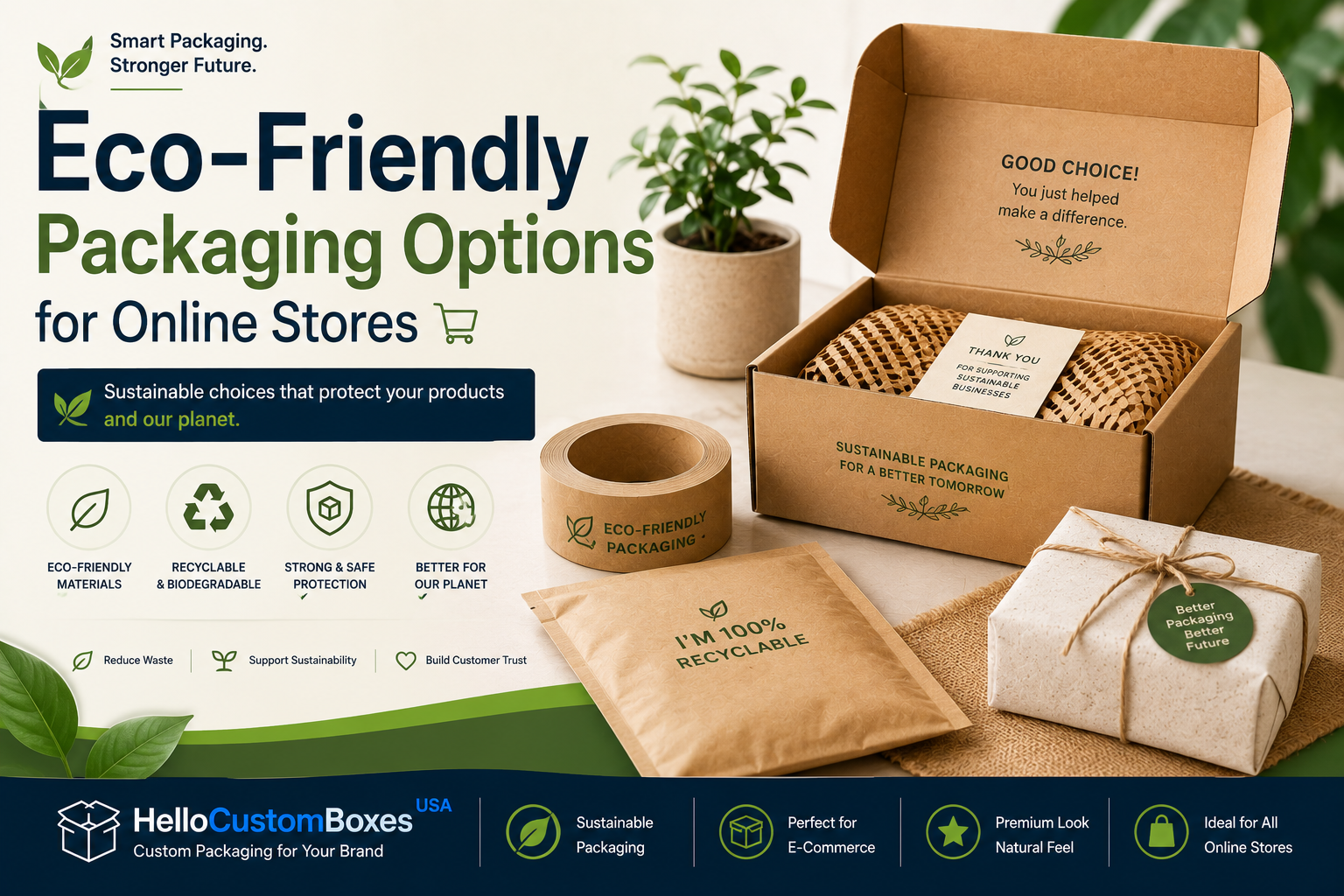
For online orders, eco packaging still has to work like proper packaging. It should not be too big, too weak, poorly printed, or difficult to recycle. Kraft is good for a natural look. SBS is better for cleaner printing. Corrugated is safer for shipping. Recycled paperboard helps cut down on new material. Put those choices together well, and the package can reduce waste, lower costs, protect the product, and support the brand.
Online stores now have to think beyond the product box itself. A package that is too large creates waste. Too much filler looks careless. Extra plastic can turn customers off. And if the item arrives crushed, cracked, bent, or sliding around inside the box, the customer remembers that.
Eco friendly packaging for online stores needs to be useful first. It should reduce waste where possible, but it still has to protect the product, look clean, and arrive in good condition.
For many growing brands, the better starting point is the box design. Get the size, fit, and opening style right first. After that, choose the board, printing, and finish.
Sustainability Starts with the Right Box Size
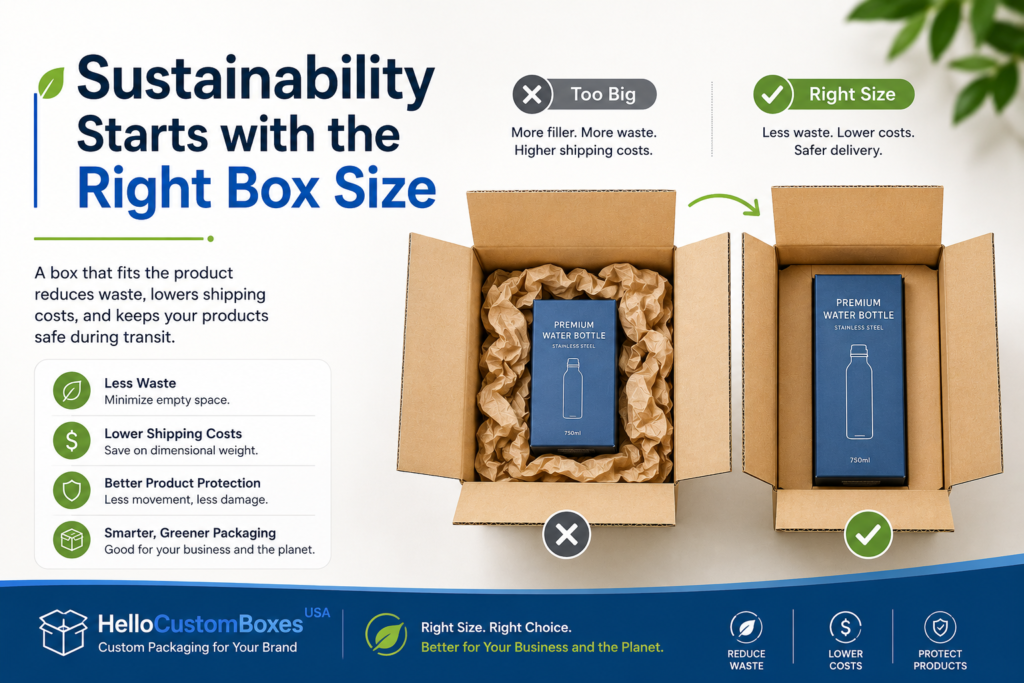
One of the easiest ways to reduce packaging waste is choosing a box that actually fits the product.
A surprisingly common issue in fulfillment centers is relying on one or two standard carton sizes for hundreds of different products. The result is predictable:
- More filler material
- Higher dimensional shipping charges
- Increased product movement
- Greater chance of corner damage
Packaging designed around the product minimizes empty space while improving protection during transit.
For example:
One lesson many businesses learn after shipping hundreds of orders is that even reducing box height by half an inch can noticeably lower shipping costs across thousands of shipments.
At Hello Custom Boxes USA, every box is built around your product’s actual size, layout, and structure, not from pre-made templates. That often eliminates unnecessary material before production even begins.
Best Eco-Friendly Packaging Products
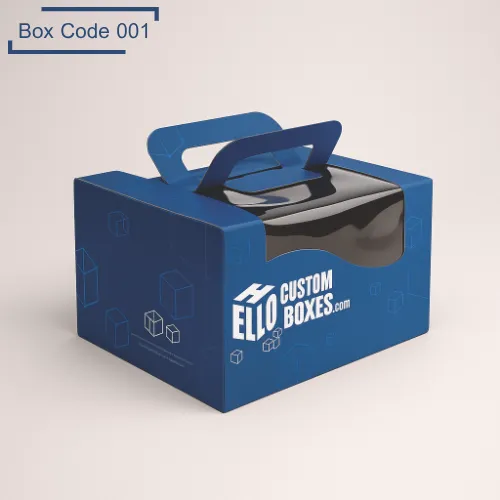
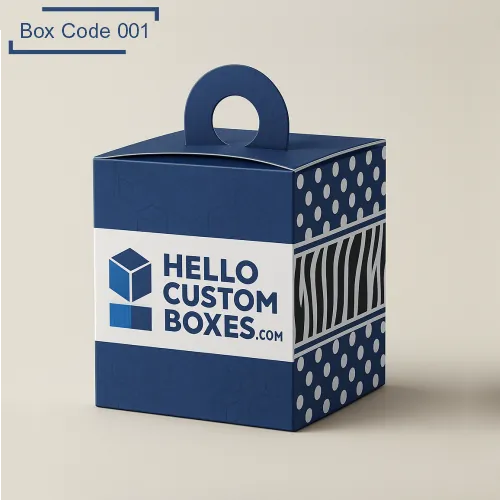
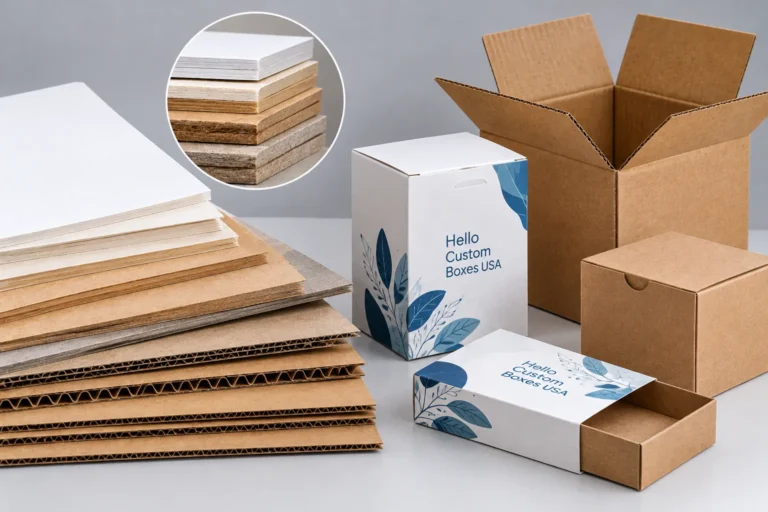
Materials Aren’t Equal—Each Solves a Different Problem
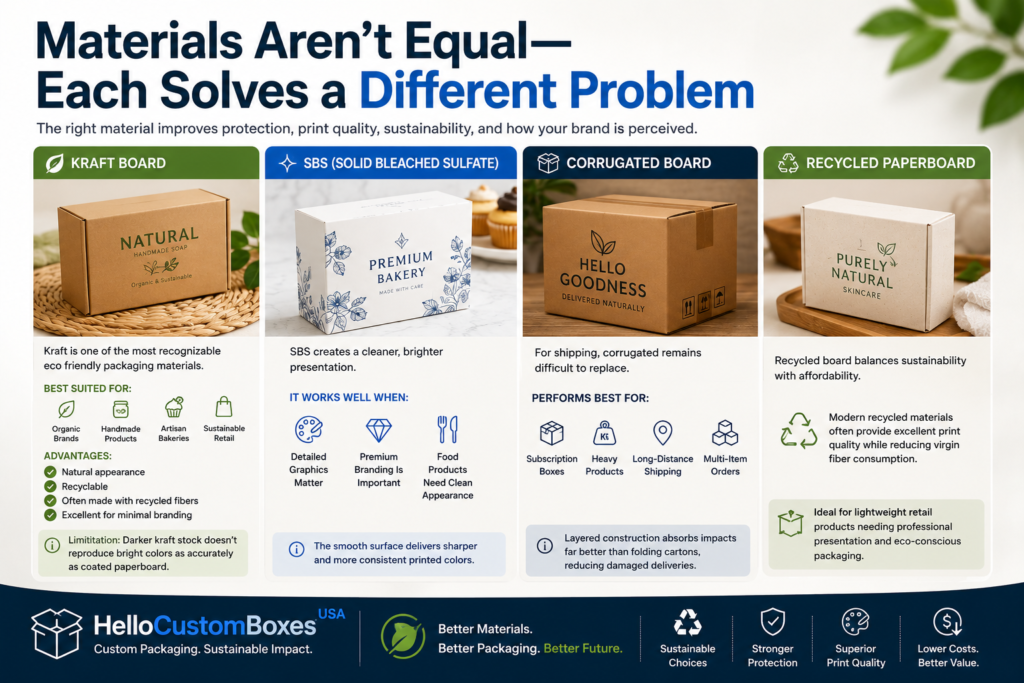
Many businesses assume every recyclable box performs the same way.
It doesn’t.
The material determines durability, print quality, shipping strength, and even how customers perceive the product.
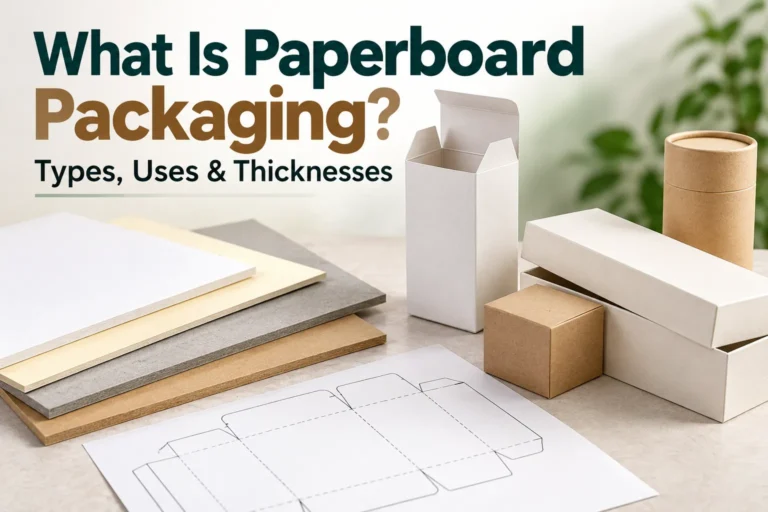
Kraft Board
Kraft remains one of the most recognizable eco friendly packaging materials.
Best suited for:- Organic brands
- Handmade products
- Artisan bakeries
- Sustainable retail packaging
- Natural appearance
- Recyclable
- Often made with recycled fibers
- Excellent for minimal branding
One limitation worth knowing is that darker kraft stock doesn’t reproduce bright colors quite as accurately as coated paperboard.
SBS (Solid Bleached Sulfate)
SBS creates a cleaner, brighter presentation.
It works well when:
- Detailed graphics matter
- Premium branding is important
- Food products require a clean appearance
Because the surface is smoother, printed colors generally appear sharper and more consistent.
Corrugated BoardFor shipping, corrugated remains difficult to replace.
Its layered construction absorbs impacts far better than folding cartons.
It performs particularly well for:
- Subscription boxes
- Heavy products
- Long-distance shipping
- Multi-item orders
Many businesses using sustainable boxes for shipping eventually move toward corrugated simply because damaged deliveries become less frequent.
Recycled PaperboardRecycled board balances sustainability with affordability.
Modern recycled materials often provide excellent print quality while helping reduce virgin fiber consumption.
For lightweight retail products, it offers an effective middle ground between environmental responsibility and professional presentation.
Packaging Still Has One Job: Protect the Product
Sustainable packaging only works when the product arrives safely. If a damaged order has to be replaced, the business uses another box, more packing material, extra labor, and another shipment. At that point, the “eco-friendly” choice may create more waste than it saves.
That is why protection should stay at the center of the design. Small details matter here. A lid that fits properly keeps the product from moving around. Ventilation helps baked goods avoid trapped moisture. Moisture-resistant barriers can also help keep products fresher without relying too much on plastic.
Bakery packaging shows this clearly. Cookies can soften when moisture builds inside the box. Cupcake frosting may touch the lid if there is not enough height. Macarons can crack when dividers are skipped to save a little money. Those small savings often disappear once replacements and complaints start.
Presentation Matters More Than Most Businesses Expect
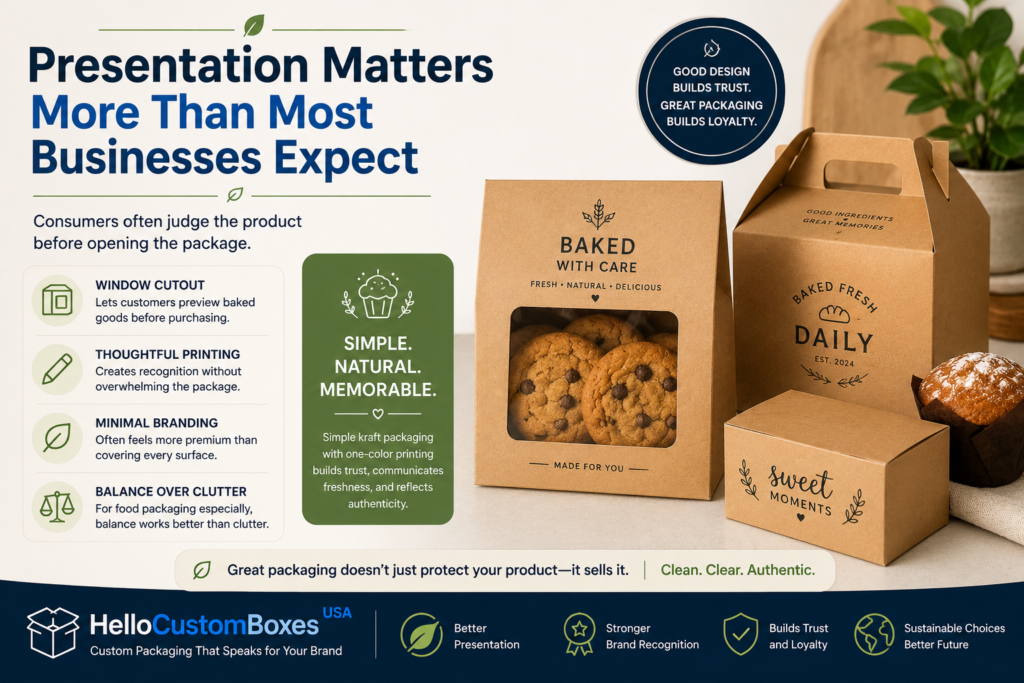
Consumers often judge the product before opening the package.
Simple design choices improve presentation without adding unnecessary materials.
A window cutout allows customers to preview baked goods before purchasing.
Thoughtful printing creates recognition without overwhelming the package.
Minimal branding often feels more premium than covering every surface with graphics.
For food packaging especially, balance works better than clutter.
Many successful bakeries rely on simple kraft packaging with one-color printing because customers associate it with freshness and authenticity.
Sustainable Packaging Doesn’t Mean Plain Packaging
Some businesses hesitate to switch because they think environmentally friendly packaging looks unfinished.
That hasn’t been true for years.
Today’s eco friendly product box packaging can include:
- Soy-based inks
- Water-based coatings
- Soft-touch finishes
- Embossing
- Foil accents (when appropriate)
- Minimal but attractive graphics
Good design often uses less ink, fewer decorative layers, and cleaner typography while still creating a memorable unboxing experience.
Shipping Materials Deserve the Same Attention
Outer packaging deserves just as much planning as the product box itself.
Many brands now combine:
- Eco friendly shipping boxes
- Paper void fill
- Recyclable tape
- Paper cushioning
- Compostable mailers for small business
- Recycled protective wraps
Switching only one component rarely delivers meaningful environmental improvements.
Looking at the complete shipping system usually creates the biggest gains.
Small Changes Often Save More Than Expected
A packaging audit frequently reveals waste that isn’t obvious.
We’ve seen businesses reduce shipping costs simply by:
- Removing oversized cartons
- Eliminating unnecessary inserts
- Standardizing a few optimized box sizes
- Printing inside the box instead of adding promotional cards
None of those changes affect the customer experience negatively.
In many cases, customers actually perceive the packaging as cleaner and more intentional.
Green Packaging Should Still Build Your Brand
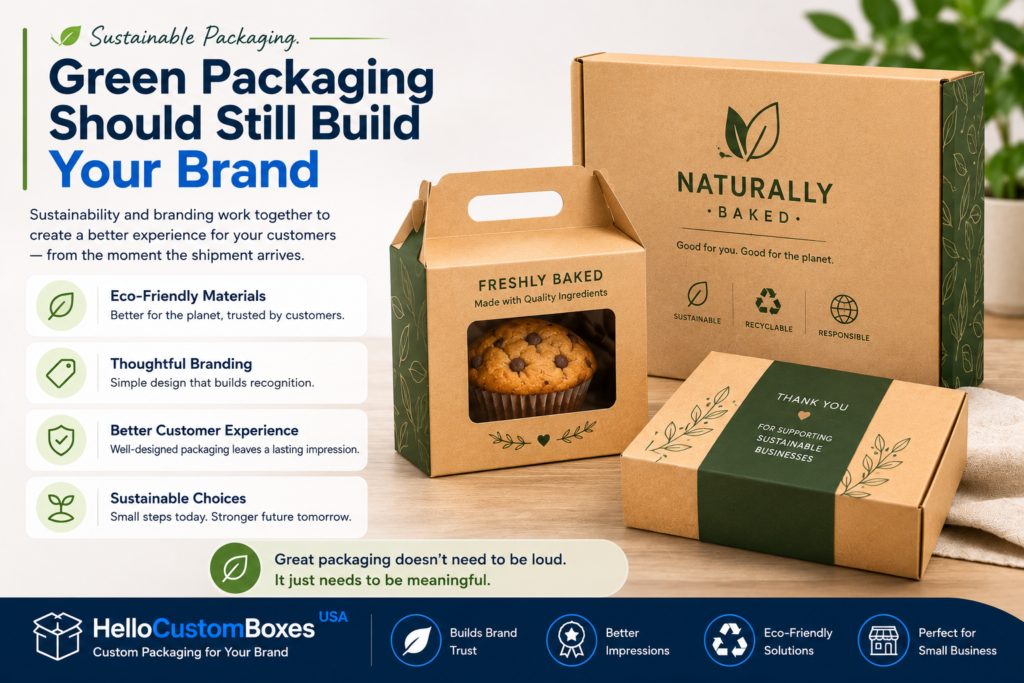
Sustainability and branding work together.
Packaging becomes part of the customer experience from the moment the shipment arrives.
Simple branded messaging, recyclable materials, and consistent design help businesses appear more thoughtful without making exaggerated environmental claims.
That’s especially valuable for startups looking for green packaging solutions for small business, where every customer impression matters.
A package doesn’t need expensive finishes to feel premium. It simply needs to be designed with purpose.
Choosing Practical Sustainability
Not every environmentally friendly option is ideal for every product.
Heavy items often require corrugated construction despite using more material because preventing damage creates a lower overall environmental impact.
Fragile bakery products sometimes need inserts even though they increase material usage.
“What’s the greenest material?”
Instead, ask:
“Which packaging protects the product while creating the least overall waste?”
That mindset usually leads to smarter long-term packaging decisions.
Final Thoughts
Eco-friendly packaging should not create extra work or extra waste. The box needs to fit the product, protect it during shipping, and look presentable when it arrives.
That applies to baked goods, retail products, subscription boxes, and most online orders. A good box does not need too many add-ons. It just needs the right size, the right material, and a structure that can handle delivery.
Before changing everything, check the basics first. Is the box too large? Is the board strong enough? Is the product moving inside? Fixing those points can reduce damage, cut waste, and make the order feel better when the customer opens it.
Frequently Asked Questions
Sometimes, yes. If the product looks fresh and well finished, the window does some of the selling. Cookies, cupcakes, pastries, and macarons usually benefit from that. A closed box can’t show those details.
For counter display, usually. For delivery, not every time. A plain box may be stronger, cheaper, or better for keeping the order covered. A window box makes more sense when the product’s appearance matters.
The one that suits the item. A tall cake needs height. Cupcakes need inserts. Cookies and macarons often look better in a window box. Pastries need enough room so toppings do not stick to the lid.
A box that looks clean, fits well, and does not hide the product too much. Clear printing helps. So does a window, when the baked goods are arranged neatly inside.
It affects trust. If the box looks neat and the product reaches the customer in good shape, people are more likely to buy again. Broken cookies, crushed cupcakes, or smeared frosting do the opposite.