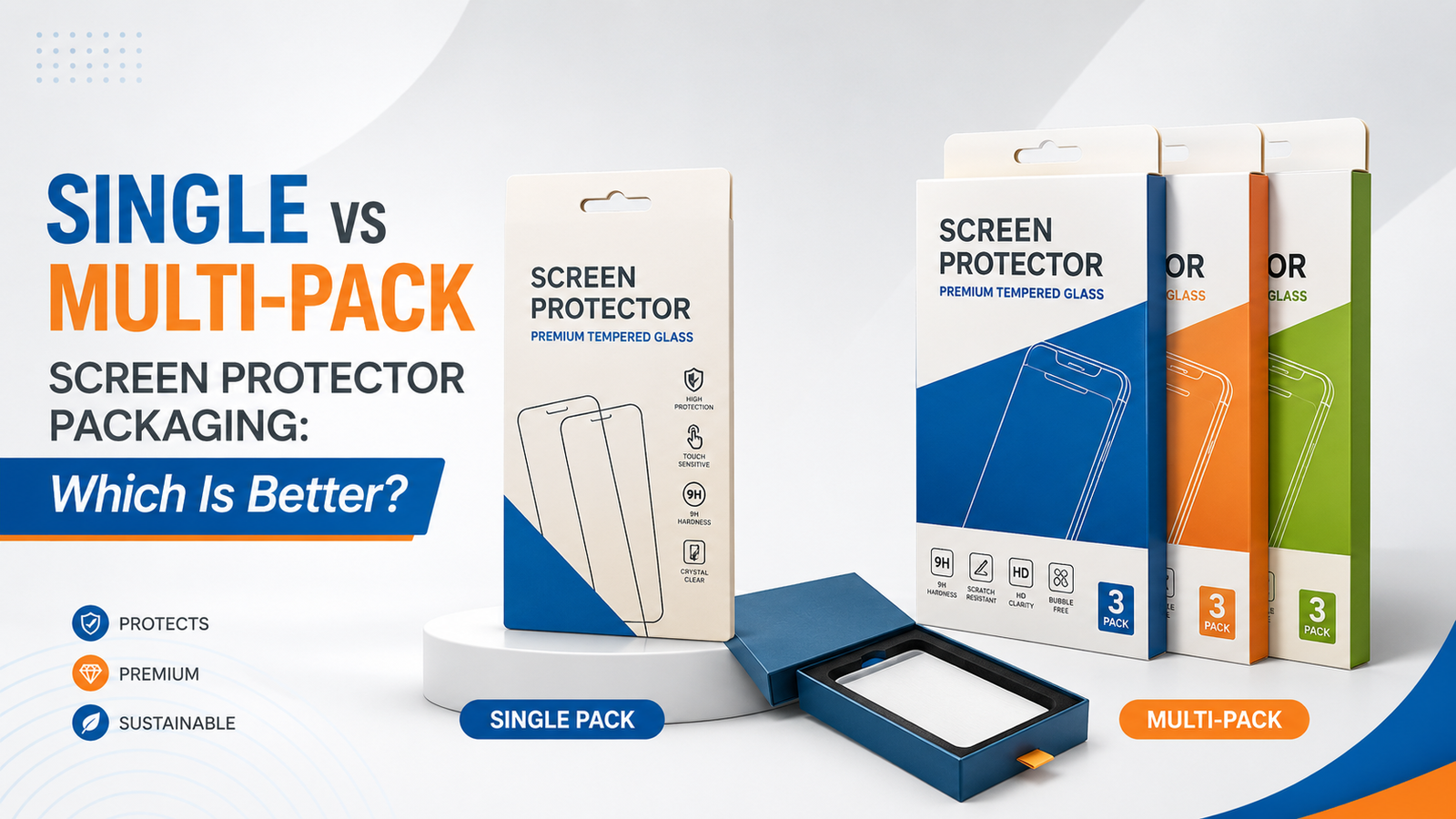
Screen protector packaging has a difficult job for something so thin. The package needs to keep the protector secure, organize installation accessories, communicate device compatibility, and still remain compact enough for retail or e-commerce.
The decision becomes more important when a brand moves from one protector per box to two, three, or more. Single-pack and multi-pack screen protector packaging should not simply use the same box with a different quantity inside. Pack count can change the required dimensions, internal layout, inserts, artwork, and shipping considerations.
For U.S. screen protector brands and electronics accessory sellers, the better format is the one that matches how the product is sold and handled.
TL;DR
- Single packs are generally simpler and more compact.
- Multi-packs can consolidate two or more protectors into one package.
- Multiple protectors need controlled separation and movement.
- Box dimensions should follow the actual protector and accessory layout.
- Inserts are useful when they solve a specific protection or organization problem.
- Retail packs need clear device compatibility and pack quantity.
- E-commerce packaging may still require separate shipping protection.
- Finalize the pack count before designing the box and artwork.
What Changes Between Single and Multi-Pack Packaging?
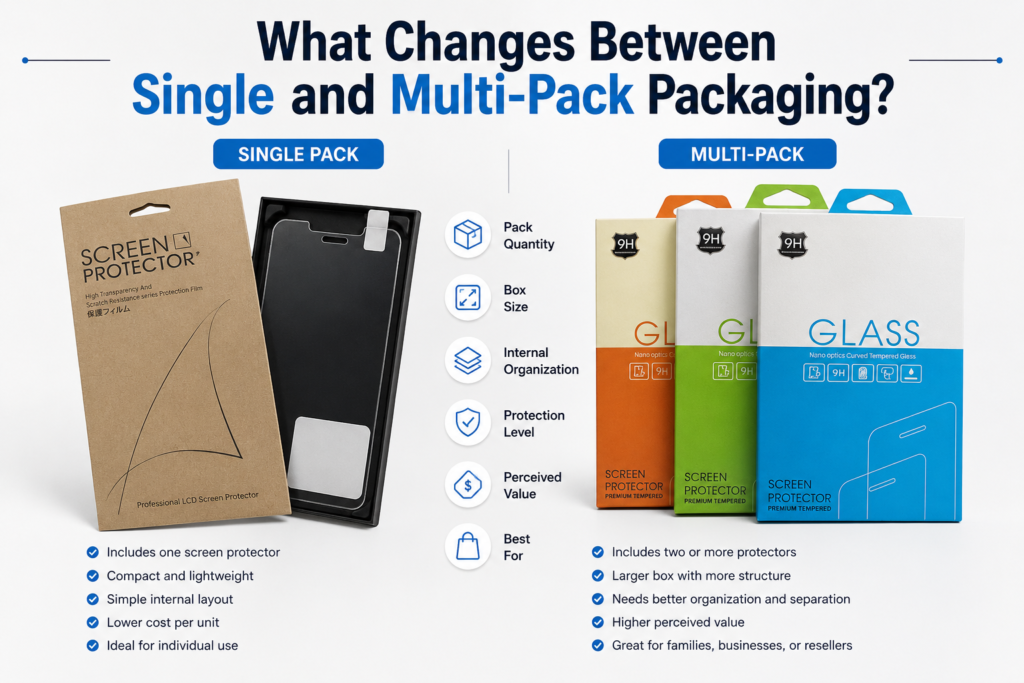
The obvious difference is quantity, but the packaging implications go further.
A single-pack screen protector packaging box only needs to accommodate one protector and any included installation accessories. The internal arrangement can therefore remain relatively straightforward.
A multi-pack may contain two or three protectors plus cleaning wipes, dust-removal stickers, alignment tools, or instructions. Simply increasing the depth of a single-pack carton can leave these components loosely stacked.
The packaging specification should instead consider:
- number of protectors;
- finished protector dimensions;
- thickness of the complete product stack;
- included installation accessories;
- method of separating individual protectors;
- required retail display format;
- shipping and handling conditions.
Pack quantity should therefore be established before the box structure is finalized.
Single-Pack Screen Protector Packaging
A single pack gives the designer fewer components to organize. This can help keep the package slim and make the opening sequence straightforward.
When a Single Pack Makes More Sense
Single-pack screen protector retail packaging is particularly useful when each protector is sold as an individual SKU.
It can work well for:
- premium individual protectors;
- new product launches;
- device-specific retail SKUs;
- products with a compact installation kit;
- brands that want a slimmer shelf footprint.
A well-fitted single pack can also provide enough space for branding and instructions without making a small product feel over-packaged.
Where Single Packs Can Fall Short
Single packs are less suitable when the product itself is marketed as a replacement bundle.
Packaging every protector separately and then grouping several packages for one sale can introduce extra material and additional handling. In those situations, a properly designed multi-pack may be more efficient.
The decision should follow the product offer rather than assuming that one format is inherently superior.
Multi-Pack Screen Protector Packaging
A screen protector multipack brings several units into one retail package. That can be convenient for customers who want a spare protector or for brands selling two- and three-pack bundles.
The structural challenge is keeping those thin components organized.
When Multi-Packs Make More Sense
Multi-pack screen protector packaging is worth considering when:
- two or more protectors are sold as one SKU;
- replacement units are part of the product proposition;
- the brand wants one box rather than several individual cartons;
- accessories need to be supplied for the complete set;
- a value pack needs to be clearly differentiated from the single version.
The outside of the box should make the quantity immediately obvious. Customers should not have to inspect small print to discover whether they are buying one, two, or three protectors.
What Makes Multi-Pack Packaging Harder to Design
Adding another protector does not necessarily mean doubling the box size.
The real issue is the internal layout. Multiple units may need separators, sleeves, trays, or another method of preventing unwanted movement and keeping the stack orderly.
Extra components also affect depth. A box that looks adequate on a dieline can become too tight once the actual protectors, protective layers, instructions, and installation accessories are loaded.
This is why physical product samples matter when developing custom screen protector packaging.
Single vs Multi-Pack Screen Protector Packaging
The differences are easier to see side by side:
The table also shows why there is no universal winner. A multi-pack solves a different packaging problem from a single pack.
Protection Depends More on Fit Than Pack Count
A larger or more elaborate package is not automatically more protective.
For thin products such as screen protectors, protective packaging depends heavily on how well the product is controlled inside the box. Excess internal space can allow components to shift, while an overly tight structure can make loading or removal awkward.
A good fit should consider the protector’s actual dimensions and the complete internal stack—not just the nominal phone-screen size.
The same principle applies to protective packaging for mobile devices and accessories: the structure, internal fit, and organization need to work together rather than relying on the outer box alone.
How Should Screen Protectors Be Arranged Inside the Box?
A screen protector packaging insert should have a clear purpose. It may hold the protector in position, separate multiple units, organize accessories, or improve the opening sequence.
Not every package needs a complicated insert.
For a simple single pack, a compact sleeve or fitted internal arrangement may provide enough control. A multi-pack can require more deliberate separation so individual protectors remain organized rather than forming a loose stack.
Accessories also need consideration. Cleaning wipes, dust stickers, alignment guides, and instructions should not move freely across the main product if that movement can interfere with presentation or protection.
These are similar to the decisions involved in packaging smaller products securely, where controlling empty space can be more useful than simply making the outer package larger.
Which Format Works Better for Retail?
Neither format automatically performs better on a retail shelf.
A single pack generally offers a compact footprint and straightforward product identification. A multi-pack can communicate greater quantity or value, but the customer needs to understand exactly what is included.
Effective screen protector packaging for retail should make several details easy to find:
- compatible device or screen size;
- number of protectors included;
- product type;
- key installation information;
- barcode and required product details;
- brand identification.
The physical display method matters too. A package intended for hooks has different structural requirements from one designed to stand or stack on a shelf.
Brands developing packaging designed for retail shelves should therefore consider display requirements alongside product protection and visual design.
What About Screen Protector Packaging for E-Commerce?
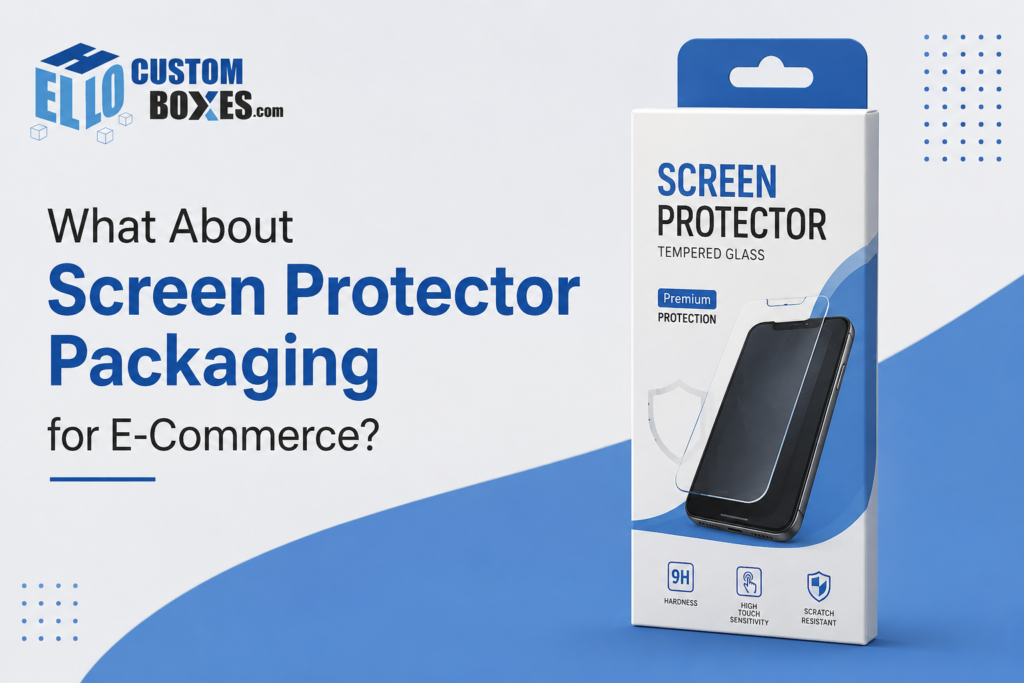
E-commerce changes the handling environment.
A screen protector box may look excellent as the consumer-facing package but still need suitable outer protection during parcel delivery. The retail box and the shipping package perform different jobs.
For online orders, brands should consider:
- movement inside the product box;
- empty space inside the shipping package;
- pressure from other items in an order;
- package dimensions relative to the product;
- whether single and multi-packs require different shipping setups.
Compact packaging can help avoid unnecessary volume, but reducing dimensions too aggressively can compromise the fit.
The goal is not simply to create the smallest possible box. It is to remove space that serves no useful purpose.
Does a Multi-Pack Actually Use Less Packaging?
It can, but that should not be assumed.
Combining several protectors into one package may reduce the amount of outer packaging used per protector compared with individually boxing every unit. The advantage depends on how efficiently the multi-pack is designed.
For example, an oversized carton with unnecessary internal layers could eliminate much of that benefit.
A more useful approach is to evaluate material efficiency per packaged product. Look at the outer carton, inserts, accessory packaging, and empty space as one system.
This provides a more defensible packaging decision than simply describing every multi-pack as sustainable.
How Printing and Branding Change With Pack Size
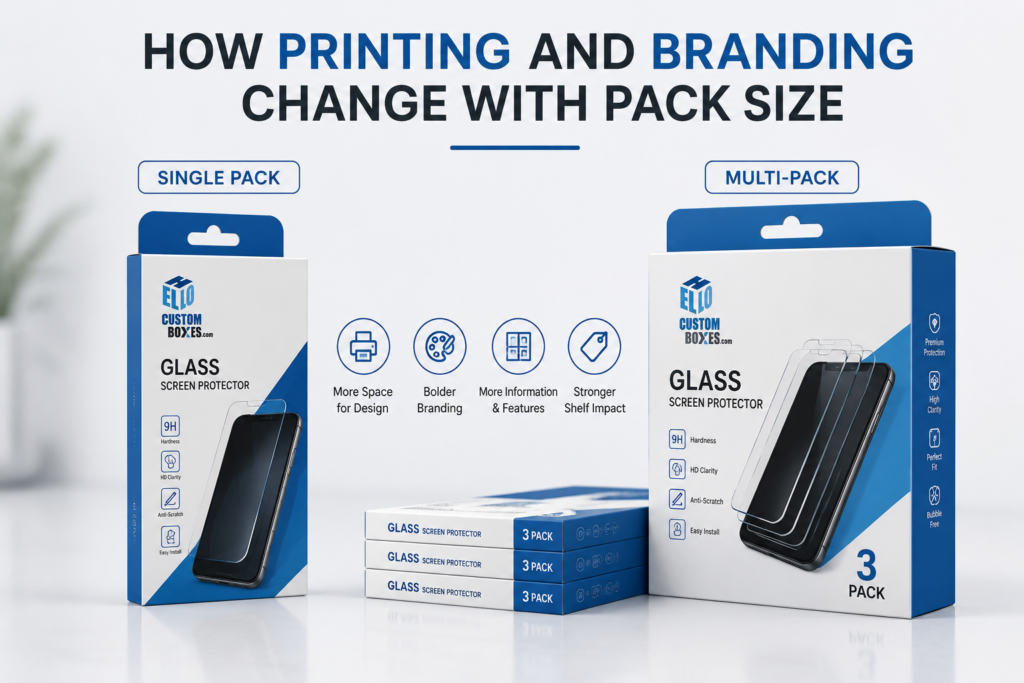
A single pack and a three-pack may belong to the same product range, but their artwork cannot always be treated identically.
Multi-pack screen protector packaging design needs particularly clear quantity communication. “2 Pack” or “3 Pack” should be easy to distinguish from the single version, especially when several variants appear together online or in stores.
The design hierarchy should prioritize:
brand → device compatibility → product type → pack quantity → supporting information
Artwork also needs to follow the final dieline. If the multi-pack requires additional depth or different panel proportions, copying the single-pack artwork without adaptation can produce awkward spacing.
Once the structure is confirmed, brands can evaluate printing options for custom packaging according to artwork, color requirements, production needs, and the desired presentation.
Which Screen Protector Packaging Format Should You Choose?
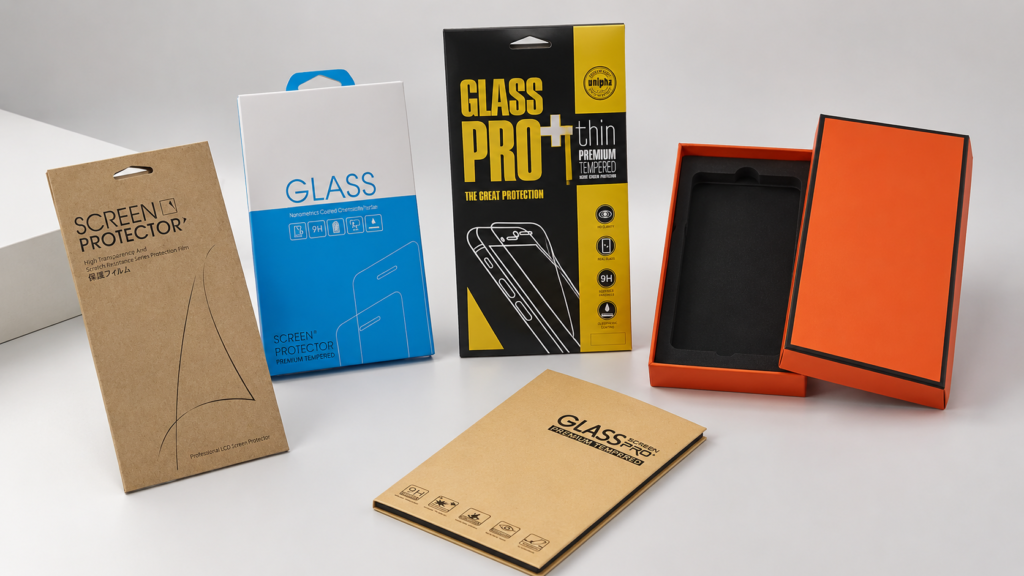
Choose a single pack when the product is sold individually, compact retail presentation matters, and the internal component arrangement is relatively simple.
Choose a multi-pack when several protectors are genuinely sold as one product and the box can organize them without unnecessary space or material.
Before choosing either, answer four questions:
- How many protectors does the customer receive?
- What accessories are included?
- How will the product be displayed or sold?
- What internal arrangement keeps every component secure?
Those answers should determine the packaging—not the other way around.
Screen Protector Packaging Checklist
Before developing a screen protector box, confirm the complete product specification.
A prototype loaded with the real product can reveal fit problems that are difficult to identify from dimensions alone.
A single pack benefits from simplicity and a compact footprint. A multi-pack can consolidate several protectors into one product, but only when the internal layout keeps those units properly organized.
For U.S. electronics accessory brands, Hello Custom Boxes can develop custom screen protector boxes around the actual product dimensions, pack quantity, internal arrangement, printing, and retail requirements.
Finalize what goes inside the package first. Then build the box around it. That approach usually produces a better fit than selecting a standard carton and trying to make the product conform to the available space.
Frequently Asked Questions
Single packs are better suited to individual products and compact presentation, while multi-packs work well for bundles and replacement sets. The better option depends on how many protectors are sold together and how they need to be organized.
Paperboard and rigid board structures can be used depending on the required presentation and protection. The appropriate material should be selected alongside the box structure, product weight, internal fit, and sales channel.
Not always. An insert is useful when it separates protectors, limits movement, organizes accessories, or improves presentation. If the box structure already controls the contents effectively, an additional insert may not be necessary.
Size the box around the actual protector, protective layers, accessories, and internal arrangement. Avoid choosing dimensions from the device name alone. Testing the complete loaded package before production is more reliable.
Yes. Custom screen protector packaging can be developed around product dimensions, pack quantity, display format, inserts, printing, and brand artwork. Retail requirements should be established before the final structure and dieline are approved.
The key difference between single and multi-pack screen protector packaging is not simply the number printed on the front. Pack quantity affects internal organization, dimensions, inserts, retail presentation, and artwork.