
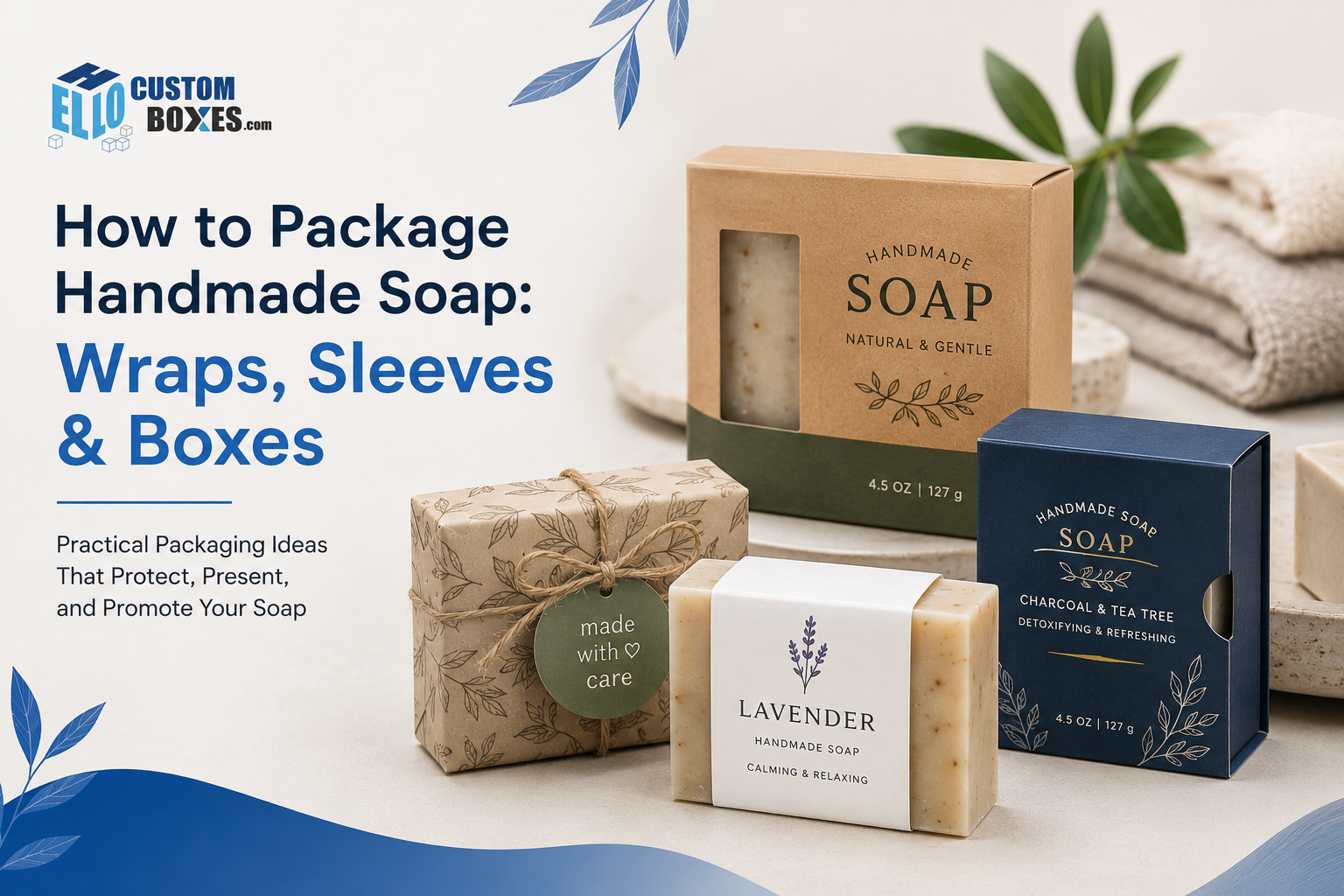
The best way to package handmade soap depends on how the bar will be stored, displayed, sold, and shipped. Paper wraps work well for simple presentation, sleeves leave part of the soap visible, and boxes provide more protection and space for branding.
For most soap makers, the right choice is not the most elaborate package. It is the one that keeps the bar clean, protects edges, provides enough room for required product information, and suits the way customers buy it.
Quick Answer: If you are deciding how to package handmade soap, use wraps for lightweight presentation, sleeves for visibility and branding, and boxes when the soap needs more protection or a stronger retail appearance.
What Should Handmade Soap Packaging Actually Do?
Good handmade soap packaging has several jobs.
It should protect the bar from dust, handling, damaged corners, and surface marks. At the same time, it should not make a handmade product feel unnecessarily over-packaged.
Before choosing a format, consider:
- the size and shape of the soap bar;
- whether the surface is smooth, textured, or decorated;
- how easily edges can chip;
- where the soap will be sold;
- whether customers need to see or smell the bar;
- the amount of labeling space required; and
- whether the product will be shipped.
A soap sold at a local craft market may work perfectly with a paper sleeve. The same bar sent through ecommerce may need a carton plus protective shipping packaging.
How to Wrap Handmade Soap
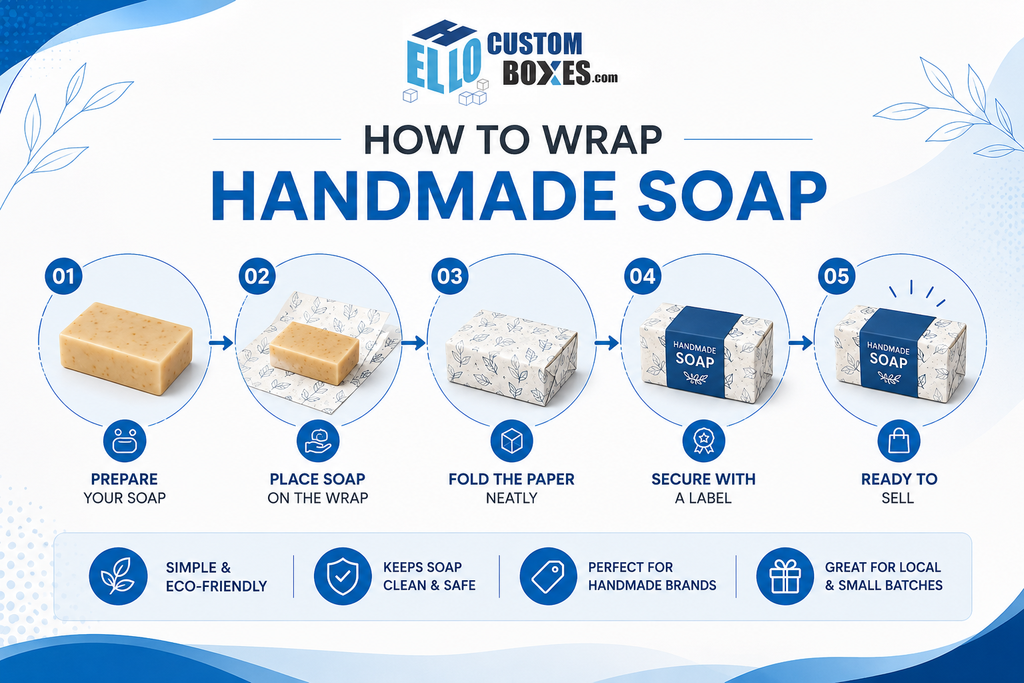
Wrapping is one of the simplest handmade soap packaging ideas, especially for small batches and artisan products.
Paper can cover the whole bar or only part of it, depending on the look and level of protection required.
Paper Wraps
Paper wrapping gives handmade soap a traditional, tactile appearance. Kraft paper, printed paper, or suitable specialty paper can be folded around the bar and secured with a label or branded sticker.
It works particularly well when the soap itself already has visual character and the packaging only needs to keep it clean and presentable.
The drawback is limited crush protection. Thin paper will not stop corners from being damaged if the bar is handled roughly.
Branded Wrapping Paper
Custom printed wraps allow patterns, ingredients, brand colors, and product information to become part of the presentation.
Keep the design practical. Soap bars are small, and excessive artwork can make important information difficult to read.
When Wrapping Works Best
A wrap makes sense when:
- the product is sold locally;
- the bar does not need substantial structural protection;
- minimal packaging is part of the brand style; or
- the soap will be placed inside secondary shipping packaging later.
If you are researching how to wrap handmade soap, start with the actual bar rather than a standard sheet size. A neat fit usually looks more intentional than excess folded paper.
Soap Packaging Sleeves: A Simple Middle Ground
A soap sleeve, sometimes called a belly band, wraps around the center of the bar while leaving part of the product exposed.
This makes soap packaging sleeves useful for businesses that want customers to see the color, texture, or stamped surface of handmade soap.
They also use less material than a full folding carton.
A sleeve can carry:
- the brand name;
- soap variety;
- scent;
- logo;
- key product details;
- barcode or SKU; and
- other required label information where space allows.
Sleeves are attractive for craft fairs, boutiques, gift displays, and small retail collections.
Their limitation is protection. Corners and exposed surfaces can still be marked during handling, so a sleeve may not be the best packaging for handmade soap when the product is fragile or shipped individually.
When Handmade Soap Boxes Make More Sense
Boxes provide more coverage than wraps or sleeves.
They are particularly useful when the soap needs to travel through retail distribution, ecommerce fulfillment, gifting, or repeated customer handling.
Handmade soap boxes can protect the bar while giving the brand more printable surface area.
Common options include:
Folding Cartons
Folding cartons are suitable for many individual soap bars. They are lightweight, printable, and can be sized closely around the product.
Kraft Soap Boxes
Kraft board works well when a brand wants a natural or understated presentation.
Minimal black, white, or single-color printing can be especially effective on kraft without making the packaging feel overly designed.
Window Soap Boxes
A die-cut window allows part of the soap to remain visible while most of the bar stays protected.
Before adding a film window, consider whether it is actually necessary. A simple open die-cut or a well-designed printed carton may better suit brands trying to keep the material mix simple.
Custom Handmade Soap Boxes
For soap bars with unusual dimensions, decorative tops, sets, or specific branding requirements, custom handmade soap boxes allow the dimensions and structure to be built around the product.
The benefit is not customization for its own sake. A closer fit can reduce movement, improve presentation, and avoid a generic box that looks oversized around the soap.
Wraps vs Sleeves vs Boxes: Which Is Better?
There is no single packaging format that works best for every handmade soap business.
Choose based on what the soap needs rather than copying packaging used by another brand.
How to Package Handmade Soap for Sale
If you are learning how to package handmade soap for sale, presentation is only one part of the decision.
Your packaging also needs to work at the point of sale.
A customer should be able to identify the product quickly. The label should remain readable, and the package should stand or stack properly if it will be placed on shelving.
For farmers’ markets and craft fairs, visibility and easy handling may matter most. A sleeve or paper wrap can work well because customers can see the handmade character of the bar.
For boutiques or retail shelves, a folding carton can create a more consistent display and provide more space for branding.
For ecommerce, consider both the individual soap package and the outer shipping box. The retail carton should not be expected to absorb every impact during parcel delivery.
Packaging Handmade Soap for Small Businesses
Small soap businesses often benefit from keeping packaging systems simple.
Instead of using a completely different structure for every fragrance, one box size may work across several bars if their dimensions are similar.
Variation can then come from:
- printed labels;
- color bands;
- stickers;
- fragrance names; or
- artwork changes.
This creates a consistent brand system without making every product look identical.
For a growing business, handmade soap packaging for small business should also be easy to assemble. A beautiful package that takes too long to fold, wrap, tie, and label can become inconvenient during busy periods.
Best Packaging for Handmade Soap by Selling Method
The way the soap reaches the customer should influence the packaging choice.
Craft Markets
Consider paper wraps, sleeves, or simple cartons. Customers often appreciate being able to see the bar.
Retail Stores
Folding boxes usually provide more protection and a cleaner shelf presentation. They also provide useful space for product information.
Gift Sets
A small carton, sleeve-and-tray style, or presentation box can help arrange several soaps together without individually over-packaging each bar.
Online Orders
Protect the soap at two levels: individual product packaging for cleanliness and presentation, then suitable outer packaging for shipping.
Do not rely on tissue or decorative paper alone to protect a soap bar from parcel handling.
Eco-Friendly Handmade Soap Packaging
For brands considering eco-friendly handmade soap packaging, simplicity is often a good starting point.
Rather than automatically adding another “green” material, first ask whether a component can be removed.
Possible approaches include:
- paper-based wraps;
- recyclable paperboard cartons where appropriate;
- kraft sleeves;
- reduced plastic components;
- smaller package dimensions; and
- designs that avoid unnecessary inserts.
Also be careful with broad environmental claims. Material recyclability can depend on coatings, adhesives, windows, local recycling systems, and how different components are combined.
A simpler package is often easier for customers to understand and dispose of correctly.
Do Not Package Soap Before It Is Ready
Packaging cannot correct a product that has not finished its required curing or drying process.
Before wrapping or boxing handmade soap, make sure the bar is ready for storage and sale according to the formulation and production method being used.
Packaging a bar too early can affect how it behaves inside the package, particularly where moisture needs to escape.
Once the soap is ready, store packaged products away from excessive heat, moisture, and conditions that could affect fragrance or appearance.
Leave Enough Space for Labels and Product Information
A common packaging mistake is choosing a very minimal sleeve or wrap and only later realizing there is not enough room for the information the product needs.
Plan the label area during the packaging design stage.
In the US, products commonly described as “soap” can fall under different regulatory categories depending on their composition and the claims made about them. Products marketed only as true soap may be treated differently from products making cosmetic or therapeutic claims, so businesses should confirm which labeling rules apply to their specific product.
That is another reason not to design the package around appearance alone.
Common Handmade Soap Packaging Mistakes
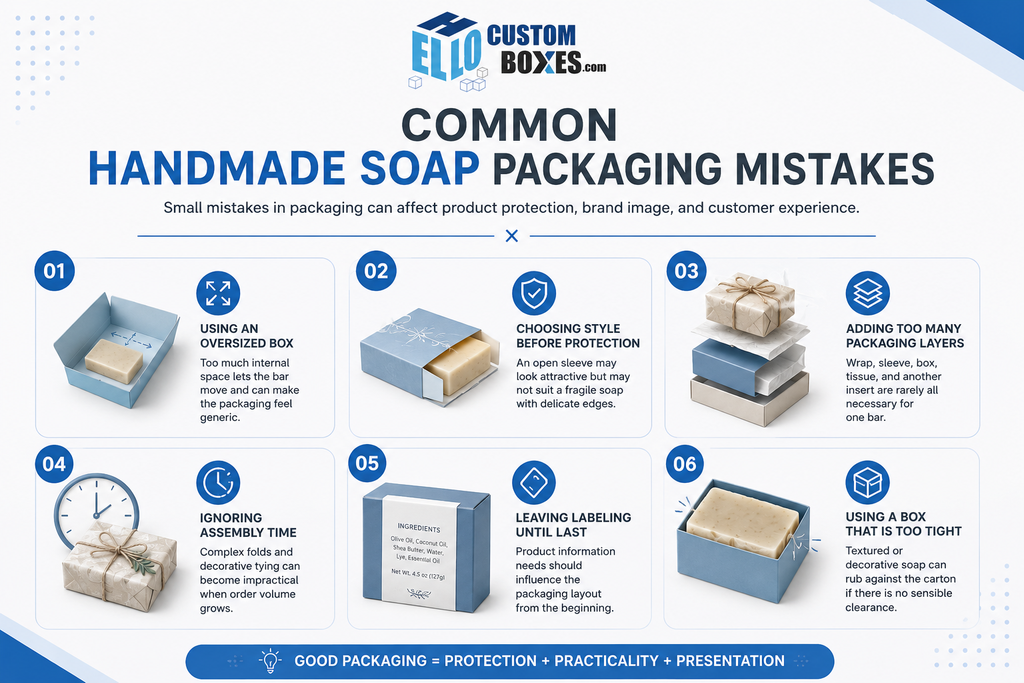
Some problems are easy to avoid.
Using an oversized box:
Too much internal space lets the bar move and can make the packaging feel generic.
Choosing style before protection:
An open sleeve may look attractive but may not suit a fragile soap with delicate edges.
Adding too many packaging layers:
Wrap, sleeve, box, tissue, and another insert are rarely all necessary for one bar.
Ignoring assembly time:
Complex folds and decorative tying can become impractical when order volume grows.
Leaving labeling until last:
Product information needs should influence the packaging layout from the beginning.
Using a box that is too tight:
Textured or decorative soap can rub against the carton if there is no sensible clearance.
Choosing Custom Soap Packaging for Your Brand
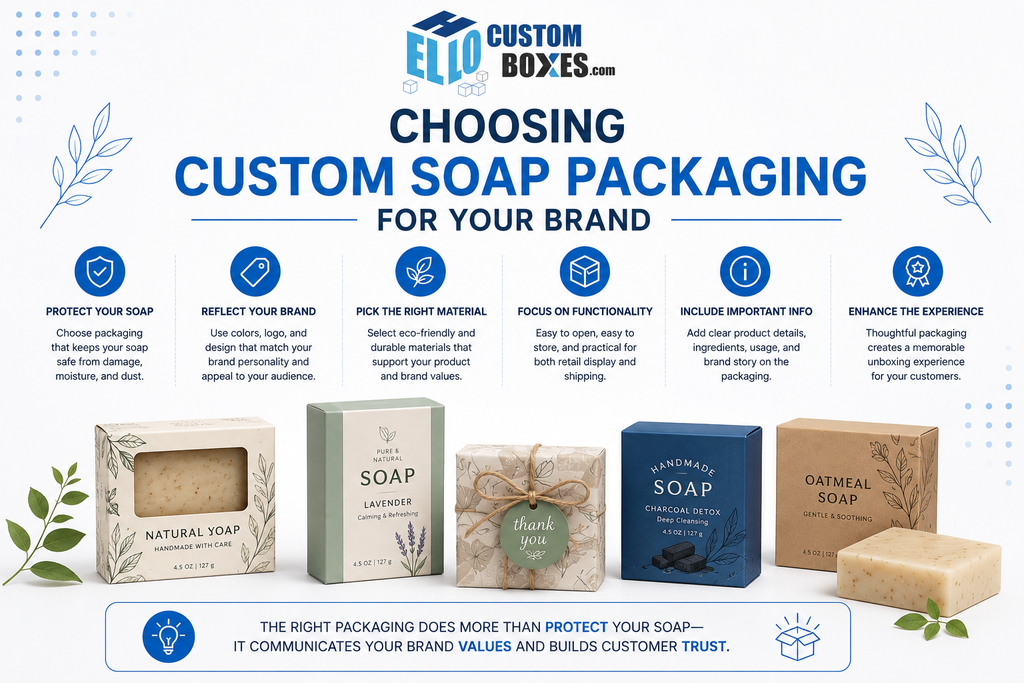
If standard wraps or generic cartons do not suit the product, custom packaging gives you more control over size, structure, board, printing, and presentation.
Hello Custom Boxes can produce custom soap packaging boxes around individual bars, sets, specialty shapes, and branded retail requirements.
Before requesting packaging, have the following ready:
- finished soap dimensions;
- product weight;
- preferred box or sleeve style;
- branding artwork;
- required label information;
- whether the soap will be sold in-store or online; and
- any preference for kraft, white paperboard, or other suitable materials.
Starting with the finished product makes it easier to develop packaging that fits properly rather than forcing the soap into an unsuitable standard carton.
Final Thoughts
There is no need to overcomplicate how to package handmade soap.
Use a wrap when the product needs simple coverage. Choose a sleeve when visibility matters. Move to a box when the bar requires more protection, more branding space, or a stronger retail presentation.
The best packaging decision comes from balancing the soap itself, the sales channel, protection needs, labeling space, and brand style.
For small makers, that may be a simple kraft band. For a growing retail brand, it may be a custom printed folding carton.
What matters is that the packaging feels appropriate for the product—not excessive, not under-protective, and not designed around keywords rather than customers.
Frequently Asked Questions
The best option depends on how the soap is sold. Wraps suit simple presentation, sleeves provide visibility, and boxes offer more protection and branding space.
Use packaging that keeps the bar clean, protects it during handling, provides adequate labeling space, and suits the sales channel. Retail, markets, and ecommerce may require different levels of protection.
Yes. Paper wraps are commonly used for handmade soap, particularly for local sales and artisan presentation. The paper should suit the product and storage conditions.
Neither is universally better. Sleeves use less material and show more of the soap, while boxes provide better surface protection and more space for printed information.
Use individual packaging for cleanliness and presentation, then place the soap inside suitable protective shipping packaging. A retail sleeve alone usually provides limited protection during parcel delivery.
Yes. Custom soap boxes can be made around the dimensions, shape, branding, material, and presentation requirements of the finished bar.