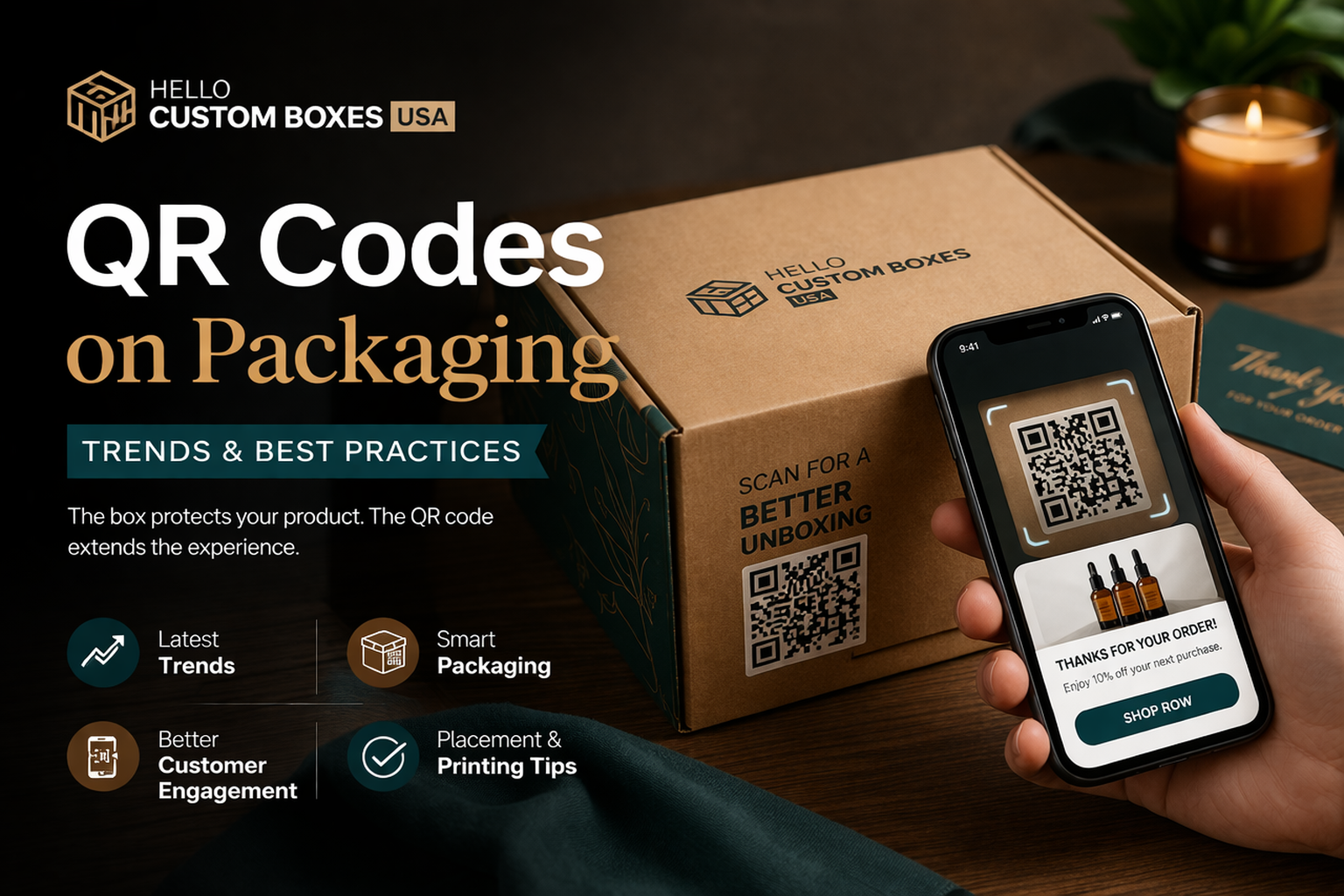
You ship an order. The box arrives intact, print looks sharp, branding is clean. But after that moment, the interaction ends.
No second touchpoint. No follow-up. No reason for the customer to come back.
That’s usually where QR codes started making sense. Not as a trend, just as something practical. But a lot of brands still drop them onto the box without thinking about what happens after shipping, and that’s where things begin to fall apart.
TL;DR — Quick Answer Block
- QR codes on packaging basically connect your box to something digital, whether that’s a video, page, or quick action.
- Right now, most brands are using them for things like tracking, personalization, or simple interaction, not just links.
- What actually matters is placement, contrast, and how the material behaves, otherwise the code won’t scan properly.
- Works well for eCommerce, retail, and subscription packaging.
- Poor printing or placement can make QR codes fail completely.
- Custom packaging with QR codes performs best when built around real product use.
What Is QR Codes on Packaging?
QR codes on packaging are scannable elements printed on boxes that direct users to digital content, pages, or actions.
Simple idea, but execution matters.
A code printed on a flat SBS board will scan easily. The same code on textured kraft or slightly crushed corrugated? Different story. Edges blur. Ink spreads. Phones hesitate.
So technically it’s just a code. Practically, it’s part of the packaging structure.
Why QR Codes on Packaging Matter for U.S. Businesses
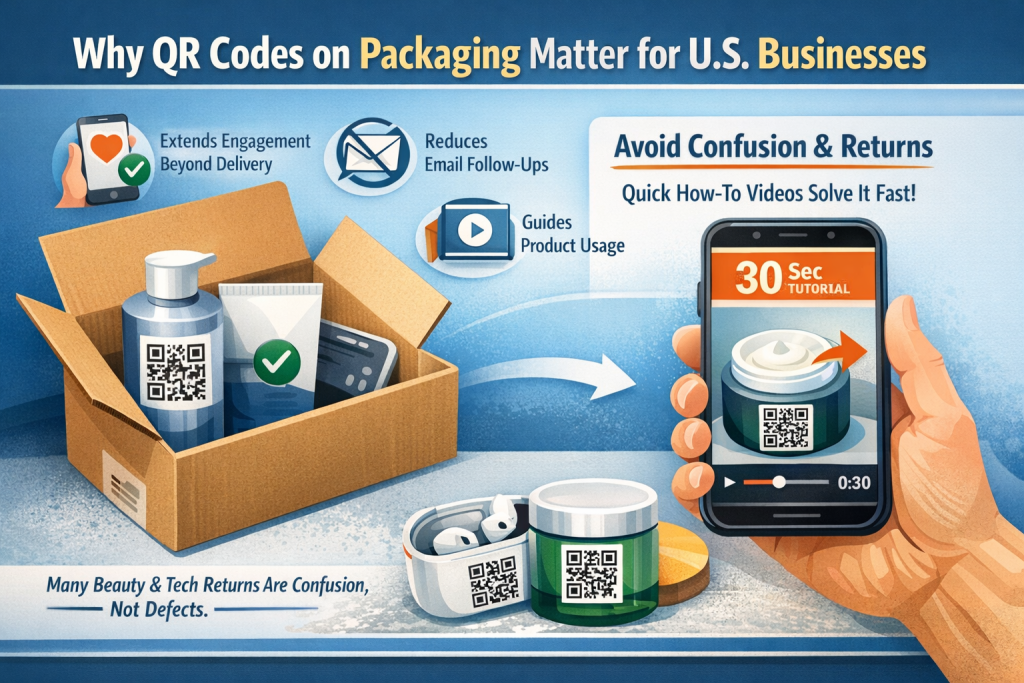
For U.S. brands, especially in eCommerce, packaging is often the only physical interaction customers have with the brand.
- It extends engagement beyond delivery
- It reduces reliance on email follow-ups
- It helps guide product usage without adding printed inserts
A lot of returns in beauty and tech aren’t product faults. They’re confusion. A small QR code linking to a 30-second usage video solves that quietly.
Key Trends in QR Code Packaging
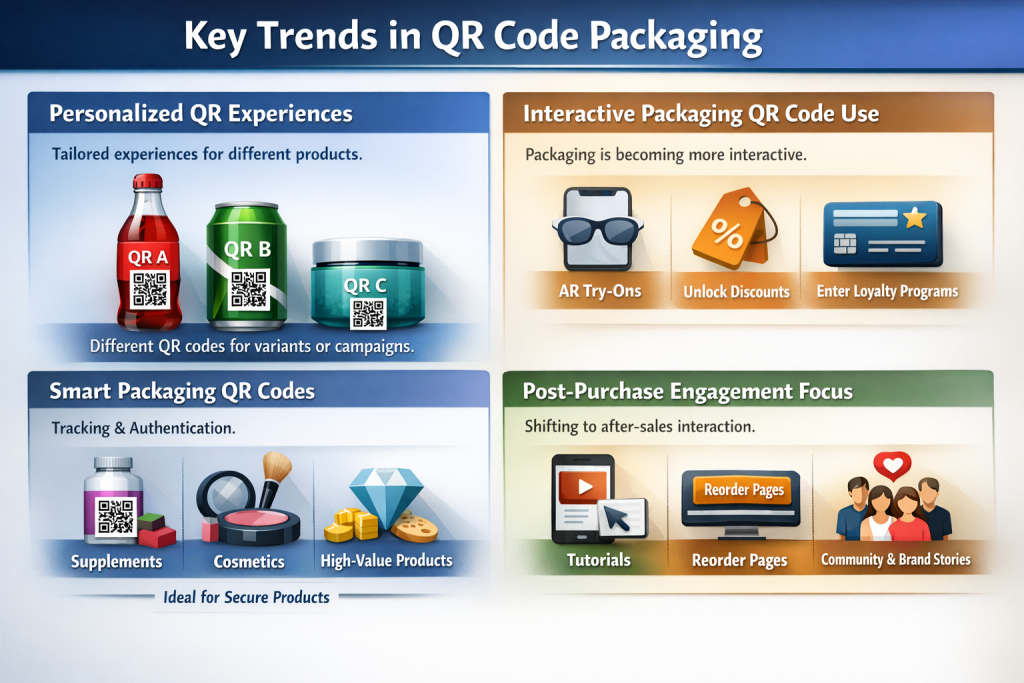
Personalized QR Experiences
Instead of sending everyone to the same page, brands now tailor experiences.
Example: Different QR codes for different product variants or campaigns.
Interactive Packaging QR Code Use
Packaging is becoming more than static.
- Scan for AR try-ons
- Unlock discounts
- Enter loyalty programs
Smart Packaging QR Codes
Used for tracking and authentication.
Especially relevant for:
- Supplements
- Cosmetics
- High-value products
Post-Purchase Engagement Focus
Trend is shifting from pre-sale marketing to post-sale engagement.
QR codes now lead to:
- Tutorials
- Reorder pages
- Community or brand stories
Materials & Printing Considerations
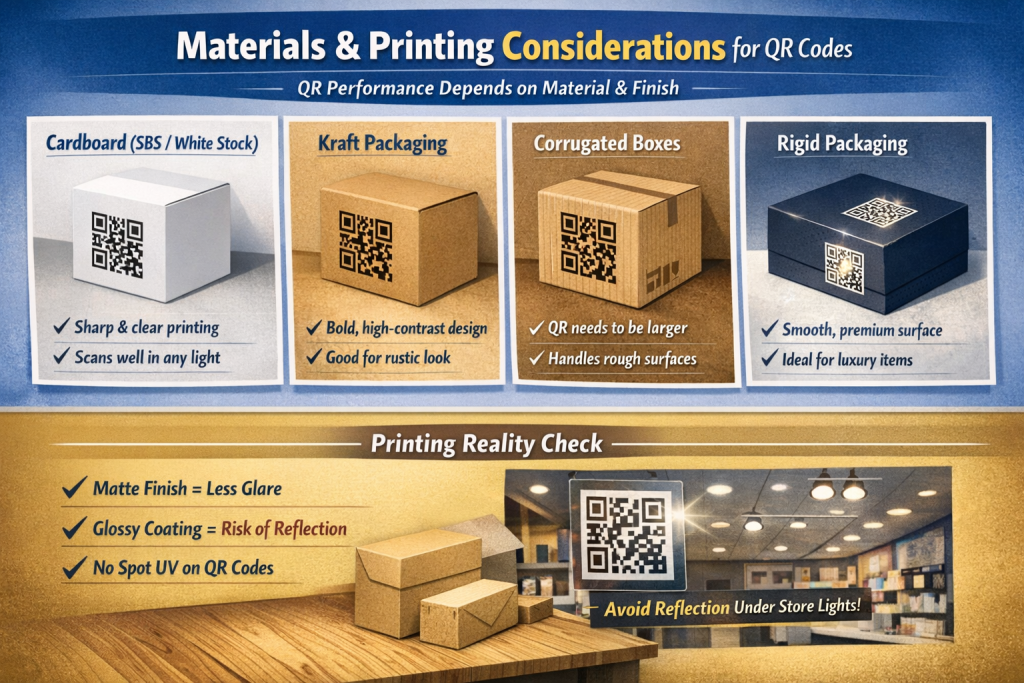
QR performance depends heavily on material and finish.
Cardboard (SBS / white stock)
- Best for clean, sharp QR printing
- Reliable scan across lighting conditions
Kraft packaging
- Absorbs ink slightly
- Needs bold, high-contrast design
Corrugated boxes
- Uneven surface
- QR must be larger to remain readable
Rigid packaging
- Smooth, premium surface
- Ideal for luxury QR experiences
Printing Reality Check
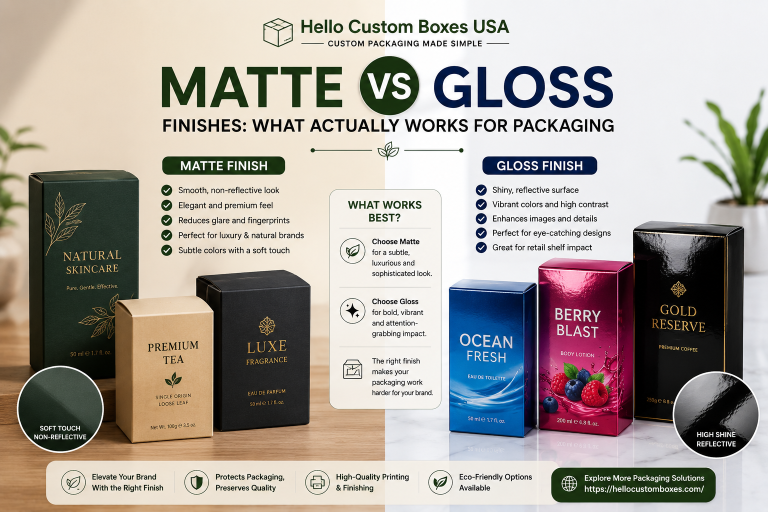
- Matte finishes reduce glare, better scanning
- Gloss lamination can reflect light and interfere
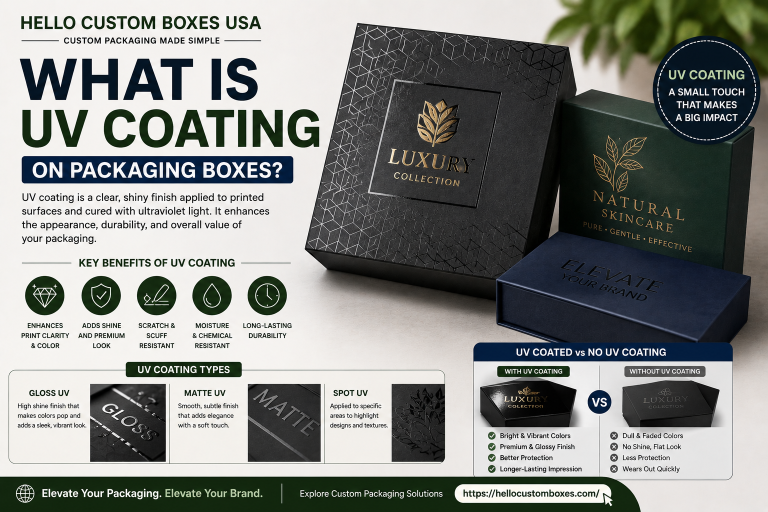
- Never apply Spot UV directly on QR codes
A small thing, but we’ve seen QR codes fail just because of reflection under retail lighting.
Common Mistakes Businesses Make
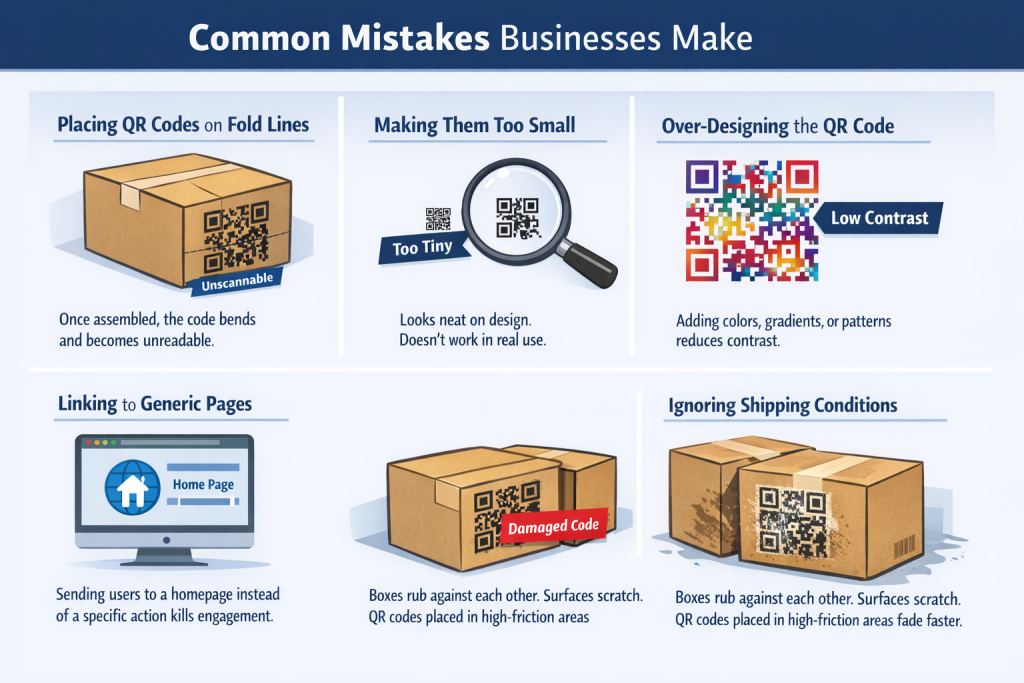
Placing QR Codes on Fold Lines
Once assembled, the code bends and becomes unreadable.
Making Them Too Small
Looks neat on design. Doesn’t work in real use.
Over-Designing the QR Code
Adding colors, gradients, or patterns reduces contrast.
Linking to Generic Pages
Sending users to a homepage instead of a specific action kills engagement.
Ignoring Shipping Conditions
Boxes rub against each other. Surfaces scratch. QR codes placed in high-friction areas fade faster.
How Hello Custom Boxes Solves This
We don’t treat QR codes as an afterthought. They’re planned with the box structure itself.
Every box is built around your product’s actual size, layout, and structure, not from pre-made templates.
That allows:
- QR placement away from folds and stress points
- Material-specific print adjustments
- Finishes selected to preserve scan clarity
You’ll notice this approach in custom packaging boxes, where structure and usability are aligned instead of layered on top.
Where QR Code Packaging Works Best
eCommerce Packaging
- Reorder links
- Setup guides
- Customer onboarding
Retail Packaging
- In-store engagement
- Product storytelling
Food Packaging
- Ingredient transparency
- Recipes
- Expiry details
Cosmetics Packaging
- Tutorials
- Skin compatibility info
- Influencer content
Even in custom bakery packaging, QR codes are being used for custom orders or event-based promotions.
Expert Tips (From Real Packaging Use)
- Always test QR codes after lamination, not before
- Keep at least 4x quiet space around the code
- Avoid placing codes near edges or corners
- Use dynamic QR codes to track actual scans
- Think about user intent, not just design
And honestly, if there’s no clear reason to scan, people won’t.
What Happens After the Box Is Delivered
QR codes don’t change your packaging structure or shipping cost.
But they do change what happens after delivery.
If your packaging currently stops at protection and presentation, this is one of the simplest ways to extend its role without overcomplicating design.
Conclusion
QR codes on packaging are evolving from a simple add-on into a functional part of packaging strategy.
The real difference comes from how they’re implemented, not just whether they’re included.
When aligned with structure, material, and user intent, they turn a box into something more than packaging.
Frequently Asked Questions
Not equally. Smooth surfaces perform better. Rough materials need adjustments.
Somewhere flat, where the box doesn’t bend. Once it sits on a fold or edge, it usually starts giving scanning issues.
Yes, dynamic QR codes allow tracking and analytics.
Very slightly, mostly in design and printing adjustments.