TL;DR:
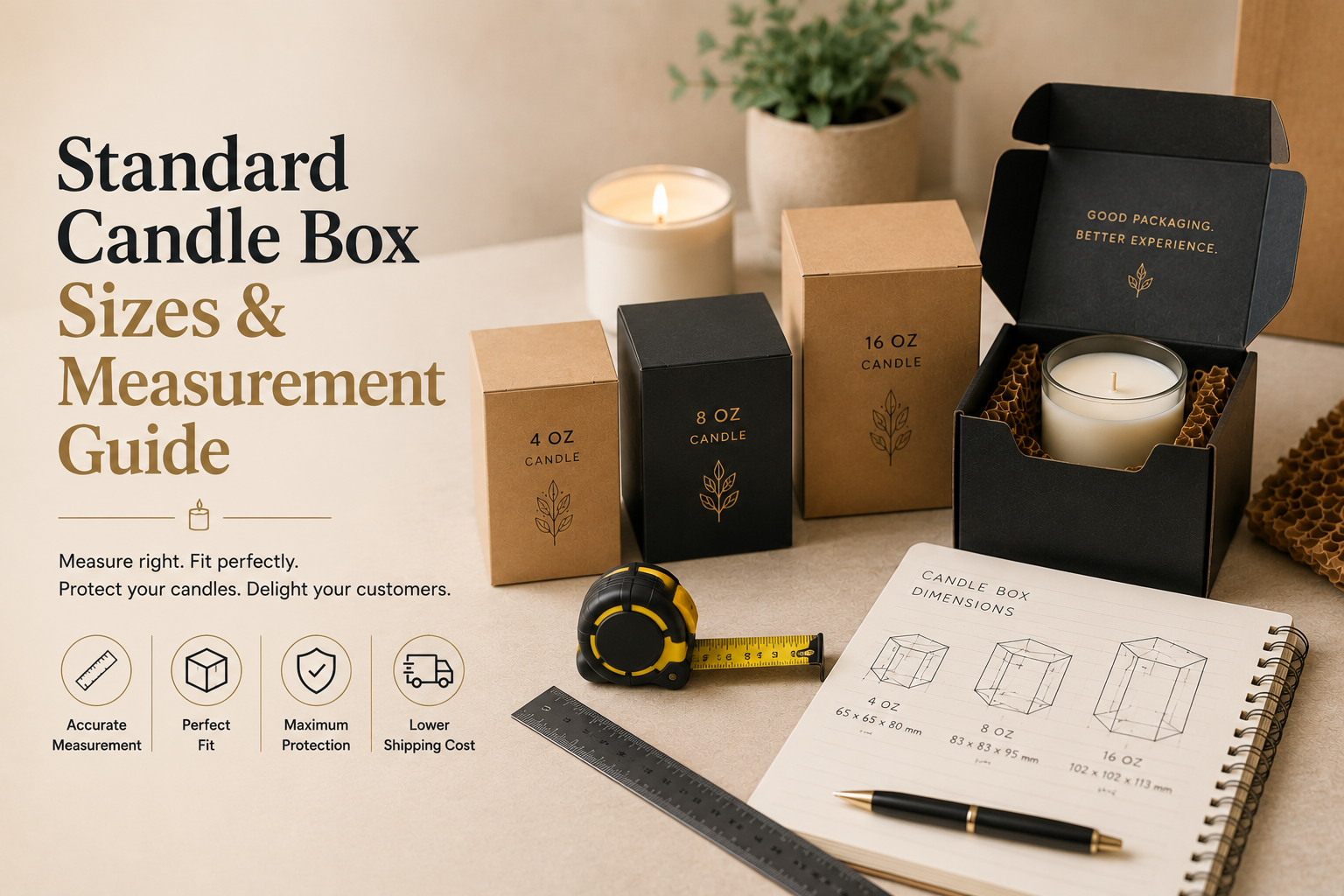
Standard candle box sizes depend on your jar:
- 8–9 oz jars → ~3.25″ x 3.25″ x 3.75″ (83 x 83 x 95 mm) interior
- 16 oz jars → ~4″ x 4″ x 5.25″ (102 x 102 x 133 mm)
- Add ¼–½ inch (6–13 mm) clearance on each side for safety
Standard Candle Box Sizes: Your No-Nonsense Measurement Guide
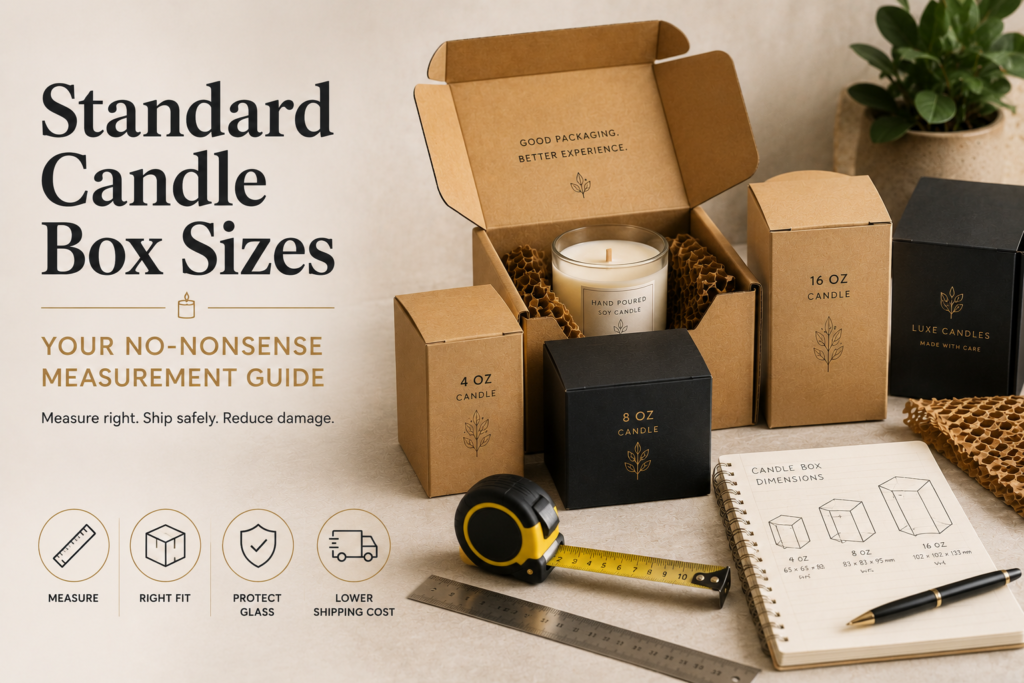
If you sell candles online or in stores, the box size can make or break your customer experience. Most 8–9 oz jar candles sit nicely in a box around 83 x 83 x 95 mm (roughly 3.25″ x 3.25″ x 3.75″), while 16 oz jars often need 102 x 102 x 133 mm or larger. Measure your actual jar, add 6–13 mm clearance on each side, pick the right material, and you’ll cut damage, lower shipping costs, and look more professional. We’ve fixed hundreds of these issues at Hello Custom Boxes USA, here’s the practical guide that actually works.
I’ve spent years on the production floor watching boxes get die-cut, printed, folded, and shipped across the U.S. One common story: a maker in California ordered tight boxes for pretty 8 oz jars. They looked great on the shelf but arrived cracked after UPS handling. Another brand over-ordered giant boxes and watched dimensional weight fees eat their profits. These aren’t theoretical problems—they show up in every batch if you skip the details.
Why Getting the Size Right Changes Everything for Your Business
Proper sizing protects glass from impacts, keeps wax from shifting, and helps your packaging stand out without wasting material. For U.S. sellers dealing with eCommerce, retail, or wholesale, it also means fewer returns and happier customers who actually post photos of their unboxing.
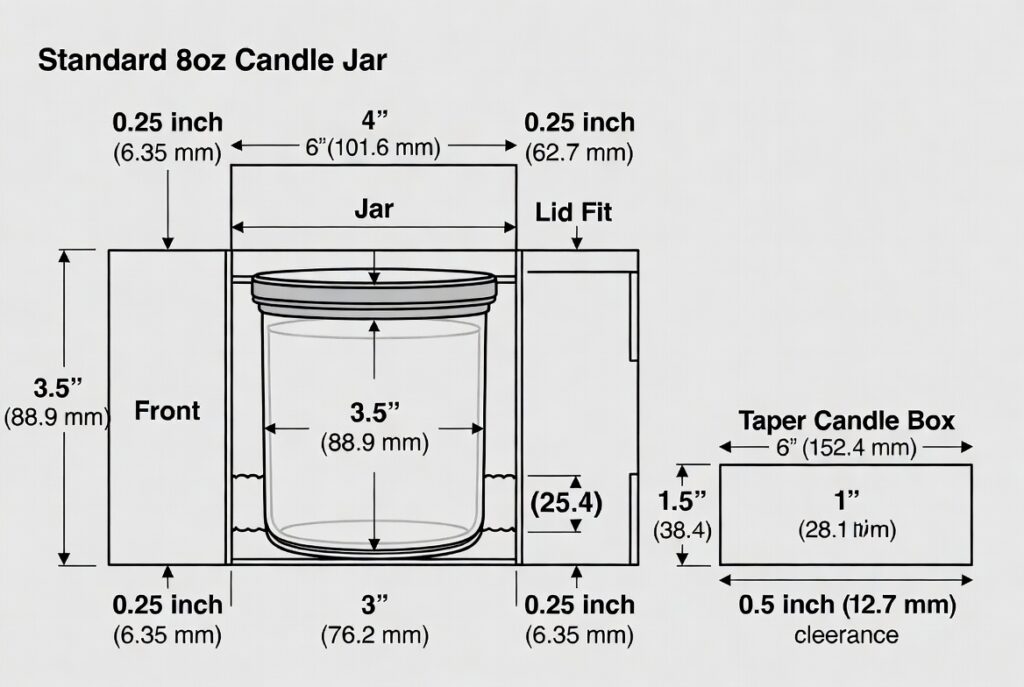
Quick real-world measurement example (in mm): Take a typical 8 oz straight-sided jar: diameter 80 mm, height 90 mm including lid. Add 8 mm clearance all around → interior target 96 x 96 x 106 mm. Then choose your board thickness (usually 1–2 mm) and you’re ready for a prototype. We always recommend measuring multiple jars from the same batch—manufacturing tolerances can surprise you.
Material Choices: What We’ve Learned From Real Production Runs
Kraft: Warm, natural feel that prints well with earth tones. Lightweight and great for smaller runs. Downside? It shows dents easier during rough transit. We use it successfully for boutique brands shipping locally.
SBS White: Crisp printing, premium look. Excellent for full-color photos of your candles. Holds shape nicely but can feel slicker—pair it with matte lamination to avoid fingerprints.
Corrugated (especially E-flute): The protector. Those tiny flutes add cushion without bulk. In our shipping tests, corrugated versions had dramatically lower breakage. Best when you’re sending across states.
Recycled Options: Modern recycled boards perform close to virgin stock. Color can vary slightly batch-to-batch, but the sustainability win is real for eco-conscious buyers. Just test print quality on your design first.
When to choose corrugated: Heavy jars, long-distance shipping, or subscription boxes.
When not to choose it: Super-premium minimalist look where every millimeter of thickness matters, or very small retail counter displays.
Protection That Actually Works: Freshness and Safety
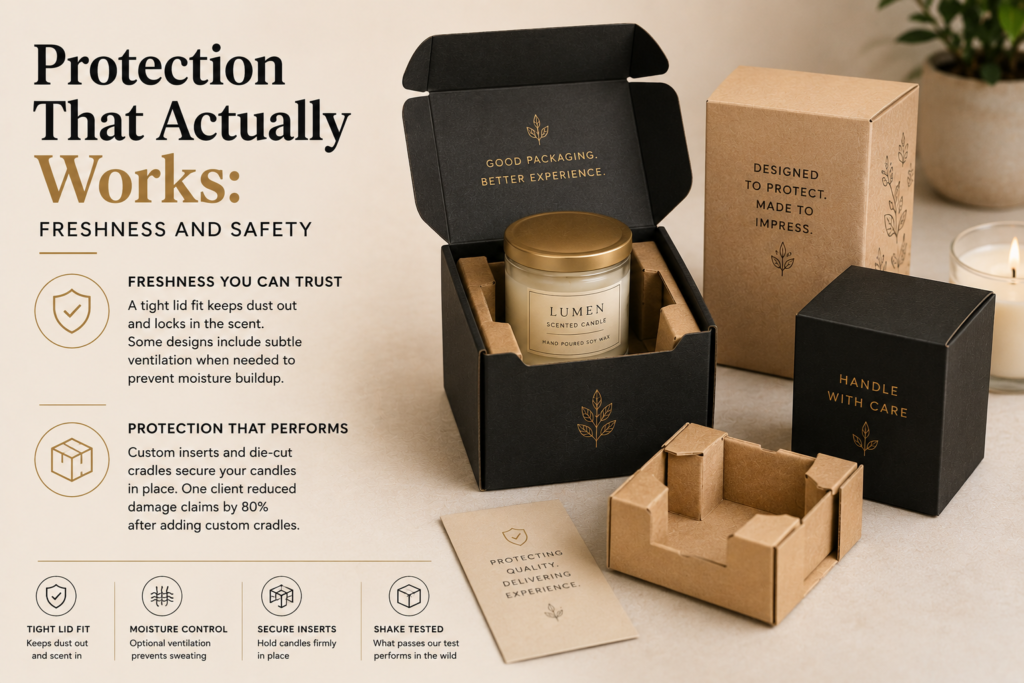
Candles hate extreme temperature swings and moisture. A good lid fit stops dust and helps contain scent. We’ve added tiny ventilation in some designs when clients reported sweating issues, but most sealed jars don’t need it.
Inserts or die-cut cradles make a huge difference. One client reduced damage claims by 80% after we added custom cradles. Real observation from the warehouse: boxes that pass the “shake test” on our end almost never have issues in the wild.
Presentation Details That Boost Sales
Window cutouts let customers see the candle color immediately. We’ve watched conversion rates climb when the window framing matches the branding. Printing tips from production: screen colors look different on kraft versus SBS, always request a physical proof.
For branding, think beyond the box. Subtle embossing or foil accents feel luxurious without crazy costs.
Comparison Table: Standard Candle Box Sizes
Common Ordering Mistakes We See Every Month
- Measuring only the jar body and forgetting the lid overhang.
- Ordering without samples—screen colors lie.
- Ignoring dimensional weight for shipping.
- Choosing the absolute cheapest material for high-value items.
- Forgetting to plan for inserts or dividers in multi-packs.
- Not accounting for seasonal volume (boxes that work in summer heat may behave differently).
One painful example: A startup ordered 500 boxes based on one perfect sample jar. The next production run of jars was 2 mm wider. Chaos. Always measure a full batch.
Printable Checklist for Your Next Order
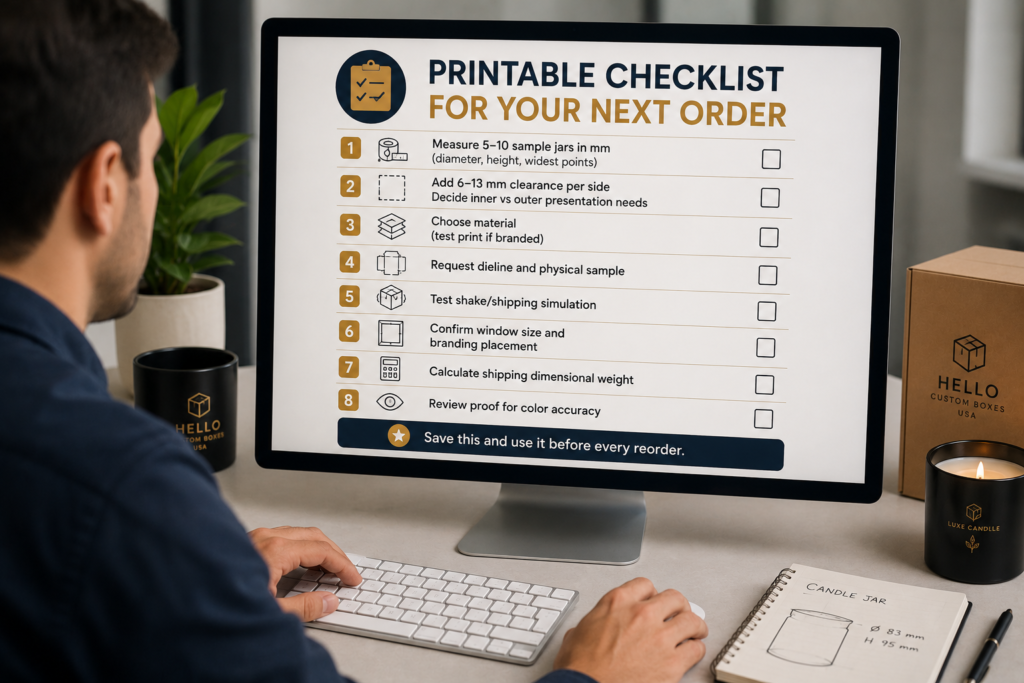
Measure 5–10 sample jars in mm (diameter, height, widest points)
Add 6–13 mm clearance per side □ Decide inner vs outer presentation needs
Choose material (test print if branded)
Request dieline and physical sample
Test shake/shipping simulation
Confirm window size and branding placement
Calculate shipping dimensional weight
Review proof for color accuracy
Save this and use it before every reorder.
When to Go Custom vs Standard Sizes
Standard sizes work great for testing or very tight budgets. But once you have consistent sales, custom sizing built to your exact jar pays for itself through protection and brand consistency. We see the switch happen around 500–1000 units per order.
Ready to Get This Right?
Every box we make at Hello Custom Boxes USA starts with your product’s real measurements. No forcing square pegs into round holes.
Browse our custom candle boxes collection or request a dieline, sample, or quote today. We’ll walk through your specifics and send proofs fast.