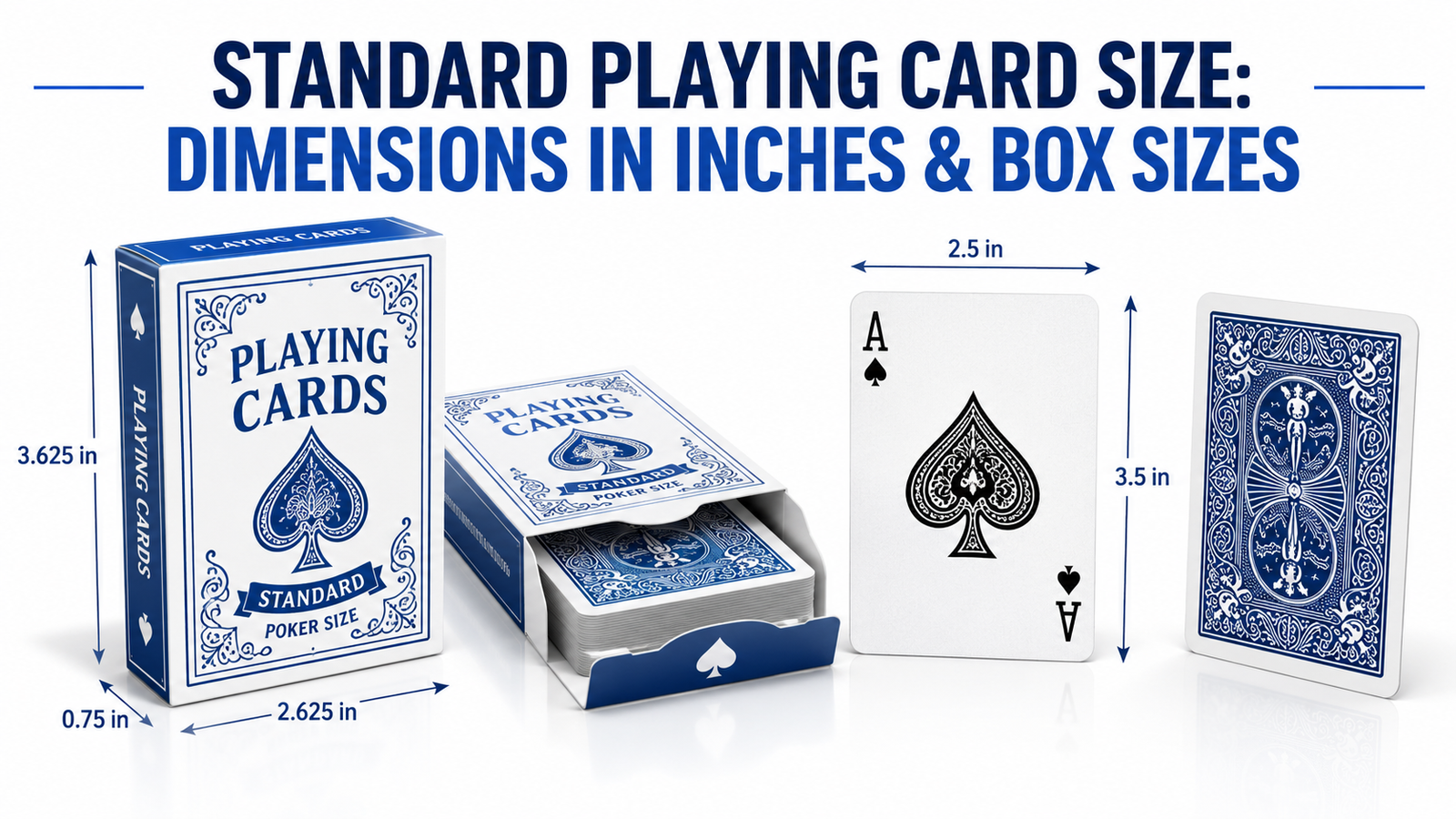
The standard playing card size used for most poker decks in the United States is 2.5 × 3.5 inches. That measurement gives you the finished width and height of each card, but it does not tell you the final dimensions of the box.
For packaging, the full deck has to be considered as a physical product. Card count, stock thickness, coatings, extra cards, instructions, and internal clearance can all change the box depth.
This guide explains the most common playing card dimensions, how poker and bridge cards differ, how to prepare artwork for printing, and how to determine a practical box size for a finished deck.
Quick Answer
A standard poker-size playing card in the USA measures 2.5 × 3.5 inches, or 63.5 × 88.9 mm. Bridge cards are usually narrower at approximately 2.25 × 3.5 inches.
A standard playing card box does not have one universal finished size. The correct box dimensions depend on the card count, finished deck thickness, coatings, extra cards, inserts, and the clearance needed for practical packing and removal.
What Is the Standard Playing Card Size?
The most common standard playing card size in the United States is:
2.5 inches wide × 3.5 inches high
That is equivalent to:
- 63.5 × 88.9 mm
- 6.35 × 8.89 cm
This format is commonly known as poker size. It is widely used for traditional 52-card decks, casino-style cards, promotional decks, branded playing cards, and many custom card games.
Bridge cards are slightly narrower, while tarot, oracle, mini, and specialty game cards may use completely different dimensions.
Common Playing Card Dimensions
Poker and bridge sizes are widely recognized standards. Specialty formats should always be confirmed with the card printer before packaging artwork or dielines are finalized.
Poker vs. Bridge Card Size
Poker and bridge cards are both typically 3.5 inches high. The main difference is width.
A poker card is approximately:
2.5 × 3.5 inches
A bridge card is approximately:
2.25 × 3.5 inches
That quarter-inch reduction may look small, but it changes how the cards feel in the hand and how the packaging needs to be sized.
Bridge cards are narrower, which makes them easier to hold when a game requires players to keep several cards in one hand. Poker cards offer a little more surface area for numbers, suits, illustrations, and branded artwork.
From a packaging perspective, the box should follow the actual card format rather than using one generic playing-card carton for every deck.
What Are the Dimensions of a 52-Card Deck?
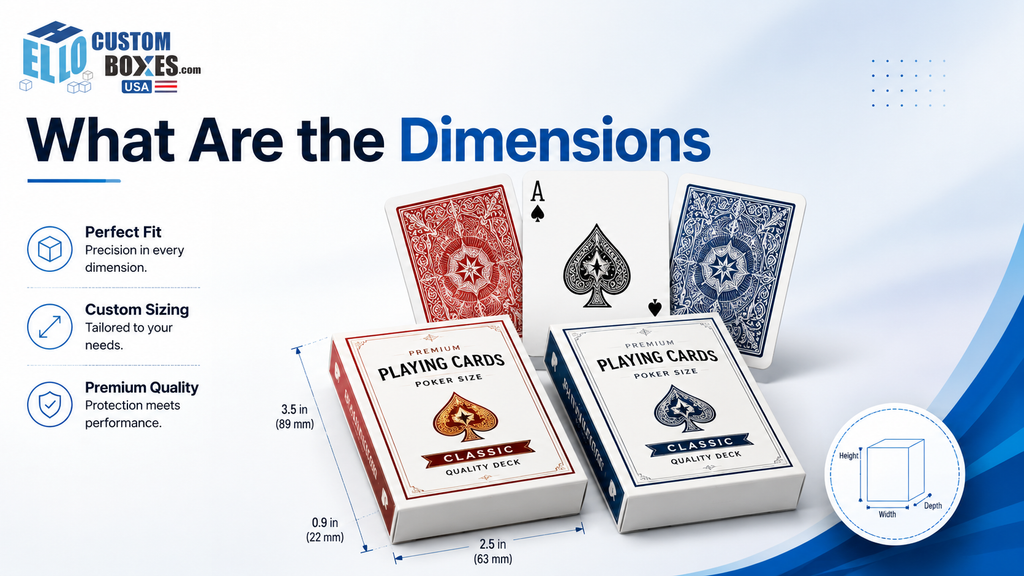
A 52-card deck does not have one universal three-dimensional size.
If the cards use the standard poker format, the face dimensions remain:
2.5 × 3.5 inches
The variable measurement is the stack depth.
That depth depends on how thick each finished card is.
For example, if a finished card measures approximately 0.30 mm thick, 52 cards would theoretically create a stack around 15.6 mm deep before considering compression, coatings, jokers, instruction cards, or other additions.
A commercial deck may also include:
- two jokers
- instruction cards
- advertising cards
- promotional cards
- warranty or information cards
For packaging, the finished physical stack matters more than the nominal card count.
Deck Thickness Matters More Than It Looks
Deck depth is one of the easiest measurements to underestimate when designing playing card packaging.
A difference of only a fraction of a millimeter per card can become noticeable once it is multiplied across an entire deck.
Several factors can increase the finished stack.
Card Stock
Heavier or thicker card stock produces a deeper deck.
A premium deck printed on substantial stock may therefore need more internal box depth than a lightweight promotional deck.
Coatings and Finishes
Varnishes, protective coatings, or laminates may slightly change the thickness and surface characteristics of the cards.
These finishes can also influence how smoothly the cards slide into and out of a carton.
Number of Cards
A basic deck may contain 52 cards, while another product may contain 54, 60, 78, or more.
Box depth should be calculated from the final card count.
Instructions and Extra Components
Rule cards may add very little thickness, but a folded instruction booklet can add considerably more.
Sleeves, tokens, dice, counters, or collectible pieces may require a completely different packaging structure.
Packaging Note
When sizing a custom playing card box, the card dimensions are only the starting point. The safest approach is to measure the complete finished stack and then design the internal carton dimensions around the actual product.
That is more reliable than choosing a tuck box simply because it is described as suitable for “52 cards.”
Playing Card Size in Pixels for Printing
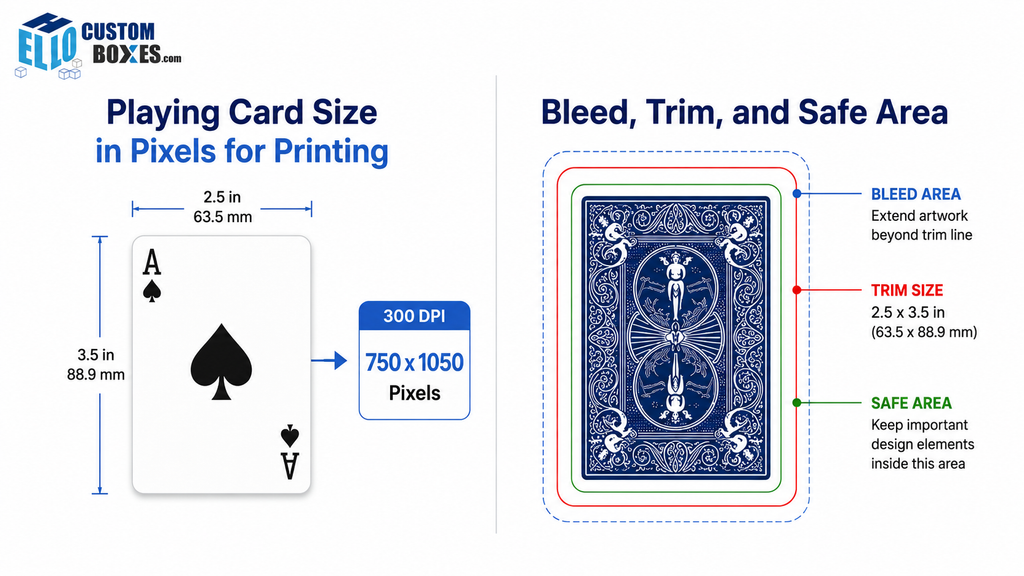
Designers often work in pixels while printers specify dimensions in inches.
For a standard 2.5 × 3.5-inch poker card at 300 DPI, the finished trim area is approximately:
750 × 1050 pixels
That is only the finished card area.
A production artwork file usually needs to be larger because the design must extend beyond the cut line to create bleed.
The final file size therefore depends on the printer’s required template.
For print-ready artwork, confirm:
- finished trim size
- bleed
- safe area
- corner radius
- color mode
- minimum image resolution
- file format
Do not rely on a generic pixel measurement when a printer-specific dieline or template is available.
Bleed, Trim, and Safe Area
Three measurements are especially important when preparing playing card artwork.
Trim Size
The trim size is the final physical size after cutting.
For a standard poker-size card, that is:
2.5 × 3.5 inches
Bleed
Bleed extends artwork beyond the trim line.
It helps prevent unwanted white edges from appearing if the cut shifts slightly during production.
Many print projects use approximately 1/8 inch of bleed, but this should not be treated as a universal specification for every playing-card printer.
Always use the bleed included in the approved artwork template.
Safe Area
Text, logos, suit symbols, numbers, and other important design elements should stay comfortably inside the trim line.
Background colors and images can run into the bleed area. Critical content should not.
This becomes particularly important near rounded corners, where artwork that appears safe on a square design file can end up too close to the finished edge.
What Are Standard Playing Card Box Dimensions?
There is no single box size that fits every playing card deck.
For a conventional 52- to 54-card poker deck, a tuck carton may often fall somewhere around:
2.5–2.6 inches wide × 3.5–3.6 inches high × approximately 0.7–0.8 inches deep
These figures are useful as a reference only, not as a production specification.
The correct finished dimensions depend on:
- card stock thickness
- total card count
- coatings
- extra cards
- instructions
- board thickness
- internal clearance
- carton structure
A box should be large enough for practical loading and removal without allowing the cards to move excessively inside.
Card Size vs. Box Size
This distinction is important:
Card size describes the finished face of each card.
Deck size adds the depth of the complete stack.
Box size adds the structural clearance and board required to hold that stack.
Those are three related measurements, but they are not interchangeable.
A Better Way to Size a Playing Card Box
For a custom packaging project, start with the finished product rather than a stock carton dimension.
Use this sequence.
1. Confirm the Finished Card Width
For standard poker cards:
2.5 inches
2. Confirm the Finished Card Height
For standard poker cards:
3.5 inches
3. Count Every Card
Include jokers, instructions, promotional cards, or other pieces that will ship inside the deck.
4. Measure the Finished Stack
Do not estimate stack depth only from the card stock specification if a physical sample is available.
Measure the cards together in their finished condition.
5. Account for Additional Contents
Include booklets, inserts, sleeves, wrappers, or accessories.
6. Add Appropriate Structural Clearance
The carton needs enough tolerance for practical packing and removal.
Too little clearance creates friction and difficult assembly.
Too much clearance allows the deck to shift.
7. Build the Dieline Around the Internal Requirement
The internal product fit should guide the box structure and panel dimensions.
This is particularly important because paperboard thickness also influences external measurements.
Example: Sizing a Standard Poker Deck
Suppose a deck contains:
- 52 standard poker cards
- 2 jokers
- 1 instruction card
That gives a total of 55 cards.
Each card measures:
2.5 × 3.5 inches
Instead of deciding that the box must automatically be 0.75 inches deep, the better process is to measure the finished 55-card stack.
If that finished stack measures differently from a conventional deck, the box depth should be adjusted accordingly.
This is why a nominal “standard playing card box size” is useful for estimating but should not replace physical product measurements.
Choosing the Right Box Style
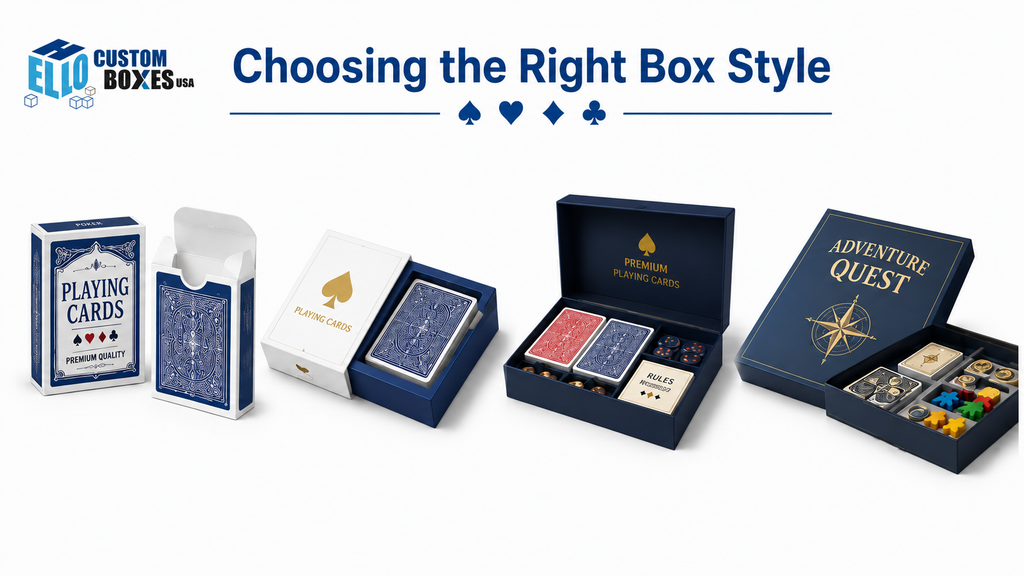
A traditional tuck carton works well for many decks, but the best structure depends on how the cards will be sold and presented.
Tuck-End Cartons
Tuck boxes are compact, lightweight, printable, and cost-efficient.
They are well suited to:
- traditional playing cards
- promotional decks
- educational cards
- straightforward card games
- retail decks
They also provide printable front, back, side, and closure panels for branding and product information.
Sleeve and Tray Packaging
A sleeve-and-tray structure provides a more substantial presentation than a basic folding tuck box.
It can work well for:
- premium card games
- branded promotional decks
- collectible products
- gift-oriented sets
Rigid Boxes
Rigid packaging is better suited to premium presentation.
It can also accommodate:
- multiple decks
- card inserts
- booklets
- tokens
- accessories
The additional structure can improve presentation, but it also changes material use, shipping weight, and production requirements.
Larger Game Boxes
A standard tuck carton may no longer be appropriate when the product contains cards plus several game components.
A fcan instead be designed around the entire contents and use inserts or compartments to keep different pieces organized.
Which Material Works for a Playing Card Box?
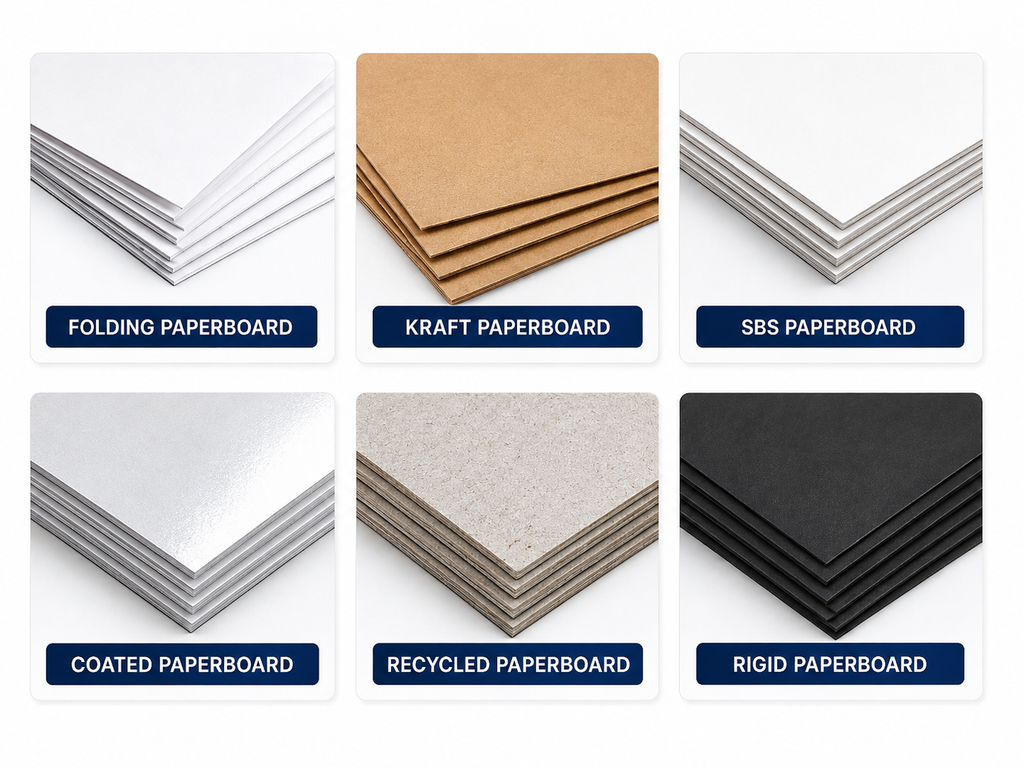
Folding paperboard is one of the most common materials for traditional playing card cartons.
It is lightweight, printable, and suitable for compact tuck-style structures.
However, material should be chosen around the finished packaging requirement rather than appearance alone.
Product Weight
A standard deck may need relatively little structural reinforcement.
Multiple decks or accessories may require a heavier board.
Print Design
A smooth coated surface is useful for detailed graphics, illustrations, and strong color reproduction.
Kraft-style boards create a more natural appearance but produce a different print result.
Finishing
Matte, gloss, spot treatments, foil, embossing, or other finishes can change both presentation and production specifications.
Distribution
Packaging that will experience frequent retail handling may need different protection from a deck packed directly inside a larger shipping carton.
For custom playing card packaging, material, structure, print design, and finished deck dimensions should be considered together rather than selected independently.
Standard Size or Custom Size?
Standard poker dimensions work well when familiarity and conventional handling are priorities.
A custom card size can make sense when the product needs:
- larger illustrations
- more written information
- educational diagrams
- children’s content
- unusual game mechanics
- a collectible format
- a distinctive visual identity
However, changing the card size affects more than the cards.
It may also change:
- packaging dimensions
- dielines
- material usage
- shipping efficiency
- insert design
- artwork placement
For that reason, finalize the card dimensions before the packaging structure goes into production.
Practical Packaging Checklist
Before approving a playing card box, confirm:
- finished card width
- finished card height
- total number of cards
- finished deck thickness
- additional cards
- instruction booklet thickness
- wrapping or sleeves
- other components
- required internal clearance
- board thickness
- carton opening style
For a custom project at Hello Custom Boxes USA, these details provide a more useful starting point than simply requesting a “standard card box.”
They allow the packaging to be developed around the actual deck rather than forcing the product into a predetermined carton size.
Final Takeaway
The standard poker-size playing card used across the United States measures 2.5 × 3.5 inches. That is the key measurement for artwork and card format, but it is only the starting point for packaging.
A well-sized playing card box should be developed from the finished deck itself. Card count, stock thickness, coatings, instructions, accessories, board thickness, and practical clearance all influence the final carton dimensions.
If you are producing custom playing cards, finalize the deck specification first. Then design the packaging around the finished stack. That approach gives you a more reliable fit and avoids treating a generic tuck-box measurement as a universal standard.
Request a QuoteFrequently Asked Questions
A standard poker-size playing card measures 2.5 × 3.5 inches, or approximately 63.5 × 88.9 mm.
Poker cards are normally 2.5 inches wide and 3.5 inches high.
A typical bridge card measures approximately 2.25 × 3.5 inches. It is the same common height as a poker card but slightly narrower.
The face dimensions depend on the card format. A poker-size deck uses 2.5 × 3.5-inch cards, while the total stack depth depends on card stock, coatings, and additional cards.
There is no universal finished thickness. The most accurate method for packaging is to measure the complete finished stack.
A conventional poker tuck box often falls around 2.5–2.6 inches wide, 3.5–3.6 inches high, and roughly 0.7–0.8 inches deep. Final dimensions should be based on the actual deck rather than this reference range alone.
Potentially. Two extra cards add some stack depth, and differences in stock or coating may add more. The complete finished deck should be measured before the final carton depth is approved.