

SBS Cardboard
Premium bleached substrate engineered for retail-ready packaging with sharp, high-resolution print performance across bulk SKUs.
Frozen meat orders do not all pack the same way. Steaks may stack flat, while sausages, poultry, burger packs, and larger cuts can take up very different amounts of room. Frozen meat boxes can be made around the products after they are packed, with the carton size and construction based on the finished weight, arrangement, and delivery setup. Custom printing can also be added for wholesale, delivery, and subscription orders.
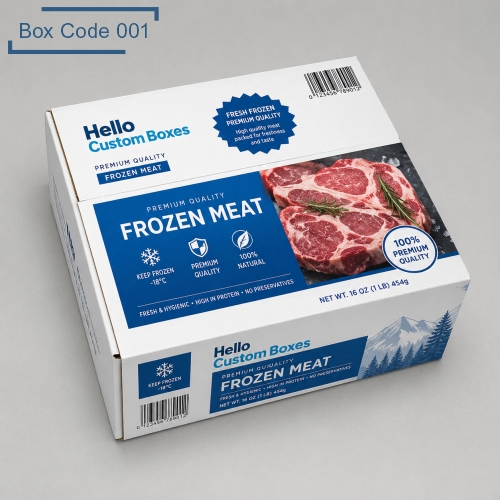
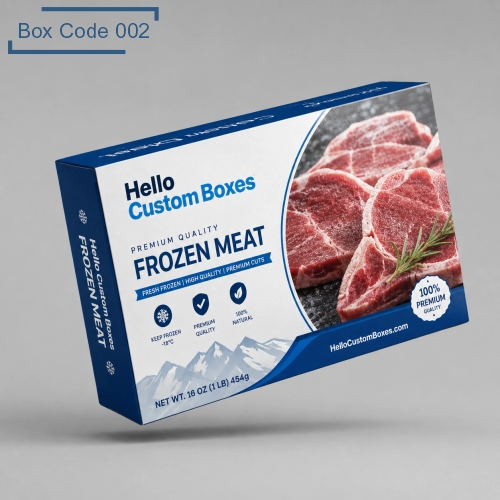
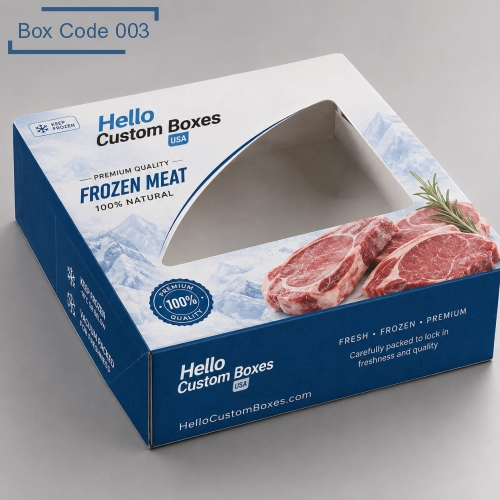
Tell us your specs and we'll send pricing within one business day.
Meat weight alone is not enough to choose a box size. Five pounds of vacuum-packed steaks can form a fairly compact stack, while the same weight made up of sausages, poultry portions, and larger cuts may need considerably more room.
The useful measurements come from the meat after its primary packaging has been applied. Vacuum packs, sealed trays, or other individual packs can be arranged as they would normally sit inside the carton. Their combined dimensions and finished weight give a better starting point for custom frozen meat packaging boxes than choosing a standard carton from the product weight. Businesses handling different food products can also explore our custom food packaging solutions for other packaging requirements.
This also helps when several products share one box. You can see which packs stack naturally, where unused space appears, and whether one carton size can handle several common orders without making smaller selections sit loosely inside.
The box specification can change with the way the meat is sold. A wholesale case moving several packs together has a different job from a direct-to-consumer order that goes through parcel delivery.
Flat steak packs are generally easier to arrange efficiently, while mixed selections need more attention because the shapes vary. Larger wholesale orders bring packed weight and stacking into the decision. Delivery orders also need enough space for the components used in the established temperature-controlled shipping setup.
For subscription businesses, consistency becomes another consideration. The products may change from one delivery to the next, so it is worth checking whether one carton genuinely works across the usual combinations or whether a small range of sizes would be more practical.
Several individually packed products can create a fairly heavy carton once they are grouped together. The outer box needs enough structure to handle that finished load through packing, stacking, and distribution.
Corrugated board is commonly used for shipping cartons because its fluted construction provides structural support. The appropriate specification should still come from the finished box dimensions, packed weight, stacking conditions, handling, and expected environment rather than choosing a particular board simply because the contents are frozen.
A compact order of vacuum-packed steaks and a larger wholesale meat case do not place the same demands on a carton. If the packed weight and dimensions are already known, providing them with the quote request gives HCB a much better basis for discussing the box construction.
Frozen products can expose paper-based packaging to moisture as they move between different environments. Condensation may appear during temperature changes, and damp conditions can affect the way paper and corrugated board perform.
The role of the outer carton matters here. Meat that is already vacuum sealed, pouched, or contained in a tray has its own primary packaging before it reaches the box. The outer carton is then selected for the conditions it will face during storage, handling, and distribution.
Tell the packaging supplier where the carton will be used. A box remaining in frozen storage may experience different conditions from one moving through a packing facility and then into parcel distribution. This information is more useful for material selection than simply specifying the thickest board available.
A frozen meat box delivery should be planned around everything that goes into the shipment. Finalizing the carton around the meat first and adding the other required components later can quickly create a space problem.
Where a temperature-controlled shipping system is used, the complete pack may include insulation, refrigerants or cooling components, dividers, and other supporting materials. Their dimensions need to be known before the final internal box size is approved.
A useful approach is to build one representative shipment exactly as it will leave the facility. This shows how the meat and the established cold-chain components fit together and makes unnecessary empty space easier to spot.
The corrugated carton itself should not be treated as a guarantee that meat will remain frozen for a stated period. Temperature performance depends on the complete shipping system and the conditions for which that system has been validated.
An oversized carton can look like the safer choice, but spare space does not automatically improve protection. Products have more room to move, additional packing material may be needed, and every shipment occupies more space than necessary.
Shipping boxes for frozen meat should accommodate the complete packing setup without leaving room that has no useful purpose. This becomes particularly relevant for businesses sending orders regularly because even a modest amount of unused space is repeated across every shipment.
The opposite extreme creates problems too. Staff should be able to load the primary-packed meat and required shipping components without squeezing products into place or changing the normal packing arrangement.
Testing a representative order before volume production can reveal these issues early. If one carton comfortably handles several regular combinations, it may become a useful standard size. Orders that consistently struggle to fit are better treated separately rather than forcing everything into one box.
A frozen meat box subscription can contain a different selection each time while remaining within the same subscription tier. That makes weight alone an unreliable guide to carton size.
One delivery may contain flat steak and burger packs. Another might replace some of those items with sausages, chicken, or a bulky roast. The overall weight can remain similar even though the space needed inside the carton changes.
Using one oversized box for every possible combination simplifies box inventory but can leave smaller orders with unnecessary room. Creating a different carton for every selection makes packing and stock management more complicated.
Reviewing the combinations shipped most often can reveal a better middle ground. A small set of established carton sizes may cover standard, larger, and family orders while still giving staff a straightforward packing system.
Mixed meat orders are easier to handle when the internal arrangement has been considered before the box dimensions are finalized. Flat packs may stack together neatly, while larger or irregular cuts need enough room without forcing smaller products into awkward gaps.
A repeatable arrangement can also help packing staff. When products normally have a known position, there is less guesswork each time the order is assembled.
Dividers or other internal pieces can be useful where they solve a genuine positioning problem, but they do not need to be added automatically. If the primary-packed products already sit securely within the established shipping system, another component may simply add material and packing work.
For subscription orders, a clear arrangement also makes the contents easier for customers to identify when the box is opened.
The outside of a shipping carton may offer plenty of print area, but part of that space is used once the order is ready for dispatch. Tape, carrier labels, product labels, and handling information can all cover printed panels.
The artwork for frozen meat boxes should therefore be reviewed on the assembled shipping carton. A logo that looks perfectly positioned on the flat dieline may end up partly covered by tape or a delivery label.
Custom printing can carry the main brand identity without filling every panel. A recognizable logo, brand colors, or a simple pattern can work across different meat selections, while changing product information can be applied separately where appropriate.
This approach can be particularly practical for subscription businesses. The same branded carton remains recognizable from one delivery to the next even when the meat selection changes.
Once a carton has been tested with the actual products and approved, keep a record of the specification. Dimensions, board construction, artwork, and the normal packing arrangement all become useful references for future wholesale orders.
That does not mean the box should be reordered without checking when the products change. A wider vacuum pack, new tray, larger cut, heavier order, or change to the established cold-chain setup can alter the space or structural requirements.
These differences become more important at volume. A minor fit issue on a few samples may be easy to work around, but the same problem repeated across a wholesale run can slow packing every day.
Keeping approved specifications for each regular carton size gives staff and purchasing teams a clearer basis for repeat orders.
Start with the meat after it has been prepared in its primary packaging. Send the length, width, and height of the vacuum packs, trays, pouches, or other packs that will sit inside the carton. For mixed orders, include the usual number of products and the approximate finished shipment weight.
For delivery projects, provide the dimensions or space requirements of the insulation, refrigerants or cooling components, dividers, and other parts included in your established shipping setup. These need to be considered before the carton size is finalized.
If you run a frozen meat box subscription, tell us about the regular order tiers and how much the contents change between deliveries. That can help establish whether one box is practical or whether several repeatable sizes would reduce unused space.
Quantity, artwork, existing box specifications, and printing requirements can also be provided with the enquiry. Hello Custom Boxes can then develop and quote custom frozen meat packaging around the way your business actually packs and distributes its products in the United States.
Specifications |
|
|---|---|
| Materials | Food-grade corrugated board, SBS paperboard, kraft board, moisture-resistant stock, freezer-suitable packaging materials, and recyclable board options. |
| Box Style | Tuck-end boxes, auto-lock boxes, corrugated shipping cartons, freezer boxes, tray-and-lid styles, and custom die-cut meat packaging. |
| Cold Resistance | Designed for chilled and frozen storage, with board and coatings selected to help maintain box integrity under low-temperature conditions. |
| Moisture Protection | Moisture-resistant surfaces, protective inner coatings, leak-control options, and reinforced construction for condensation and frozen product handling. |
| Load Support | Reinforced bases, strong side walls, secure closures, and stacking support for frozen meat products during storage and transportation. |
| Printing | CMYK and Pantone printing, digital or offset printing, product branding, handling information, barcode printing, and custom food packaging graphics. |
| Finishes | Matte or gloss coating, moisture-resistant finish, scuff-resistant surface, protective lamination, and smooth printable exterior. |
| Product Fit | Custom internal dimensions for meat cuts, packaged portions, frozen poultry, seafood, bulk packs, and different product weights. |
| Sizes | Custom length, width, and depth based on product dimensions, pack quantity, storage requirements, and shipping configuration. |
| Wholesale | Bulk production, custom dieline development, sampling options, large-volume orders, and consistent structural and print quality. |
| Sustainability | Recyclable corrugated board, kraft packaging options, recyclable paper-based materials, reduced-plastic designs, and eco-conscious frozen food packaging solutions. |
Choose from practical materials, print methods, inks, finishes, and add-ons for a better product presentation.
Premium bleached substrate engineered for retail-ready packaging with sharp, high-resolution print performance across bulk SKUs.

High-density rigid board built for wholesale cartons, structural strength, and stack-ready warehouse logistics.

Eco-conscious black kraft for premium unboxing programs, corporate gifting, and limited-edition product lines.
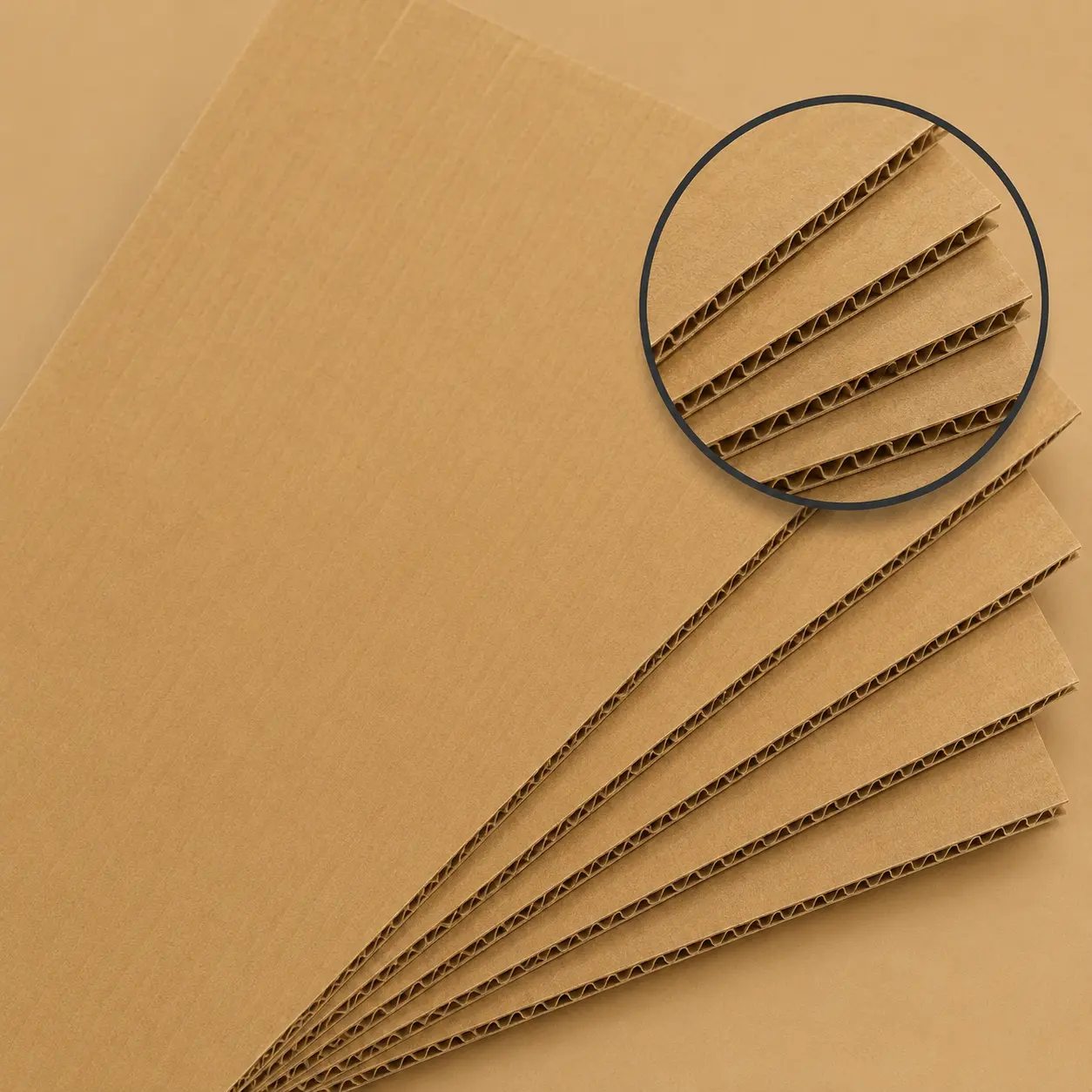
Multi-flute corrugated board built for protective shipping, e-commerce dispatch, and high-volume B2B fulfillment.
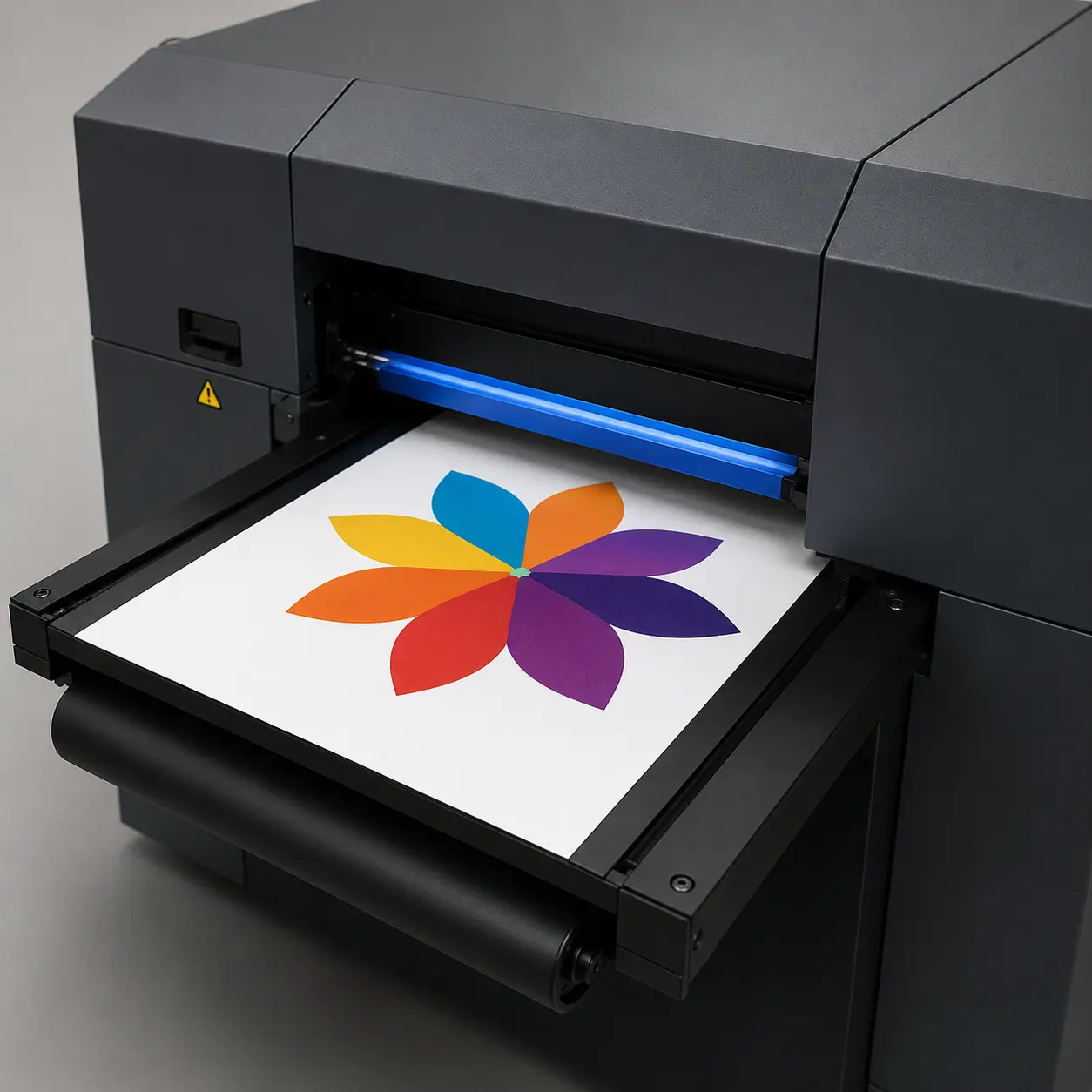
Short-run digital printing with no plate setup — ideal for prototypes, sample approvals, and quick reorders.
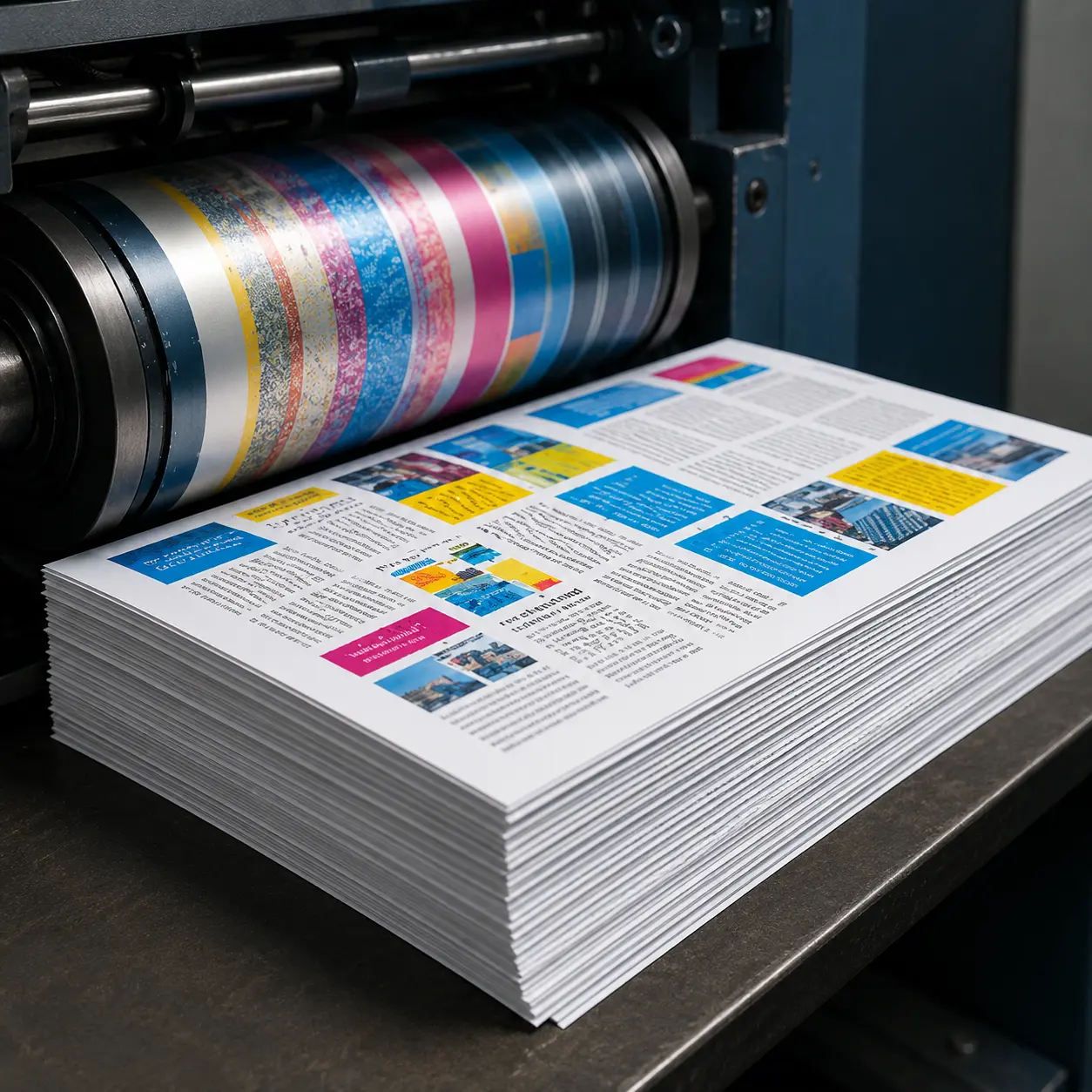
Industry-standard offset printing for high-volume runs with consistent color matching across bulk production.

Selective dimensional embellishment for premium B2B branding, tactile depth, and shelf differentiation.

Vibrant UV-cured printing suited for promotional packaging, event giveaways, and trade-show units.

High-visibility ink system engineered for shelf impact, retail displays, and wholesale point-of-sale units.
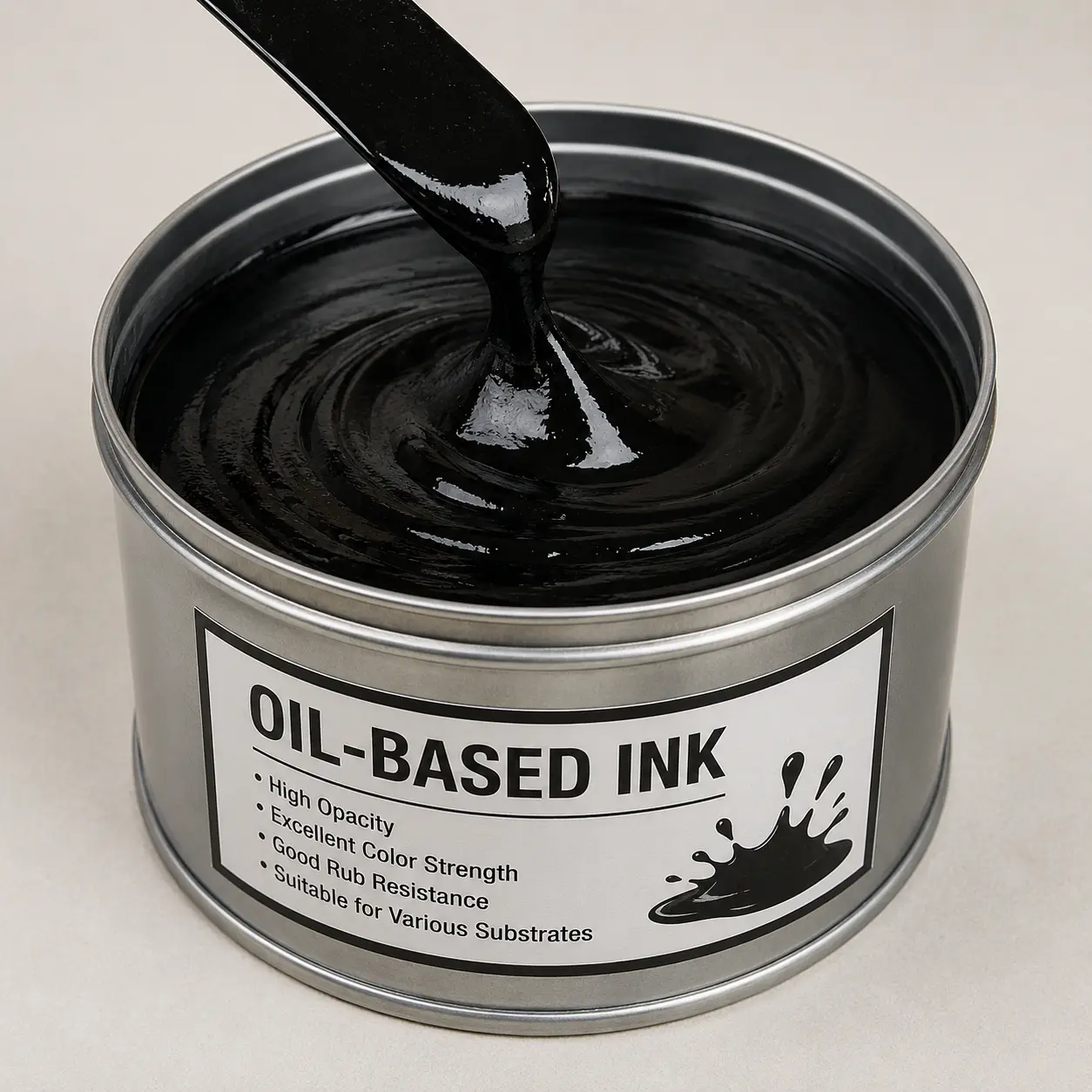
Industry-grade ink for durable, scuff-resistant production runs across long-haul distribution.

Spot-color matching to corporate brand standards — consistent identity across every SKU and reorder.

Sustainable plant-based ink for eco-certified packaging programs and ESG-aligned product launches.

Protective film extends shelf life and protects packaging during shipping and warehouse handling.

Water-based protective seal — fast-drying, food-safe-friendly finish for high-volume bulk production.

Premium tactile finish that elevates corporate gifting boxes and high-end B2B product lines.

Highlight logos and key artwork with selective gloss for maximum retail brand recognition.

Raised brand marks for tactile, premium identity on retail shelves and corporate packaging.

Pressed impressions for subtle, sophisticated branding on premium B2B product lines.

Metallic foil application — gold, silver, and custom finishes for luxury wholesale packaging.
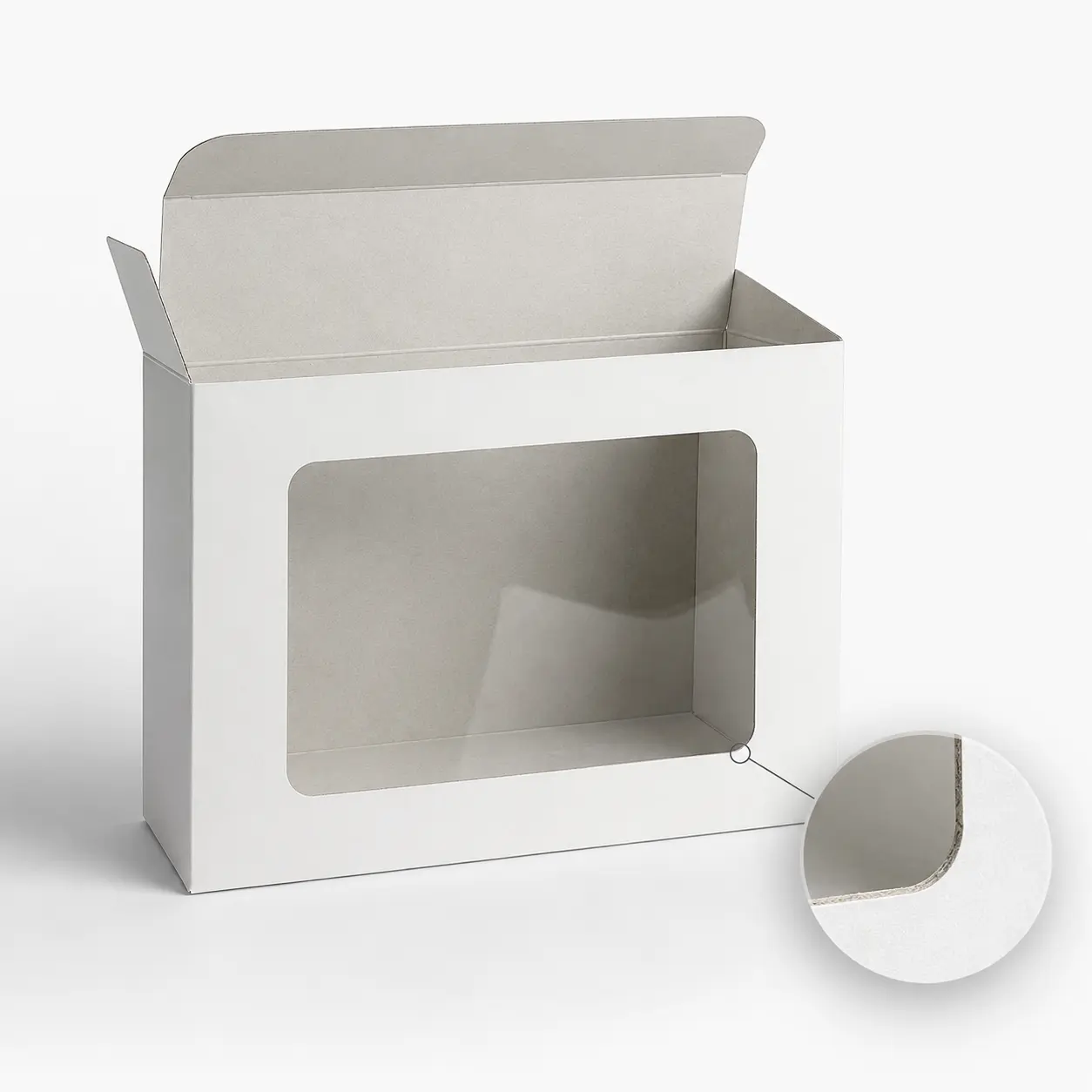
Precision die-cut openings that let customers view the product inside, with optional clear patching for better protection and presentation.
Simple, practical, and built around real B2B production needs.
Send product size, quantity, material preference, artwork, and delivery details.
Our team prepares a proof or 3D mockup so you can check design and structure.
Once approved, your packaging moves into printing, cutting, finishing, and packing.
Finished boxes are packed and shipped to your warehouse, retailer, or 3PL.
Explore similar packaging options that may fit your product line.



Reviews
There are no reviews yet.