TL;DR:
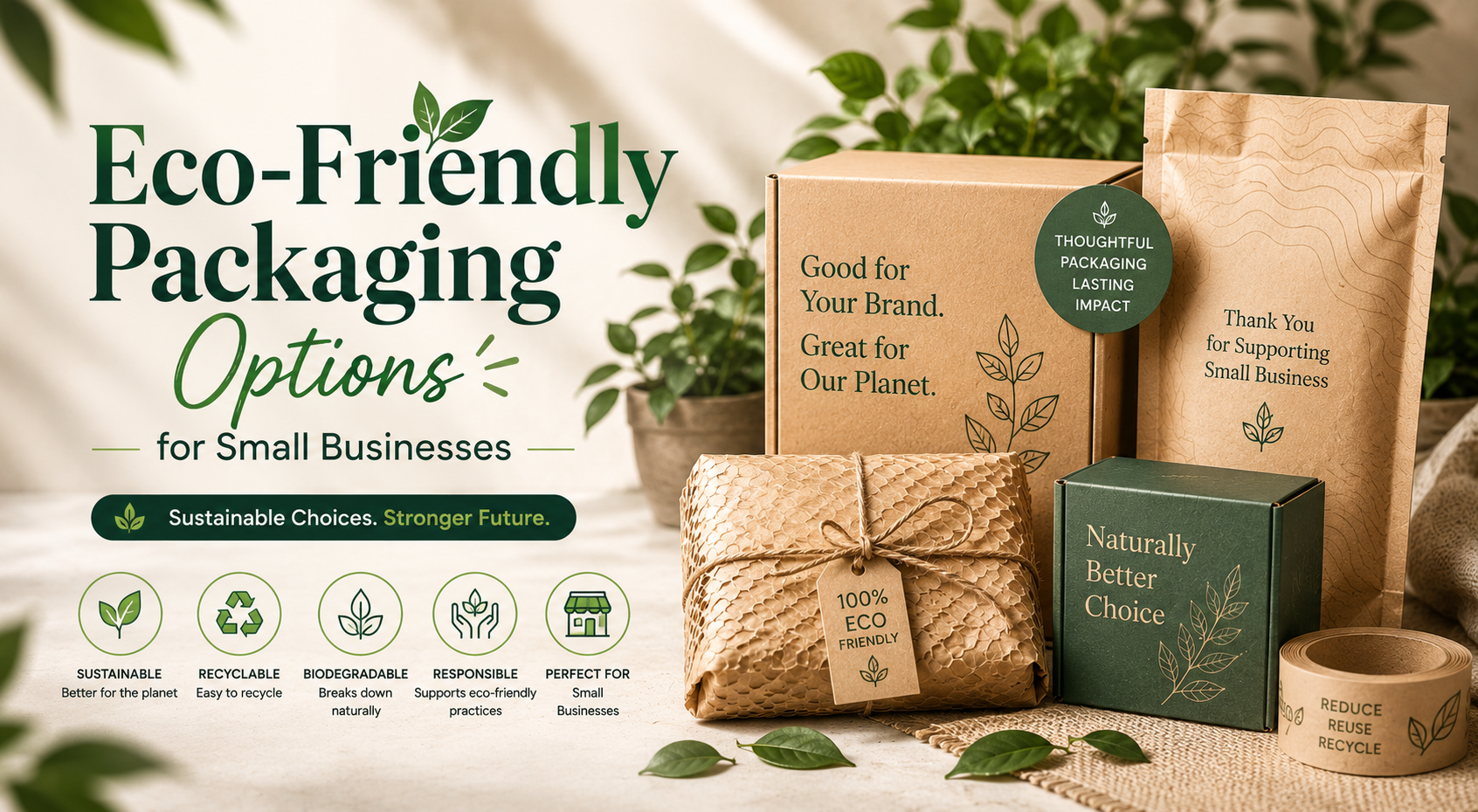
Eco-friendly packaging for a small business works best when it uses less material, protects the product properly, and is easy for customers to recycle. Right-sized cardboard boxes, kraft packaging, recycled paperboard, and corrugated boxes are practical options for many small brands because they balance protection, cost, and sustainability.
Instead of choosing a material simply because it carries an “eco” label, consider the product weight, shipping method, required protection, order volume, and disposal options available to customers. In many cases, reducing excess packaging and choosing recyclable paper-based materials creates a more practical sustainable packaging system.
Eco-Friendly Packaging Options at a Glance
How to Choose Eco-Friendly Packaging for a Small Business
Choosing eco-friendly packaging for a small business should start with the product rather than the material label. A lightweight retail item, fragile ecommerce order, and food product can all need different levels of protection.
For most small businesses, the best option is packaging that uses only as much material as necessary while still protecting the product during storage, handling, and delivery.
A lightweight product may only need recycled paperboard or kraft packaging, while heavier or fragile products usually benefit from corrugated cardboard. Products that need additional protection can also use molded pulp or paper-based inserts to reduce movement inside the box.
Cost also matters. Small businesses do not always need complex materials or heavily engineered packaging to become more sustainable. In many cases, a right-sized recyclable box with minimal finishing can be more practical than an expensive packaging format that creates disposal problems for customers.
As order volume grows, custom sizing becomes even more useful. Reducing unnecessary internal space can lower material use, reduce filler, and improve shipping efficiency.
Most small businesses do not wake up one morning and decide to “go sustainable.” They start questioning packaging when something goes wrong.
Boxes arrive crushed. Products move inside the carton. Shipping costs feel higher than they should. Customers open the package and quietly judge the brand before they ever touch the product.
This is usually the point where eco-friendly packaging starts to matter to small businesses. Not as a trend, but as a practical solution.
At Hello Custom Boxes USA, these conversations rarely start with environmental buzzwords. They usually start with real packaging problems: waste, returns, storage issues, oversized boxes, or spending money on packaging that does not actually protect the product.
Packaging Becomes a Problem Faster for Small Brands
Large companies can absorb losses. Small brands feel every mistake immediately.
If packaging is oversized, you pay for extra board, extra filler, and extra shipping weight. If it is underbuilt, products arrive damaged. Both situations create waste, financial and physical.
Sustainable packaging options are often just better-designed packaging. Less material. Better fit. Fewer failures. The environmental benefit comes from efficiency, not slogans.
The Mistake of Chasing Labels
A lot of small business owners focus on packaging labels because they sound responsible, not because they understand how those materials behave after shipping. Once the package is out of the warehouse and in a customer’s hands, many of these materials do not perform or break down the way people expect.
Some materials only break down in specific conditions. Others behave poorly during shipping. When packaging fails in transit, replacing damaged goods creates more waste than the material ever saved.
The biggest improvement usually comes from structure, not material swaps. Right-sized boxes. Correct board strength. Packaging designed around the product instead of the catalog.
Recyclable Packaging Is Often the Smartest Move
For many small businesses, recyclable packaging is one of the most practical places to start. Cardboard, kraft paper, corrugated board, and recycled paperboard are familiar materials that can work across retail, ecommerce, and shipping applications.
Recyclability also works well with another important goal: using less packaging in the first place. A box made around the actual product dimensions can reduce empty space, unnecessary filler, and excess board without sacrificing protection.
For lightweight retail products, recyclable cardboard or paperboard may be enough. Products that need more protection during delivery often benefit from corrugated packaging, while kraft packaging can work well for businesses looking for a simple paper-based presentation.
When recyclability is a priority, keep the packaging structure straightforward. Excessive coatings, unnecessary layers, or overly complex construction can make recycling less practical. A well-designed paper-based package is often easier for customers to handle and more efficient for a small business to manage.
Businesses comparing materials can also review our eco-friendly packaging options to see how recycled paperboard, kraft, corrugated board, and paper-based components can be used in custom packaging.
Where Biodegradable Packaging Actually Fits
Biodegradable packaging can work, but only in specific situations.
Lightweight products. Short storage times. Direct-to-consumer shipments. Simple paper-based components like wraps or inserts.
Using biodegradable materials selectively tends to reduce waste. Trying to make them do the job of every part of the box usually backfires and creates new issues instead.
The goal is not to impress customers with material names. The goal is to make packaging easy to deal with after the product is opened.
Compostable Packaging Needs Restraint
Compostable packaging solutions are often requested by food, wellness, and cosmetic brands. Sometimes they are the right answer. Sometimes they are not.
When customers can’t compost at home or nearby, compostable packaging usually ends up treated like any other trash. In those situations, simple recyclable packaging tends to work out better. Compostable materials only really help when they’re used carefully and for the right products.
Shipping Is Where Sustainability Shows Up
Shipping is where packaging efficiency gets tested. A box may look sustainable on paper, but if it is too weak, oversized, or poorly fitted, the environmental and financial benefits can quickly disappear.
Too much empty space allows products to move during transit and usually requires more filler. Weak board can lead to crushed corners, damaged products, returns, and replacement shipments.
For small businesses shipping products regularly, well-sized corrugated packaging can provide the strength needed without unnecessary layers of material. The right board strength, flute type, and internal fit help protect products while keeping the package as efficient as possible.
Fewer damaged orders mean fewer replacement products, boxes, and shipments. In practice, preventing avoidable damage can be just as important as choosing a recyclable material in the first place.
How Eco-Friendly Packaging Affects Brand Perception
Customers do not usually talk about packaging. They feel it.
A box that feels oversized or flimsy sends the wrong signal. A box that fits properly and opens cleanly builds trust without explanation.
Eco-friendly packaging boxes often succeed because they feel intentional. Kraft finishes, simple printing, and clean structures look honest. Not trendy. Not forced.
Right packaging. Right product. Customers stop questioning the brand.
Choosing Packaging That Grows With You
What works at low volume often breaks at scale.
The best eco-friendly packaging for small businesses is packaging that can be adjusted as order volume increases. Custom sizing, flexible materials, and practical structures prevent waste later when growth accelerates.
Sustainability is not about locking into one material forever. It is about avoiding decisions that create unnecessary waste as the business grows.
Keeping Eco-Friendly Packaging Affordable
Eco-friendly packaging does not have to be the most expensive option. For a small business, reducing unnecessary material is often one of the simplest ways to control packaging costs while cutting waste.
Start with the box size. Packaging that closely matches the product usually needs less board, less filler, and less storage space. It can also help reduce unnecessary shipping volume.
The structure matters just as much as the material. A lower-cost box that fails during delivery can lead to damaged products, replacements, and additional shipping. On the other hand, an oversized or over-engineered box may use more material than the product actually needs.
For many small businesses, a practical approach is to:
- choose packaging around the actual product dimensions;
- use recyclable paper-based materials where they suit the product;
- avoid unnecessary inserts, layers, or finishes;
- use enough board strength to protect the product without overpacking; and
- review the packaging as order volumes and shipping needs change.
The goal is not to spend more just to make packaging look sustainable. It is to use the right amount of material and protection for the job.
Choosing the Right Sustainable Packaging for Your Business
The best sustainable packaging choice depends on what you sell, how the product is shipped, and how much protection it needs. A lightweight retail item may work well in recycled paperboard or kraft packaging, while heavier or fragile products usually need stronger corrugated construction.
For a small business, the goal should be to balance sustainability with practical performance. Consider the product dimensions, shipping conditions, storage space, order volume, and how easily customers can recycle the packaging after use.
Start with a simple structure, use only the material needed to protect the product, and review the packaging as your business grows. In many cases, these small decisions have a greater impact than choosing a complicated material simply because it is marketed as sustainable.
Keep It Simple
Eco-friendly packaging does not need to be loud. It needs to work.
If the box fits the product, protects it in transit, and can be recycled easily, it is already doing more than most packaging on the market.
Customers notice when things make sense. They also notice when they do not.
The most sustainable packaging is often the packaging that nobody complains about.
Final Thoughts
Eco-friendly packaging for a small business does not have to be complicated. The most practical approach is to use recyclable paper-based materials, choose the right box size, avoid unnecessary packaging layers, and make sure the structure protects the product throughout storage and shipping.
Recycled cardboard, kraft paper, paperboard, and corrugated packaging can all work well depending on the product and the level of protection required. The right choice is the one that reduces unnecessary material without creating damage, excess shipping costs, or disposal problems for customers.
For small businesses, sustainable packaging works best when it is practical, efficient, and flexible enough to support future growth.
Frequently Asked Questions
From what we see, the best option is usually not the most complicated one. For many small businesses, recyclable cardboard, kraft paper, or corrugated boxes work well because they are practical, protective, and easy for customers to dispose of. We normally recommend starting with the product itself, then choosing the lightest and simplest packaging that can still protect it properly.
Not always. We usually find that plain cardboard and corrugated boxes are easy to recycle, but heavy coatings, plastic layers, wax, food residue, or mixed materials can make things more difficult. That is why we often suggest keeping the box structure simple and avoiding unnecessary finishes where recyclability is a priority.
In our experience, not necessarily. Compostable packaging only works well when customers have access to the right composting facilities. That is not available everywhere. For many small businesses, recyclable paper or cardboard is often the more practical choice because customers already understand how to handle it after use.