TL;DR — Quick Answer
- • Matte and gloss mainly change how packaging looks, feels, and wears over time
- • Matte gives a softer, muted, non-reflective surface
- • Gloss adds shine and makes colors appear more vivid
- • Matte hides minor wear better
- • Gloss attracts attention but shows marks faster
- • The right choice depends on usage, lighting, and handling
Introduction
You approve the design. Everything looks right on screen. Clean layout, strong colors, no issues.
Then the boxes arrive.
And something feels slightly off.
Maybe the colors don’t hit the same way. Maybe the surface already shows marks before it even reaches a shelf. It’s subtle, but noticeable.
Most of the time, this isn’t a design mistake. It comes down to the finish.
Matte or gloss might seem like a small decision early on. In real use, it rarely stays small. Lighting changes it. Handling changes it. Even how someone holds the box changes the perception.
What Matte and Gloss Finishes Really Do
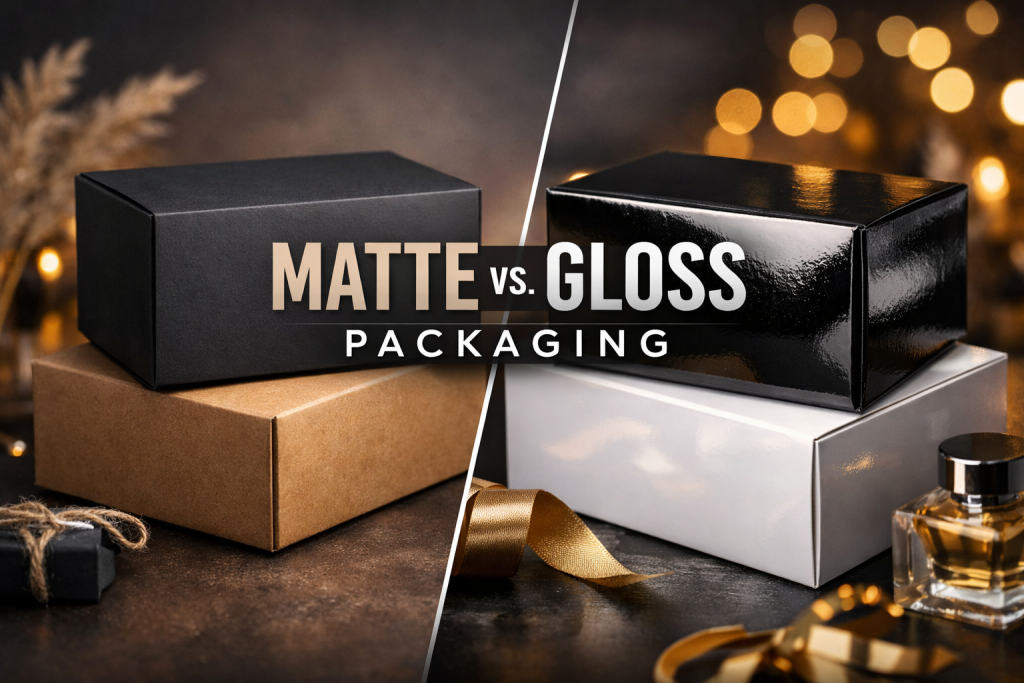
At the simplest level, both are surface coatings applied after printing.
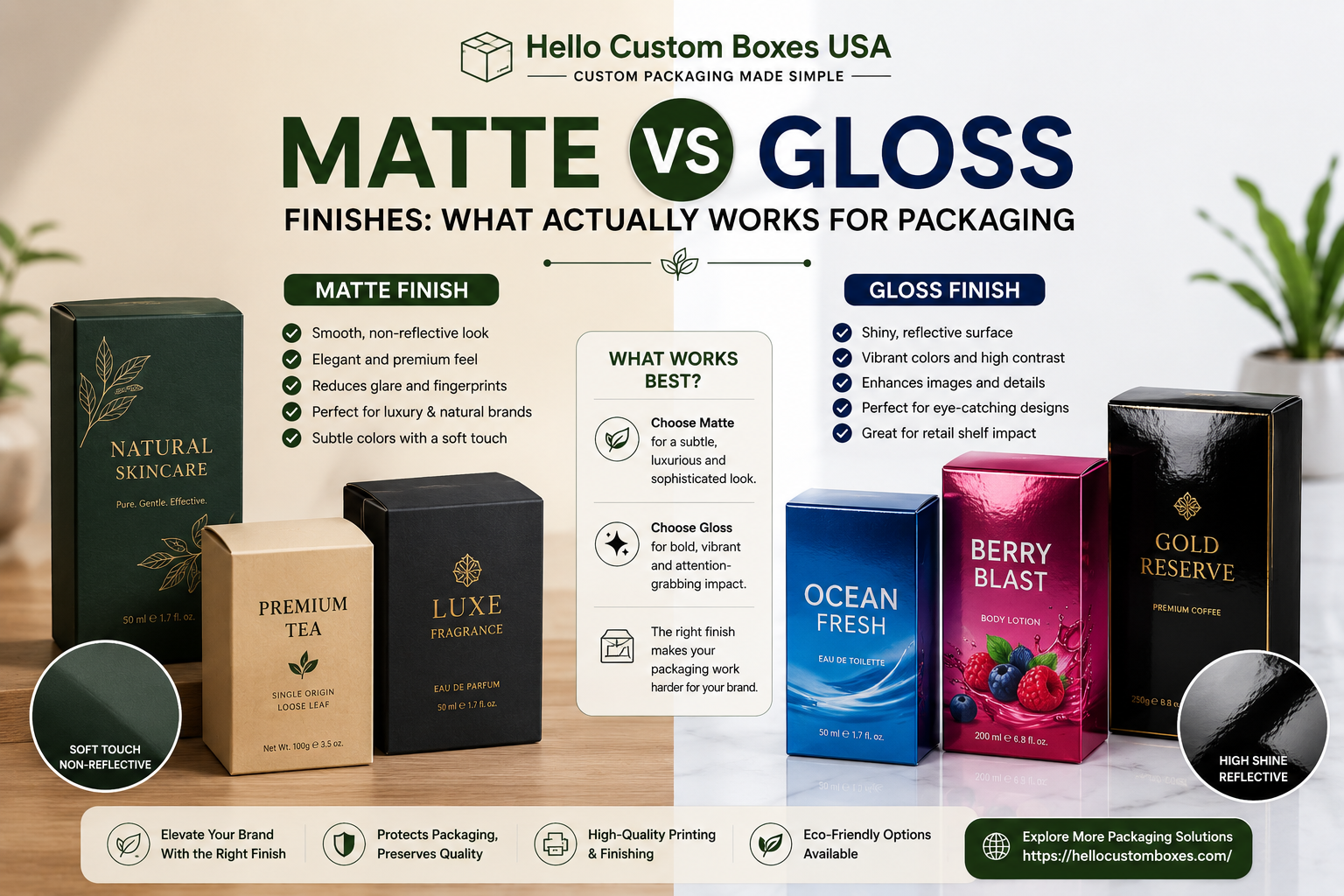
Matte spreads light across the surface instead of reflecting it. That’s why it feels softer visually. Colors look slightly toned down.
Gloss does the opposite. It reflects light directly, which makes colors appear sharper and more saturated.
But in actual production, the difference goes beyond appearance.
Ink behaves differently under each finish, especially in how colors look after printing. Surface friction changes too, and even stacking pressure affects how the box holds up over time.”
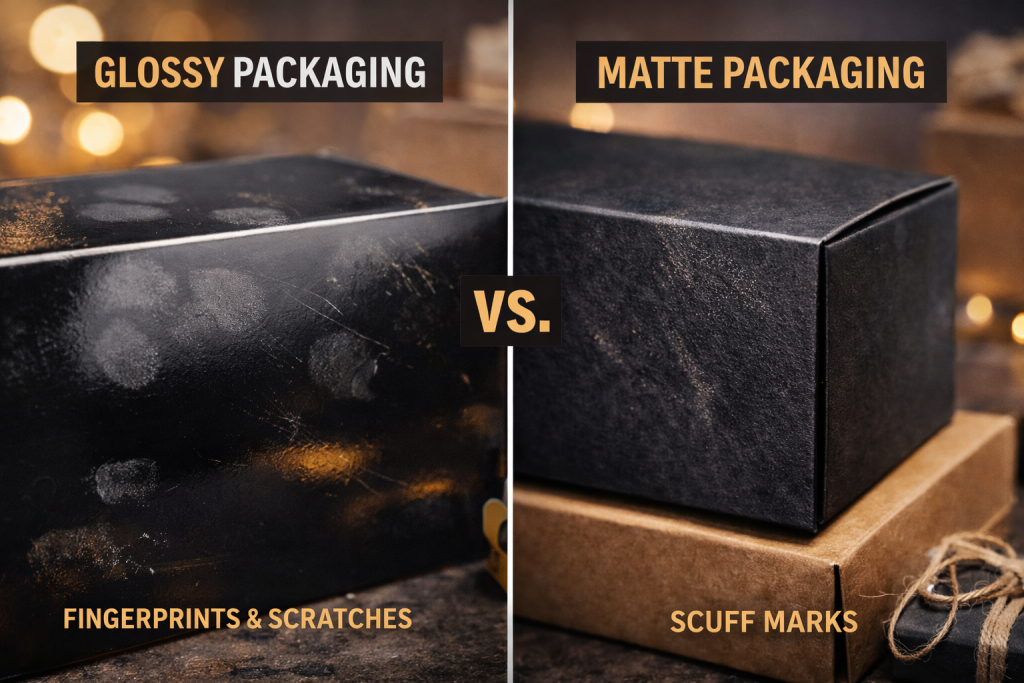
You’ll see it quickly in bulk runs. Matte can start showing rub marks if boxes are tightly packed. Gloss, on the other hand, often looks great out of the press but starts picking up fingerprints under normal handling.
Matte vs Gloss Finishes: Side-by-Side Comparison
Why This Matters in Real Use
Packaging doesn’t stay in one place. It moves through multiple stages.
Warehouse to shipping. Shipping to delivery. Then handling, unboxing, and sometimes display.
Each stage adds its own stress.
• Under store lighting, gloss tends to stand out more
• During transport, matte often hides minor scuffs better
• For online brands, matte usually photographs more evenly
There’s also perception.
Gloss feels louder. More energetic.
Matte feels controlled. Sometimes more refined. In some cases, it even gives a higher-end impression without changing the cost much.
Common Finish Options You’ll See
Matte Lamination
A thin film layered over the print. Smooth to touch, slightly soft in appearance.
Used often in:
• Cosmetic packaging
• Electronics
• Subscription boxes
One thing to watch: if the structure underneath isn’t strong, pressure marks can show through more easily.
Gloss Lamination
Adds shine and boosts color contrast.
Works well for:
• Food packaging
• Retail display products
• Bright, color-heavy designs
It’s especially noticeable with bold tones. Reds and blues tend to pop more under gloss.
Matte Base with Spot Gloss
This is where things get more interesting.
A matte surface overall, with selected glossy areas. Logos, text, or patterns.
You get contrast you can actually see and feel.
Common in premium or limited-run packaging.
Labels and Stickers Behave Differently
Full boxes and labels don’t always react the same way.
• Matte labels reduce glare, which helps readability
• Gloss labels handle moisture better
If your product goes into cold storage or humid conditions, gloss tends to last longer.
Material Changes the Outcome
Finish alone doesn’t define the result. The material underneath matters just as much.
• Kraft with matte gives a more natural look, which is why many brands prefer it for a natural and eco-friendly packaging look.
• Rigid with matte leans toward premium
• Corrugated with gloss increases visual impact, but isn’t always practical
Printing style also plays a role.
Gloss tends to make colors look deeper and sharper. Matte keeps tones more controlled but slightly flatter.
Dark shades are where this becomes obvious.
Where Things Usually Go Wrong
- Choosing based on visuals alone
What looks good on screen doesn’t always translate the same after printing. - Ignoring how the box will be handled
Frequent handling changes how quickly wear becomes visible. - Weak structure under matte
Matte surfaces make dents or pressure marks easier to notice. - Using gloss for premium products without testing
Sometimes it shifts the perception toward something more commercial than intended.
How Hello Custom Boxes Handles This
Finishes aren’t treated as an afterthought.
They’re considered alongside structure from the start.
Every box is built around your product’s actual size, layout, and structure, not from pre-made templates.
Before finalizing, we look at how the finish interacts with the material. Especially in cases involving custom printed boxes or rigid packaging, where small differences become more visible.
The goal isn’t just a good look on day one. It’s consistency after handling, shipping, and real use.
Where Each Finish Works Best
There’s no universal rule, but patterns show up across industries.
• eCommerce brands often lean toward matte for presentation
• Retail products use gloss for visibility
• Cosmetics shift depending on brand identity
• Food packaging usually favors gloss for cleanliness and color
It’s less about preference, more about context.
Practical Observations from Real Runs
A few things tend to repeat across projects:
• Lighting changes everything, especially in retail environments
• High-gloss surfaces show marks faster with frequent handling
• Matte combined with spot gloss often gives better balance
• Dark colors react differently depending on finish
• Structural strength matters more than finish alone
Thinking About Your Packaging
If you’re deciding between matte and gloss, don’t lock the choice too early.
Start with how the box will be used. Where it will sit. How often it will be touched.
Then choose the finish that fits that situation.
That’s usually where things start to align.
Conclusion
This isn’t about which finish looks better in general.
It’s about which one performs better for your product.
Gloss pulls attention. Matte shapes perception.
Most of the time, the right answer depends on how your packaging behaves outside the design file.
Need Help Choosing the Right Packaging Finish?
Choosing between matte and gloss finishes is easier when you can compare them on the actual material, print design, and product you’ll be using. At Hello Custom Boxes, we help businesses select packaging finishes based on branding goals, product type, shipping requirements, and budget. Whether you’re creating luxury retail packaging or durable ecommerce boxes, our team can recommend the finish that delivers the right look and long-term performance.
Frequently Asked Questions
There isn't a single finish that's better for every product. Matte works well for brands that want a premium, understated appearance with less glare, while gloss is often the better choice for retail packaging that relies on bright colours and shelf visibility. The right finish depends on your product, branding goals, and how the packaging will be handled during shipping and display.
Explain that pricing is usually similar and depends more on material, quantity, printing method, and finishing options than the finish itself.
Discuss handling, scratches, moisture, and real-world durability.
Explain why cosmetics, perfumes, candles, and premium gift boxes often use matte or matte with Spot UV.
Explain why gloss is commonly used for colourful retail food packaging, while matte can work for premium food brands.
Mention Spot UV and selective gloss over a matte surface.